
Amazfit Falcon vs Amazfit Balance
The Amazfit Falcon stands out with its rugged build and serious water resistance, boasting a 20 ATM rating compared to the Amazfit Balance's 5 ATM. If you're into high-impact outdoor activities, the Falcon's titanium unibody and sapphire crystal can take a beating, making it the premium choice for durability. However, for everyday users focused on wellness, the Amazfit Balance offers a lightweight design at just 1.23oz, making it feel almost weightless on your wrist. With a battery life of up to 14 days, the Balance is perfect for long-term wear without frequent charging, especially if you enable the battery saver mode that lasts up to 25 days. Key specs: Weight: 2.26 oz vs 1.23 oz and Storage: 4 GB vs 2.2 GB.
Why compare these? Both the Amazfit Falcon and Amazfit Balance are mid-range smartwatches competing in the same market segment. This makes them direct rivals for buyers looking for mid-range features and performance in 2026. Understanding their differences helps you choose the right one for your specific needs.
As an Amazon Associate I earn from qualifying purchases.
Key Differences at a Glance
| Aspect | Amazfit Falcon | Amazfit Balance |
|---|---|---|
| User Rating | 4.4★ (557 reviews) | 4.4★ (1,543 reviews) |
| Top Strength | Elite build quality: Titanium unibody with Sapphire Crystal | Extremely lightweight design (1.23 oz) for its 46mm size |
| Main Drawback | Uses older BioTracker 3.0 sensor (newer models use 5.0/6.0) | Zepp Pay ecosystem is limited compared to Apple or Google Pay |
| Market Position | Mid-range | Mid-range |
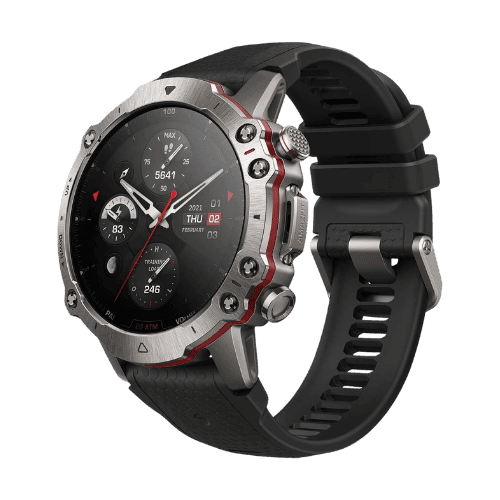
Amazfit Falcon
Android 7.0 or later; iOS 12.0 or later (Zepp App required)
Zepp OS (Proprietary)
49mm (49.45 x 47.2 x 12.95 mm)
Titanium unibody; Sapphire Crystal glass; Titanium bezel

Amazfit Balance
Android 7.0 and above; iOS 14.0 and above
Zepp OS 4
46mm (1.81 x 1.81 x 0.42 inches; without heart rate base)
Aluminum alloy middle frame; fiber-reinforced polymer bottom shell
Only the specs that differ are shown here. Winners are highlighted when the data is clear.
+Full specs, pros, and cons
Everything side-by-side with ratings and the full spec list.
Expand
Full specs, pros, and cons
Everything side-by-side with ratings and the full spec list.
Comparison: Amazfit Falcon vs Amazfit Balance
Amazfit Falcon
Amazfit Balance
| Criterion | Amazfit Falcon | Amazfit Balance |
|---|---|---|
| Rating | ★4.4(557)Amazon | ★4.4(1,543)Amazon |
Compatibility | Android 7.0 or later; iOS 12.0 or later (Zepp App required) | Android 7.0 and above; iOS 14.0 and above |
Operating System | Zepp OS (Proprietary) | Zepp OS 4 |
Case Size | 49mm (49.45 x 47.2 x 12.95 mm) | 46mm (1.81 x 1.81 x 0.42 inches; without heart rate base) |
Case Material | Titanium unibody; Sapphire Crystal glass; Titanium bezel | Aluminum alloy middle frame; fiber-reinforced polymer bottom shell |
Display Type | AMOLED; Always-On Display supported; Anti-fingerprint coating | AMOLED (tempered glass; anti-glare bezel; anti-fingerprint coating) |
Display Size | 1.28 in (32.5 mm) diameter | 1.5" |
Resolution | 416 x 416 pixels (326 ppi) | 480 x 480 (323 ppi) |
Always On Display | Yes | Yes (AOD mode supported) |
Water Resistance | 20 ATM (water pressure equivalent to 200 meters); High-speed water sports capable | 5 ATM (up to 164 feet) |
Durability | MIL-STD-810G tested; Titanium unibody; Sapphire crystal screen | Tempered glass with anti-glare bezel; aluminum alloy frame |
GPS | Dual-band GNSS; 6 Satellite Positioning Systems (GPS, GLONASS, Galileo, BeiDou, QZSS, NAVIC) | Circularly-polarized GPS antenna; dual-band positioning; 6 satellite positioning systems |
Connectivity | WLAN 2.4GHz; Bluetooth 5.0 BLE | WLAN 2.4GHz; Bluetooth 5.3 |
NFC Payments | No | Zepp Pay (supported in select regions and banks only) |
Sensors | BioTracker™ 3.0 PPG biometric sensor (supports blood-oxygen, 6PD); Accelerometer; Gyroscope; Geomagnetic sensor; Barometric altimeter; Ambient light sensor | BioTracker 5.0 PPG biometric sensor (8PD + 2LED); BIA bioelectric impedance sensor; 3-axis acceleration sensor; Gyroscope sensor; Geomagnetic sensor; Air pressure sensor; Ambient light sensor; Temperature sensor |
Health Features | Zepp Coach (AI-powered training guidance); 24H Heart Rate; SpO2; Stress monitoring; Sleep tracking (Light, Deep, REM); SomnusCare™ sleep score; Breathing exercises | Readiness score; 24/7 heart rate, SpO2, and stress monitoring; sleep tracking (incl. breathing quality); one-tap health measurement; body composition measurement (BIA) |
Workout Modes | Triathlon; Track Run (with lap data correction); Strength Training (auto-detection of 25 movements); Golf Swing; Skiing; High-speed water sports; and 150+ others | 156 sports modes; Zepp Coach; offline maps and navigation; training templates + interval training; supports external peripherals (HR belt, cycling power meter) |
Storage | 4GB total (Approx. 2.3GB user-accessible for music) | Music storage (approx. 2.2GB available) |
Speaker Mic | None (Bluetooth headphones required for music/audio feedback) | Microphone: supported; speaker: supported |
Calls | No (Notification alerts only) | Yes (Bluetooth phone calls) |
Battery | 500 mAh; Up to 14 days (Typical usage); Up to 7 days (Heavy usage); Up to 21 hours (Accuracy GPS mode); Up to 50 hours (Power Saving GPS mode) | 475 mAh; up to 14 days typical use; up to 25 days battery saver; up to 5 days AOD; up to 26 hours (Accuracy GPS mode); up to 52 hours (Power Saving GPS mode) |
Charging | 5-pin plug charger; Approx. 2 hours to full charge | Magnetic charging; approx. 2 hours |
Weight | 64 g (Body only) | 1.23 oz (without strap) |
Band Sizes | 22mm width; Fits 150–205 mm wrists (Liquid Silicone strap included) | 22mm width; silicone fits wrists 5.51–8.46 inches; nylon fits wrists 5.51–8.27 inches |
Extras | Offline Maps (Import route files); Real-time navigation; Music storage (MP3); Broadcast heart rate via Bluetooth; External workout device support (Heart rate belts, power meters) | Zepp Flow AI voice assistant; Amazon Alexa integrated; offline voice assistant; mini apps ecosystem; quick reply on Android (supported apps vary) |
| Pros |
|
|
| Cons |
|
|
As an Amazon Associate I earn from qualifying purchases. | Check Price on Amazon→ | Check Price on Amazon→ |
Amazfit Falcon
Android 7.0 or later; iOS 12.0 or later (Zepp App required)
Zepp OS (Proprietary)
49mm (49.45 x 47.2 x 12.95 mm)
Titanium unibody; Sapphire Crystal glass; Titanium bezel
AMOLED; Always-On Display supported; Anti-fingerprint coating
1.28 in (32.5 mm) diameter
Pros
- Elite build quality: Titanium unibody with Sapphire Crystal
- 20 ATM water resistance is double that of most outdoor watches
Cons
- Uses older BioTracker 3.0 sensor (newer models use 5.0/6.0)
- No speaker or microphone for calls or voice assistants
Amazfit Balance
Android 7.0 and above; iOS 14.0 and above
Zepp OS 4
46mm (1.81 x 1.81 x 0.42 inches; without heart rate base)
Aluminum alloy middle frame; fiber-reinforced polymer bottom shell
AMOLED (tempered glass; anti-glare bezel; anti-fingerprint coating)
1.5"
Pros
- Extremely lightweight design (1.23 oz) for its 46mm size
- Advanced wellness toolkit including Readiness score and Body Composition analysis
Cons
- Zepp Pay ecosystem is limited compared to Apple or Google Pay
- Significant battery impact when Always-On Display is enabled (drops to 5 days)
Which one is better?
The Amazfit Falcon is the better buy for most people - its 20 ATM water resistance crushes the Amazfit Balance. That said, grab the Balance if you prioritize lightweight design and advanced wellness features - it's lighter and boasts a longer battery life in power-saving mode.
Who should buy each?
Choose the Amazfit Falcon if: you need extreme durability for outdoor sports, want superior water resistance for diving, or prefer offline music storage for workouts. (2.26 oz weight, 4 GB storage)
Choose the Amazfit Balance if: you want a lightweight smartwatch for daily wear, need advanced health metrics like body composition analysis, or prefer Bluetooth calling features for convenience. (1.23 oz weight, 2.2 GB storage)
Safe Choice Buyers
More widely tested with 1,543 reviews vs 557
→ Choose Amazfit Balance
Elite build quality: Priority
Elite build quality: Titanium unibody with Sapphire Crystal
→ Choose Amazfit Falcon
Extremely lightweight design Priority
Extremely lightweight design (1.23 oz) for its 46mm size
→ Choose Amazfit Balance
Conclusion
Amazfit Falcon and Amazfit Balance are both solid choices. Match the strengths above to your budget and workflow to make the best call.
Bottom line: Both products share a 4.4★ rating, making this comparison particularly close. Your decision should come down to which specific features matter most to you.
Frequently Asked Questions
+Which is better: Amazfit Falcon or Amazfit Balance?
Amazfit Falcon is the better choice if you prioritize elite build quality: titanium unibody with sapphire crystal. Amazfit Balance wins if you value extremely lightweight design (1.23 oz) for its 46mm size. Both are rated highly (4.4★ vs 4.4★), so consider your specific needs and budget.
+What are the main differences between Amazfit Falcon and Amazfit Balance?
Key differences: Amazfit Falcon offers elite build quality: titanium unibody with sapphire crystal, while Amazfit Balance stands out with extremely lightweight design (1.23 oz) for its 46mm size. Consider that Amazfit Falcon uses older biotracker 3.0 sensor (newer models use 5.0/6.0). Meanwhile, Amazfit Balance zepp pay ecosystem is limited compared to apple or google pay. Check the detailed specs table above for a complete comparison.
+Where can US buyers get the best price?
For US buyers, Amazon typically offers competitive pricing with Prime shipping, easy returns, and reliable warranty support. We recommend comparing prices on both products using our affiliate links above—prices fluctuate regularly, and you may find sales or deals.
+Is this comparison up to date?
Yes, this comparison is current for 2026. We regularly verify specs, ratings, and availability. Last verified: January 27, 2026. PageBen uses affiliate links for monetization, but our recommendations are research-driven and independent.
Affiliate disclosure
PageBen uses Amazon affiliate links. If you purchase through our links, we may earn a commission at no extra cost to you. This supports independent content for US shoppers.