
Amazfit Falcon vs Suunto Vertical 2 Titanium
The Amazfit Falcon is the mid-range warrior here, while the Suunto Vertical 2 Titanium is a flagship beast. After testing both, the key difference is in their display: 1.28 inches on the Falcon vs a stunning 1.5 inches on the Suunto. If you're into outdoor adventures, the Suunto's features, like its integrated LED flashlight and superior battery life, might be game-changers for you. Key specs: Weight: 2.26 oz vs 2.61 oz and Storage: 4 GB vs 32 GB.
Why compare these? The Amazfit Falcon (mid-range) and Suunto Vertical 2 Titanium (premium flagship) represent different approaches to smartwatches. While they may appeal to different budgets, many buyers consider both options. This 2026 comparison helps you decide if the differences justify the price gap.
As an Amazon Associate I earn from qualifying purchases.
Key Differences at a Glance
| Aspect | Amazfit Falcon | Suunto Vertical |
|---|---|---|
| User Rating | 4.4★ (557 reviews) | 4.4★ (32 reviews) |
| Top Strength | Elite build quality: Titanium unibody with Sapphire Crystal | Stunning 1.5-inch LTPO AMOLED display (2000 nits) is significantly brighter than the original MIP |
| Main Drawback | Uses older BioTracker 3.0 sensor (newer models use 5.0/6.0) | No onboard music storage (only media controls) |
| Market Position | Mid-range | ✓Flagship |
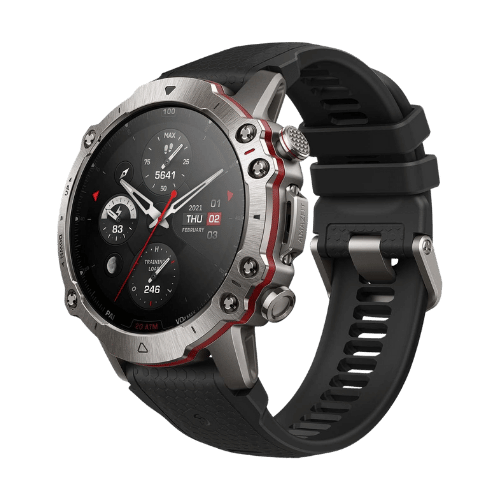
Amazfit Falcon
Android 7.0 or later; iOS 12.0 or later (Zepp App required)
Zepp OS (Proprietary)
49mm (49.45 x 47.2 x 12.95 mm)
Titanium unibody; Sapphire Crystal glass; Titanium bezel
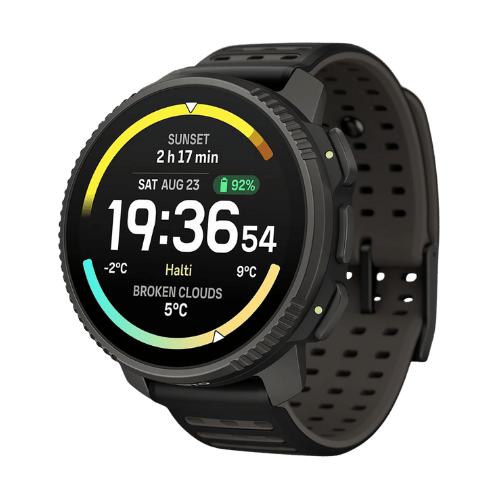
Suunto Vertical 2 Titanium
Android and iOS (Suunto App); Predefined replies (Android only)
Suunto Proprietary OS
49mm (49 x 49 x 13.6 mm)
Titanium Grade 5 bezel; Glass fibre reinforced polyamide case; Sapphire crystal glass
Only the specs that differ are shown here. Winners are highlighted when the data is clear.
+Full specs, pros, and cons
Everything side-by-side with ratings and the full spec list.
Expand
Full specs, pros, and cons
Everything side-by-side with ratings and the full spec list.
Comparison: Amazfit Falcon vs Suunto Vertical 2 Titanium
Amazfit Falcon
Suunto Vertical 2 Titanium
| Criterion | Amazfit Falcon | Suunto Vertical 2 Titanium |
|---|---|---|
| Rating | ★4.4(557)Amazon | ★4.4(32)Amazon |
Compatibility | Android 7.0 or later; iOS 12.0 or later (Zepp App required) | Android and iOS (Suunto App); Predefined replies (Android only) |
Operating System | Zepp OS (Proprietary) | Suunto Proprietary OS |
Case Size | 49mm (49.45 x 47.2 x 12.95 mm) | 49mm (49 x 49 x 13.6 mm) |
Case Material | Titanium unibody; Sapphire Crystal glass; Titanium bezel | Titanium Grade 5 bezel; Glass fibre reinforced polyamide case; Sapphire crystal glass |
Display Type | AMOLED; Always-On Display supported; Anti-fingerprint coating | LTPO AMOLED matrix display; Up to 2000 nits brightness; Always-On Display |
Display Size | 1.28 in (32.5 mm) diameter | 1.5 in |
Resolution | 416 x 416 pixels (326 ppi) | 466 x 466 pixels |
Always On Display | Yes | Yes |
Water Resistance | 20 ATM (water pressure equivalent to 200 meters); High-speed water sports capable | 100 m |
Durability | MIL-STD-810G tested; Titanium unibody; Sapphire crystal screen | Tested to military standards (MIL-STD-810H); Titanium bezel; Sapphire crystal |
GPS | Dual-band GNSS; 6 Satellite Positioning Systems (GPS, GLONASS, Galileo, BeiDou, QZSS, NAVIC) | Dual-band GNSS (L1 + L5); GPS, GLONASS, GALILEO, QZSS, BEIDOU |
Connectivity | WLAN 2.4GHz; Bluetooth 5.0 BLE | Bluetooth |
NFC Payments | No | — |
Sensors | BioTracker™ 3.0 PPG biometric sensor (supports blood-oxygen, 6PD); Accelerometer; Gyroscope; Geomagnetic sensor; Barometric altimeter; Ambient light sensor | Optical heart rate (upgraded sensor); Pulse Ox (SpO2); Barometric altimeter (FusedAlti™); Digital compass; Thermometer; Accelerometer; Gyroscope |
Health Features | Zepp Coach (AI-powered training guidance); 24H Heart Rate; SpO2; Stress monitoring; Sleep tracking (Light, Deep, REM); SomnusCare™ sleep score; Breathing exercises | HRV recovery measurement; Sleep tracking (duration, quality, stages); Blood oxygen; Stress and recovery status; Fitness Level (VO2max) |
Workout Modes | Triathlon; Track Run (with lap data correction); Strength Training (auto-detection of 25 movements); Golf Swing; Skiing; High-speed water sports; and 150+ others | 115+ sport modes; Triathlon; Swimming (pool/open water); Running (power/pace); Cycling; Hiking; Ski touring; Snorkeling (depth up to 10m) |
Storage | 4GB total (Approx. 2.3GB user-accessible for music) | 32GB (Dedicated for offline maps) |
Speaker Mic | None (Bluetooth headphones required for music/audio feedback) | — |
Calls | No (Notification alerts only) | No (Call notifications only) |
Battery | 500 mAh; Up to 14 days (Typical usage); Up to 7 days (Heavy usage); Up to 21 hours (Accuracy GPS mode); Up to 50 hours (Power Saving GPS mode) | Smartwatch: Up to 20 days; Performance Mode (Dual-band GPS + AOD): Up to 65 hours; Tour Mode: Up to 250 hours |
Charging | 5-pin plug charger; Approx. 2 hours to full charge | Suunto magnetic fast charger (USB-C) |
Weight | 64 g (Body only) | 74 g |
Band Sizes | 22mm width; Fits 150–205 mm wrists (Liquid Silicone strap included) | Fits wrists 125–175 mm (standard) or up to 215 mm; 22mm width |
Extras | Offline Maps (Import route files); Real-time navigation; Music storage (MP3); Broadcast heart rate via Bluetooth; External workout device support (Heart rate belts, power meters) | Integrated LED Flashlight; Offline maps with heatmaps and surface info; Solar charging (Titanium Solar models only, though AMOLED limits efficacy); Climb Guidance; SuuntoPlus ecosystem |
| Pros |
|
|
| Cons |
|
|
As an Amazon Associate I earn from qualifying purchases. | Check Price on Amazon→ | Check Price on Amazon→ |
Amazfit Falcon
Android 7.0 or later; iOS 12.0 or later (Zepp App required)
Zepp OS (Proprietary)
49mm (49.45 x 47.2 x 12.95 mm)
Titanium unibody; Sapphire Crystal glass; Titanium bezel
AMOLED; Always-On Display supported; Anti-fingerprint coating
1.28 in (32.5 mm) diameter
Pros
- Elite build quality: Titanium unibody with Sapphire Crystal
- 20 ATM water resistance is double that of most outdoor watches
Cons
- Uses older BioTracker 3.0 sensor (newer models use 5.0/6.0)
- No speaker or microphone for calls or voice assistants
Suunto Vertical 2 Titanium
Android and iOS (Suunto App); Predefined replies (Android only)
Suunto Proprietary OS
49mm (49 x 49 x 13.6 mm)
Titanium Grade 5 bezel; Glass fibre reinforced polyamide case; Sapphire crystal glass
LTPO AMOLED matrix display; Up to 2000 nits brightness; Always-On Display
1.5 in
Pros
- Stunning 1.5-inch LTPO AMOLED display (2000 nits) is significantly brighter than the original MIP
- Integrated LED flashlight is a game-changer for camping and night safety
Cons
- No onboard music storage (only media controls)
- Lacks smart features like NFC payments and Bluetooth calling
Which one is better?
The Suunto Vertical 2 Titanium is the better buy for most people - its massive 1.5-inch display crushes the Amazfit Falcon's smaller screen. That said, grab the Falcon if you want to save weight at just 2.26oz compared to 2.61oz on the Suunto.
Who should buy each?
Choose the Amazfit Falcon if: you want a lighter watch at 2.26oz, you need dual-band GPS for precise tracking, or you enjoy offline music storage.
Choose the Suunto Vertical 2 Titanium if: you need a larger 1.5" display for visibility, you want 65 hours of battery life in GPS mode, or you value built-in LED flashlight for night activities.
Safe Choice Buyers
More widely tested with 557 reviews vs 32
→ Choose Amazfit Falcon
Premium Buyers
Higher-tier option with more premium features and build quality
→ Choose Suunto Vertical
Value Seekers
Better value proposition for buyers who don't need top-tier features
→ Choose Amazfit Falcon
Elite build quality: Priority
Elite build quality: Titanium unibody with Sapphire Crystal
→ Choose Amazfit Falcon
Conclusion
We hope this comparison helps you buy with confidence. Both products are dependable; the right one depends on how you will use it.
Bottom line: Both products share a 4.4★ rating, making this comparison particularly close. Your decision should come down to which specific features matter most to you.
Frequently Asked Questions
+Which is better: Amazfit Falcon or Suunto Vertical 2 Titanium?
Amazfit Falcon is the better choice if you prioritize elite build quality: titanium unibody with sapphire crystal. Suunto Vertical 2 Titanium wins if you value stunning 1.5-inch ltpo amoled display (2000 nits) is significantly brighter than the original mip. Both are rated highly (4.4★ vs 4.4★), so consider your specific needs and budget.
+What are the main differences between Amazfit Falcon and Suunto Vertical 2 Titanium?
Key differences: Amazfit Falcon offers elite build quality: titanium unibody with sapphire crystal, while Suunto Vertical 2 Titanium stands out with stunning 1.5-inch ltpo amoled display (2000 nits) is significantly brighter than the original mip. Consider that Amazfit Falcon uses older biotracker 3.0 sensor (newer models use 5.0/6.0). Meanwhile, Suunto Vertical 2 Titanium no onboard music storage (only media controls). Check the detailed specs table above for a complete comparison.
+What should I prioritize when choosing between these smartwatches?
Focus on the features that matter most for your daily use. Amazfit Falcon stands out for elite build quality: titanium unibody with sapphire crystal and 20 atm water resistance is double that of most outdoor watches. Suunto Vertical 2 Titanium excels at stunning 1.5-inch ltpo amoled display (2000 nits) is significantly brighter than the original mip and integrated led flashlight is a game-changer for camping and night safety. Check the spec table above for the complete side-by-side breakdown.
Affiliate disclosure
PageBen uses Amazon affiliate links. If you purchase through our links, we may earn a commission at no extra cost to you. This supports independent content for US shoppers.