
AMD Ryzen 5 5500 vs Intel Core i3-12100F
The AMD Ryzen 5 5500 is the budget option here, boasting 6 cores and 12 threads for multitasking. It has a boost clock of 4.2 GHz compared to Intel Core i3-12100F's 4.3 GHz, but the latter excels in single-core performance. In real-world usage, the Intel chip's efficiency means better overall performance under load, especially in gaming and light productivity tasks. The Ryzen 5 5500 shines with its affordability and low power consumption—just 65W TDP compared to Intel's 58W. However, its PCIe 3.0 support limits future-proofing for high-speed SSDs, while Intel's PCIe 5.0 allows for faster data transfer rates. If you're looking for a solid entry-level CPU, these trade-offs matter significantly depending on your specific needs in 2026. Key specs: Performance: 4.3 GHz vs 4.2 GHz boost clock and Power Draw: 58W vs 65W TDP.
Why compare these? Both the AMD Ryzen 5 5500 and Intel Core i3-12100F are entry-level processors competing in the same market segment. This makes them direct rivals for buyers looking for entry-level features and performance in 2026. Understanding their differences helps you choose the right one for your specific needs.
As an Amazon Associate I earn from qualifying purchases.
Key Differences at a Glance
| Aspect | AMD Ryzen | Intel Core |
|---|---|---|
| User Rating | 4.7★ (10,043 reviews) | 4.7★ (1,621 reviews) |
| Top Strength | Most affordable 6-core Zen 3 processor available | Superior single-core performance typically beating older flagships |
| Main Drawback | PCIe 3.0 limitation restricts maximum speed of modern SSDs and GPUs | Limited to 4 cores (struggles with heavy multi-threaded production workloads) |
| Market Position | Entry | Entry |
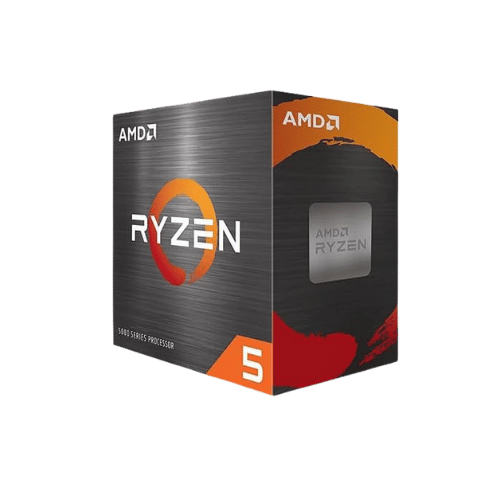
AMD Ryzen 5 5500
Zen 3 (Ryzen 5000 Series / Cezanne)
Socket AM4 (PGA 1331)
6 Cores / 12 Threads
3.6 GHz Base / Up to 4.2 GHz Boost
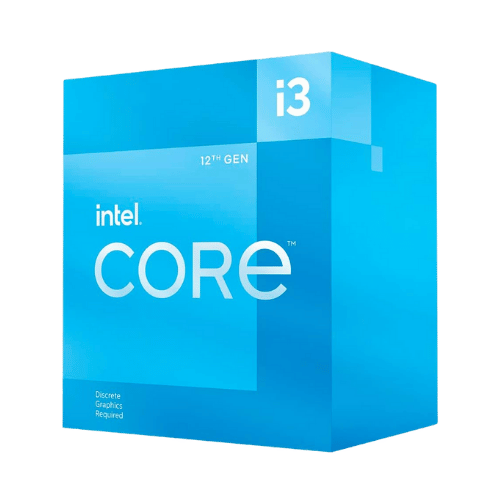
Intel Core i3-12100F
Alder Lake (12th Gen Intel Core)
LGA1700
4 Cores (4 Performance + 0 Efficient) / 8 Threads
3.3 GHz Base / Up to 4.3 GHz Max Turbo
Only the specs that differ are shown here. Winners are highlighted when the data is clear.
+Full specs, pros, and cons
Everything side-by-side with ratings and the full spec list.
Expand
Full specs, pros, and cons
Everything side-by-side with ratings and the full spec list.
Comparison: AMD Ryzen 5 5500 vs Intel Core i3-12100F
AMD Ryzen 5 5500
Intel Core i3-12100F
| Criterion | AMD Ryzen 5 5500 | Intel Core i3-12100F |
|---|---|---|
| Rating | ★4.7(10,043)Amazon | ★4.7(1,621)Amazon |
Architecture Gen | Zen 3 (Ryzen 5000 Series / Cezanne) | Alder Lake (12th Gen Intel Core) |
Socket Platform | Socket AM4 (PGA 1331) | LGA1700 |
Cores Threads | 6 Cores / 12 Threads | 4 Cores (4 Performance + 0 Efficient) / 8 Threads |
Base Boost Clock | 3.6 GHz Base / Up to 4.2 GHz Boost | 3.3 GHz Base / Up to 4.3 GHz Max Turbo |
Cache L2 L3 | 3 MB L2 + 16 MB L3 (19 MB Total) | 12 MB Intel® Smart Cache (L3) + 5 MB L2 |
TDP Power | 65 W | 58 W (Processor Base Power) |
Max Turbo Power | 88 W (PPT) | 89 W (Maximum Turbo Power) |
Process Node | TSMC 7nm FinFET (Monolithic Die) | Intel 7 (10nm Enhanced SuperFin) |
Memory Support | DDR4-3200 MT/s (Official); Dual-Channel; Up to 128 GB; ECC Support: No | DDR5-4800 MT/s / DDR4-3200 MT/s (Up to 128 GB) |
Memory Bandwidth Max | N/A (Dependent on RAM config, theoretical max ~51.2 GB/s @ 3200 MT/s) | 76.8 GB/s |
Pcie Version | PCIe 3.0 | PCIe 5.0 and 4.0 |
Pcie Lanes | 24 Total (20 Usable: x16 Graphics, x4 NVMe) | 20 (16 PCIe 5.0 + 4 PCIe 4.0) |
Igpu | None (Discrete graphics card required) | No (F-Series; Discrete GPU Required) |
Instruction Features | AMD-V, AVX, AVX2, FMA3, AES-NI, SHA, SSE4.1/4.2 | SSE4.1/4.2, AVX2, Intel 64, VT-x/VT-d, AES-NI |
Cooler Included | Yes (Wraith Stealth) | Yes (Intel Laminar RM1) |
Max Temp | 90°C (194°F) TjMax | 100°C (212°F) Tjunction |
Notes Limits | Based on 'Cezanne' silicon (disabled iGPU). Limited to PCIe 3.0 speed (slower than 5600/5600X). Smaller L3 cache (16MB) impacts gaming performance vs. standard Zen 3 (32MB). | F-series requires a discrete graphics card. Excellent pairing with H610 or B660 chipsets for budget builds. |
Chipset Support | A520, B450, B550, X570, X470, X370, B350, A320 (BIOS update required) | Intel 600 and 700 Series (H610, B660, H670, Z690, etc.) |
| Pros |
|
|
| Cons |
|
|
As an Amazon Associate I earn from qualifying purchases. | Check Price on Amazon→ | Check Price on Amazon→ |
AMD Ryzen 5 5500
Zen 3 (Ryzen 5000 Series / Cezanne)
Socket AM4 (PGA 1331)
6 Cores / 12 Threads
3.6 GHz Base / Up to 4.2 GHz Boost
3 MB L2 + 16 MB L3 (19 MB Total)
65 W
Pros
- Most affordable 6-core Zen 3 processor available
- Low power consumption and easy to cool (Wraith Stealth included)
Cons
- PCIe 3.0 limitation restricts maximum speed of modern SSDs and GPUs
- Half the L3 cache of the Ryzen 5 5600, resulting in lower gaming FPS
Intel Core i3-12100F
Alder Lake (12th Gen Intel Core)
LGA1700
4 Cores (4 Performance + 0 Efficient) / 8 Threads
3.3 GHz Base / Up to 4.3 GHz Max Turbo
12 MB Intel® Smart Cache (L3) + 5 MB L2
58 W (Processor Base Power)
Pros
- Superior single-core performance typically beating older flagships
- Highly efficient 58W base power draw
Cons
- Limited to 4 cores (struggles with heavy multi-threaded production workloads)
- No integrated graphics (requires a discrete GPU)
Which one is better?
The Intel Core i3-12100F is the better buy for most people - its superior single-core performance at 4.3 GHz crushes the AMD Ryzen 5 5500.
Who should buy each?
Choose the AMD Ryzen 5 5500 if: you need more cores for multitasking, want the most affordable 6-core processor, or prefer low power consumption.
Choose the Intel Core i3-12100F if: you prioritize single-core performance, want faster PCIe support for future upgrades, or require better efficiency for gaming.
Safe Choice Buyers
More widely tested with 10,043 reviews vs 1,621
→ Choose AMD Ryzen
Most affordable 6-core Priority
Most affordable 6-core Zen 3 processor available
→ Choose AMD Ryzen
Superior single-core performance Priority
Superior single-core performance typically beating older flagships
→ Choose Intel Core
Conclusion
There is no wrong answer here. Focus on the features you will use daily and pick the model that aligns with them.
Bottom line: Both products share a 4.7★ rating, making this comparison particularly close. Your decision should come down to which specific features matter most to you.
Frequently Asked Questions
+Which is better: AMD Ryzen 5 5500 or Intel Core i3-12100F?
AMD Ryzen 5 5500 is the better choice if you prioritize most affordable 6-core zen 3 processor available. Intel Core i3-12100F wins if you value superior single-core performance typically beating older flagships. Both are rated highly (4.7★ vs 4.7★), so consider your specific needs and budget.
+What are the main differences between AMD Ryzen 5 5500 and Intel Core i3-12100F?
Key differences: AMD Ryzen 5 5500 offers most affordable 6-core zen 3 processor available, while Intel Core i3-12100F stands out with superior single-core performance typically beating older flagships. Consider that AMD Ryzen 5 5500 pcie 3.0 limitation restricts maximum speed of modern ssds and gpus. Meanwhile, Intel Core i3-12100F limited to 4 cores (struggles with heavy multi-threaded production workloads). Check the detailed specs table above for a complete comparison.
+What should I prioritize when choosing between these processors?
Focus on the features that matter most for your daily use. AMD Ryzen 5 5500 stands out for most affordable 6-core zen 3 processor available and low power consumption and easy to cool (wraith stealth included). Intel Core i3-12100F excels at superior single-core performance typically beating older flagships and highly efficient 58w base power draw. Check the spec table above for the complete side-by-side breakdown.
Affiliate disclosure
PageBen uses Amazon affiliate links. If you purchase through our links, we may earn a commission at no extra cost to you. This supports independent content for US shoppers.