
ASUS ProArt Display PA278QV 27" WQHD Monitor vs Sceptre C248W-1920RN 23.6" Curved FHD 75Hz Monitor
If you are torn between ASUS ProArt Display PA278QV 27" WQHD Monitor and Sceptre C248W-1920RN 23.6" Curved FHD 75Hz Monitor, this breakdown is for you. We compare specs, pros, and cons so you can decide confidently.
As an Amazon Associate I earn from qualifying purchases.
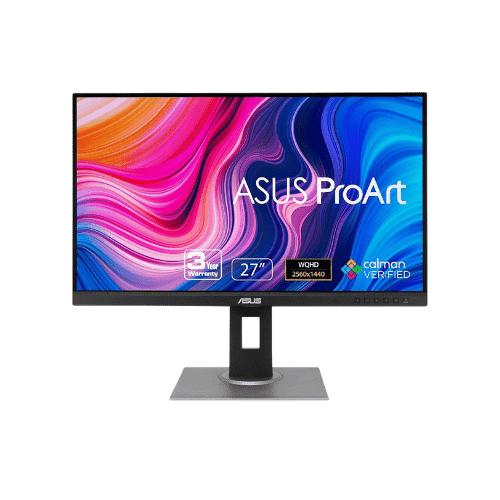
ASUS ProArt Display PA278QV 27" WQHD Monitor

Sceptre C248W-1920RN 23.6" Curved FHD 75Hz Monitor
Comparison: ASUS ProArt Display PA278QV 27" WQHD Monitor vs Sceptre C248W-1920RN 23.6" Curved FHD 75Hz Monitor
ASUS ProArt Display PA278QV 27" WQHD Monitor
Sceptre C248W-1920RN 23.6" Curved FHD 75Hz Monitor
| Criterion | ASUS ProArt Display PA278QV 27" WQHD Monitor | Sceptre C248W-1920RN 23.6" Curved FHD 75Hz Monitor |
|---|---|---|
| Rating | ★4.7(4,200)Amazon | ★4.6(24,344)Amazon |
Screen Size | 27" Viewable (27" Class) | 23.6" Viewable (24" Class) |
Resolution | 2560 x 1440 (WQHD) | 1920 x 1080 (FHD) |
Aspect Ratio | 16:9 | 16:9 |
Screen Type | IPS (In-Plane Switching) | VA (Vertical Alignment) |
Refresh Rate | 75 Hz | 75 Hz |
Response Time | 5 ms (GtG) | 8 ms (GtG) |
Brightness | 350 nits (Typical) | 250 nits (cd/m²) |
Contrast | 1,000:1 (Typical) | 3,000:1 (Static) |
Color Gamut | 100% sRGB / 100% Rec. 709 | 85% sRGB / 70% DCI-P3 |
Color Depth | 16.7M (8-bit) | 16.7M (8-bit) |
HDR | No (Not supported) | No (Not supported) |
Adaptive Sync | Adaptive-Sync (48Hz - 75Hz range) | No (Not supported on 'RN' model) |
Viewing Angles | 178° (H) / 178° (V) | 178° (H) / 178° (V) |
Curvature | Flat | 1800R |
Speakers | 2x 2 W (Stereo) | 2x 2 W (4Ω) |
Ports | 1x Mini DisplayPort 1.2; 1x DisplayPort 1.2; 1x HDMI 1.4; 1x Dual-Link DVI-D; 4x USB 3.0 Downstream; 1x USB-B Upstream; 1x 3.5mm Audio In; 1x 3.5mm Headphone Out | 1x HDMI 1.4; 1x VGA; 1x 3.5mm Headphone Out; 1x 3.5mm Audio In |
USB C | No | No |
Kvm | No | No |
Vesa | 100 x 100 mm | 75 x 75 mm |
Ergonomics | Height (150mm), Swivel (-90° to 90°), Pivot (90°), Tilt (-5° to 35°) | Tilt only (-5° to 15°) |
Power Consumption | 18.6 W (Typical) / 0.5 W (Standby) | 23 W (Typical) / 29 W (Max) / 0.5 W (Standby) |
Weight With Stand | 7,720 g (17.02 lbs) | 2,998 g (6.61 lbs) |
| Pros |
|
|
| Cons |
|
|
As an Amazon Associate I earn from qualifying purchases. | Check Price on Amazon→ | Check Price on Amazon→ |
ASUS ProArt Display PA278QV 27" WQHD Monitor
✓ Pros:
- • Factory calibrated and Calman Verified for excellent color accuracy (Delta E < 2) out of the box
- • Rare inclusion of legacy ports (Mini DisplayPort and DVI-D) maximizes compatibility with older workstations
- • Fully ergonomic stand supports generous height, tilt, swivel, and bidirectional pivot adjustments
- • 75Hz refresh rate with Adaptive-Sync provides a smoother experience than standard 60Hz office monitors
- • Features a 4-port USB 3.0 hub for connecting peripherals directly to the monitor
✗ Cons:
- • Lacks USB-C connectivity for single-cable laptop docking (found on the pricier 'CV' model)
- • No HDR support
- • Standard contrast ratio (1,000:1) means blacks can appear grayish in dark rooms
- • Bezels are slightly thicker than modern 'frameless' competitors
As an Amazon Associate I earn from qualifying purchases.
Sceptre C248W-1920RN 23.6" Curved FHD 75Hz Monitor
✓ Pros:
- • High static contrast ratio (3,000:1) delivers deep blacks typical of VA panels
- • 1800R curvature adds a layer of immersion to the 24-inch viewing experience
- • 75Hz refresh rate offers smoother motion than standard 60Hz office displays
- • Includes both HDMI and legacy VGA ports for broad device compatibility
- • VESA 75x75mm compatible for mounting on monitor arms or walls
✗ Cons:
- • Slow 8ms response time can cause noticeable ghosting in fast-paced games
- • Lacks Adaptive Sync / FreeSync support (unlike the 'RNR' variant)
- • Color gamut (85% sRGB) is narrower than IPS competitors, leading to less vibrant colors
- • Stand offers only basic tilt adjustment with no height or swivel options
As an Amazon Associate I earn from qualifying purchases.
Which one is better?
Based on ratings and feature balance, ASUS ProArt Display PA278QV 27" WQHD Monitor has a slight edge for specific features. Sceptre C248W-1920RN 23.6" Curved FHD 75Hz Monitor remains a strong alternative if its strengths match your needs.
Who should buy each?
ASUS ProArt Display PA278QV 27" WQHD Monitor excels at: Factory calibrated and Calman Verified for excellent color accuracy (Delta E < 2) out of the box, Rare inclusion of legacy ports (Mini DisplayPort and DVI-D) maximizes compatibility with older workstations
Watch for: Lacks USB-C connectivity for single-cable laptop docking (found on the pricier 'CV' model)
Sceptre C248W-1920RN 23.6" Curved FHD 75Hz Monitor excels at: High static contrast ratio (3,000:1) delivers deep blacks typical of VA panels, 1800R curvature adds a layer of immersion to the 24-inch viewing experience
Watch for: Slow 8ms response time can cause noticeable ghosting in fast-paced games
Conclusion
ASUS ProArt Display PA278QV 27" WQHD Monitor and Sceptre C248W-1920RN 23.6" Curved FHD 75Hz Monitor are both solid choices. Match the strengths above to your budget and workflow to make the best call.
Frequently Asked Questions
+Which has better value?
ASUS ProArt Display PA278QV 27" WQHD Monitor excels if you value factory calibrated and calman verified for excellent color accuracy (delta e < 2) out of the box. Sceptre C248W-1920RN 23.6" Curved FHD 75Hz Monitor is better if you prioritize high static contrast ratio (3,000:1) delivers deep blacks typical of va panels. Pick based on your budget and daily use.
+Is this an independent review?
Yes. We use affiliate links for monetization, but recommendations are research-driven and unbiased.
+Do newer models exist?
Check release timelines from the manufacturers and compare pricing before you buy. We refresh this page when major updates land.
Affiliate disclosure
PageBen uses Amazon affiliate links. If you purchase through our links, we may earn a commission at no extra cost to you. This supports independent content for US shoppers.