
ASUS TUF Gaming A15 15.6" 144Hz Gaming Laptop (FA507NU-DS74, Ryzen 7 7735HS/RTX 4050, 16GB/1TB) vs Dell XPS 13 (9340, 2024) — Intel Core Ultra 7 155H
The ASUS TUF Gaming A15 15.6" 144Hz Gaming Laptop (FA507NU-DS74, Ryzen 7 7735HS/RTX 4050, 16GB/1TB) is the heavier hitter here, especially for gaming. With its powerful RTX 4050 GPU and a refresh rate of 144Hz, it’s made for serious gamers who need top performance. On the flip side, the Dell XPS 13 (9340, 2024) — Intel Core Ultra 7 155H shines with a stunning 500 nits display that’s perfect for outdoor use. Key specs: Display: 15.6" vs 13.4" and Refresh: 144 Hz vs 120 Hz.
Why compare these? Both the ASUS TUF Gaming A15 15.6" 144Hz Gaming Laptop (FA507NU-DS74, Ryzen 7 7735HS/RTX 4050, 16GB/1TB) and Dell XPS 13 (9340, 2024) — Intel Core Ultra 7 155H are high-end laptops competing in the same market segment. This makes them direct rivals for buyers looking for high-end features and performance in 2026. Understanding their differences helps you choose the right one for your specific needs.
As an Amazon Associate I earn from qualifying purchases.
Key Differences at a Glance
| Aspect | ASUS TUF | Dell XPS |
|---|---|---|
| User Rating | 4.3★ (70 reviews) | ✓4.5★ (63 reviews) |
| Top Strength | Large 90Wh battery provides excellent endurance for a gaming laptop | Ultra-modern, minimalist design with zero-lattice keyboard and seamless glass palm rest |
| Main Drawback | Screen brightness is limited to 250 nits, making outdoor use difficult | 3K OLED option is locked to 60Hz, unlike the 120Hz IPS panels |
| Market Position | Premium | Premium |
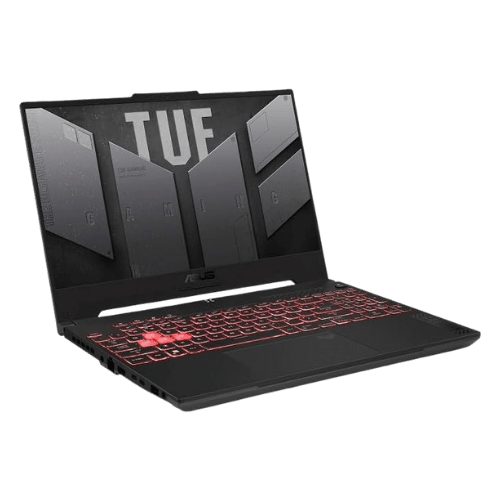
ASUS TUF Gaming A15 15.6" 144Hz Gaming Laptop (FA507NU-DS74, Ryzen 7 7735HS/RTX 4050, 16GB/1TB)
AMD Ryzen 7 7735HS (Zen 3+, 8 cores, up to 4.75 GHz)
NVIDIA GeForce RTX 4050 Laptop GPU (6GB GDDR6, 140W TGP max)
No (Not supported on Ryzen 7 7735HS)
Dual Arc Flow Fans (84-blade) with 4 exhaust vents

Dell XPS 13 (9340, 2024) — Intel Core Ultra 7 155H
Intel Core Ultra 7 155H (Meteor Lake, 16 cores, up to 4.8 GHz)
Intel Arc Graphics (Integrated)
Intel AI Boost (Dedicated NPU)
Air (Dual fans with heat pipes)
Only the specs that differ are shown here. Winners are highlighted when the data is clear.
+Full specs, pros, and cons
Everything side-by-side with ratings and the full spec list.
Expand
Full specs, pros, and cons
Everything side-by-side with ratings and the full spec list.
Comparison: ASUS TUF Gaming A15 15.6" 144Hz Gaming Laptop (FA507NU-DS74, Ryzen 7 7735HS/RTX 4050, 16GB/1TB) vs Dell XPS 13 (9340, 2024) — Intel Core Ultra 7 155H
ASUS TUF Gaming A15 15.6" 144Hz Gaming Laptop (FA507NU-DS74, Ryzen 7 7735HS/RTX 4050, 16GB/1TB)
Dell XPS 13 (9340, 2024) — Intel Core Ultra 7 155H
| Criterion | ASUS TUF Gaming A15 15.6" 144Hz Gaming Laptop (FA507NU-DS74, Ryzen 7 7735HS/RTX 4050, 16GB/1TB) | Dell XPS 13 (9340, 2024) — Intel Core Ultra 7 155H |
|---|---|---|
| Rating | ★4.3(70)Amazon | ★4.5(63)Best Buy |
Processor | AMD Ryzen 7 7735HS (Zen 3+, 8 cores, up to 4.75 GHz) | Intel Core Ultra 7 155H (Meteor Lake, 16 cores, up to 4.8 GHz) |
Graphics | NVIDIA GeForce RTX 4050 Laptop GPU (6GB GDDR6, 140W TGP max) | Intel Arc Graphics (Integrated) |
AI Engine | No (Not supported on Ryzen 7 7735HS) | Intel AI Boost (Dedicated NPU) |
Cooling | Dual Arc Flow Fans (84-blade) with 4 exhaust vents | Air (Dual fans with heat pipes) |
RAM | 16 GB DDR5-4800 (2x 8GB SO-DIMM) | 16 GB, 32 GB, or 64 GB LPDDR5x (7467 MT/s) |
RAM Upgrade | Yes (2x DDR5 SO-DIMM slots, up to 32 GB) | No (Soldered) |
Storage | 1 TB PCIe 4.0 NVMe SSD | 512 GB, 1 TB, or 2 TB PCIe Gen4 NVMe SSD |
Storage Upgrade | Yes (2x M.2 PCIe Gen 4 slots) | Yes (1x M.2 2230/2280 slot; user-replaceable) |
Display Size | 15.6" | 13.4" |
Resolution | 1920 x 1080 (FHD) | Options: 1920x1200 (FHD+), 2560x1600 (QHD+), or 2880x1800 (3K+) |
Aspect Ratio | 16:9 | 16:10 |
Screen Type | IPS-level (Anti-glare) | Options: IPS (FHD+/QHD+) or OLED (3K+ Touch) |
Refresh Rate | 144 Hz (G-SYNC supported) | 120 Hz (FHD+/QHD+ IPS) / 60 Hz (3K+ OLED) |
Brightness | 250 nits (Typical) | 500 nits (IPS) / 400 nits (OLED) |
Color Gamut | 100% sRGB | 100% sRGB (FHD+) / 100% DCI-P3 (QHD+/OLED) |
Keyboard Layout | US English (ANSI) with NumPad | US English (Zero-lattice) with Capacitive Touch Function Row |
Keyboard Backlight | Yes (1-zone RGB Mini-LED) | Yes |
Biometrics | No (Not supported) | Fingerprint reader (Power button) + IR Face Recognition |
Webcam | 720p HD camera | 1080p FHD RGB+IR camera |
USB Ports | 1x USB 4 Type-C (DisplayPort); 1x USB 3.2 Gen 2 Type-C (DisplayPort/PD/G-SYNC); 2x USB 3.2 Gen 1 Type-A | 2x Thunderbolt 4 (USB-C) (Data, Power Delivery, DisplayPort 2.1) |
Video Ports | 1x HDMI 2.1 FRL | DisplayPort 2.1 via Thunderbolt 4 |
Audio Ports | 1x 3.5mm Combo Audio Jack | No (Requires USB-C to 3.5mm adapter) |
Connectivity | Wi-Fi 6 (802.11ax 2x2); Bluetooth 5.3; Gigabit Ethernet (RJ45) | Wi-Fi 7 (Intel Killer BE1750); Bluetooth 5.4 |
Battery | 90 Wh (4-cell Li-ion) | 55 Wh (Integrated) |
Charger | 240 W AC adapter | 60 W USB-C AC adapter |
Weight | 2,200 g (4.85 lbs) | 1,170 g (2.6 lbs) [OLED] / 1,190 g (2.62 lbs) [IPS] |
Build Material | Plastic chassis with Aluminum lid (Mecha Gray) | CNC-machined Aluminum + Gorilla Glass 3 (Victus on OLED) |
Operating System | Windows 11 Home | Windows 11 Home or Pro |
| Pros |
|
|
| Cons |
|
|
As an Amazon Associate I earn from qualifying purchases. | Check Price on Amazon→ | Check Price on Amazon→ |
ASUS TUF Gaming A15 15.6" 144Hz Gaming Laptop (FA507NU-DS74, Ryzen 7 7735HS/RTX 4050, 16GB/1TB)
AMD Ryzen 7 7735HS (Zen 3+, 8 cores, up to 4.75 GHz)
NVIDIA GeForce RTX 4050 Laptop GPU (6GB GDDR6, 140W TGP max)
No (Not supported on Ryzen 7 7735HS)
Dual Arc Flow Fans (84-blade) with 4 exhaust vents
16 GB DDR5-4800 (2x 8GB SO-DIMM)
Yes (2x DDR5 SO-DIMM slots, up to 32 GB)
Pros
- Large 90Wh battery provides excellent endurance for a gaming laptop
- GPU runs at full 140W TGP for maximum RTX 4050 performance
Cons
- Screen brightness is limited to 250 nits, making outdoor use difficult
- Fans can become quite loud under turbo loads
Dell XPS 13 (9340, 2024) — Intel Core Ultra 7 155H
Intel Core Ultra 7 155H (Meteor Lake, 16 cores, up to 4.8 GHz)
Intel Arc Graphics (Integrated)
Intel AI Boost (Dedicated NPU)
Air (Dual fans with heat pipes)
16 GB, 32 GB, or 64 GB LPDDR5x (7467 MT/s)
No (Soldered)
Pros
- Ultra-modern, minimalist design with zero-lattice keyboard and seamless glass palm rest
- IPS panel options (FHD+/QHD+) finally support smooth 120Hz refresh rates
Cons
- 3K OLED option is locked to 60Hz, unlike the 120Hz IPS panels
- No physical function keys; uses capacitive touch row which lacks tactile feedback
Which one is better?
Grab the Dell XPS 13 if you need a more portable option - it's lighter.
Who should buy each?
Choose the ASUS TUF Gaming A15 15.6" 144Hz Gaming Laptop (FA507NU-DS74, Ryzen 7 7735HS/RTX 4050, 16GB/1TB) if: you want top-tier gaming performance with a 144Hz refresh rate, need a long-lasting battery for gaming on the go, or prioritize GPU power for video editing.
Choose the Dell XPS 13 (9340, 2024) — Intel Core Ultra 7 155H if: you prefer a lightweight design for travel, need a bright display for outdoor work, or want a sleek modern aesthetic for professional settings. (13.4" display, 120 Hz refresh)
Quality Seekers
Higher user rating (4.5★ vs 4.3★) indicates better overall satisfaction
→ Choose Dell XPS
Large 90Wh battery Priority
Large 90Wh battery provides excellent endurance for a gaming laptop
→ Choose ASUS TUF
Ultra-modern, minimalist design Priority
Ultra-modern, minimalist design with zero-lattice keyboard and seamless glass palm rest
→ Choose Dell XPS
Conclusion
ASUS TUF Gaming A15 15.6" 144Hz Gaming Laptop (FA507NU-DS74, Ryzen 7 7735HS/RTX 4050, 16GB/1TB) and Dell XPS 13 (9340, 2024) — Intel Core Ultra 7 155H are both solid choices. Match the strengths above to your budget and workflow to make the best call.
Bottom line: The Dell XPS 13 (9340, 2024) — Intel Core Ultra 7 155H leads with a 4.5★ rating versus 4.3★. That said, ASUS TUF Gaming A15 15.6" 144Hz Gaming Laptop (FA507NU-DS74, Ryzen 7 7735HS/RTX 4050, 16GB/1TB) could still be the right pick depending on your specific priorities.
Frequently Asked Questions
+Which is better: ASUS TUF Gaming A15 15.6" 144Hz Gaming Laptop (FA507NU-DS74, Ryzen 7 7735HS/RTX 4050, 16GB/1TB) or Dell XPS 13 (9340, 2024) — Intel Core Ultra 7 155H?
ASUS TUF Gaming A15 15.6" 144Hz Gaming Laptop (FA507NU-DS74, Ryzen 7 7735HS/RTX 4050, 16GB/1TB) is the better choice if you prioritize large 90wh battery provides excellent endurance for a gaming laptop. Dell XPS 13 (9340, 2024) — Intel Core Ultra 7 155H wins if you value ultra-modern, minimalist design with zero-lattice keyboard and seamless glass palm rest. Both are rated highly (4.3★ vs 4.5★), so consider your specific needs and budget.
+What are the main differences between ASUS TUF Gaming A15 15.6" 144Hz Gaming Laptop (FA507NU-DS74, Ryzen 7 7735HS/RTX 4050, 16GB/1TB) and Dell XPS 13 (9340, 2024) — Intel Core Ultra 7 155H?
Key differences: ASUS TUF Gaming A15 15.6" 144Hz Gaming Laptop (FA507NU-DS74, Ryzen 7 7735HS/RTX 4050, 16GB/1TB) offers large 90wh battery provides excellent endurance for a gaming laptop, while Dell XPS 13 (9340, 2024) — Intel Core Ultra 7 155H stands out with ultra-modern, minimalist design with zero-lattice keyboard and seamless glass palm rest. Consider that ASUS TUF Gaming A15 15.6" 144Hz Gaming Laptop (FA507NU-DS74, Ryzen 7 7735HS/RTX 4050, 16GB/1TB) screen brightness is limited to 250 nits, making outdoor use difficult. Meanwhile, Dell XPS 13 (9340, 2024) — Intel Core Ultra 7 155H 3k oled option is locked to 60hz, unlike the 120hz ips panels. Check the detailed specs table above for a complete comparison.
+What should I prioritize when choosing between these laptops?
Focus on the features that matter most for your daily use. ASUS TUF Gaming A15 15.6" 144Hz Gaming Laptop (FA507NU-DS74, Ryzen 7 7735HS/RTX 4050, 16GB/1TB) stands out for large 90wh battery provides excellent endurance for a gaming laptop and gpu runs at full 140w tgp for maximum rtx 4050 performance. Dell XPS 13 (9340, 2024) — Intel Core Ultra 7 155H excels at ultra-modern, minimalist design with zero-lattice keyboard and seamless glass palm rest and ips panel options (fhd+/qhd+) finally support smooth 120hz refresh rates. Check the spec table above for the complete side-by-side breakdown.
Affiliate disclosure
PageBen uses Amazon affiliate links. If you purchase through our links, we may earn a commission at no extra cost to you. This supports independent content for US shoppers.