
ASUS VG248QG 24" G-SYNC Gaming Monitor vs LG 27GR93U-B 27" UltraGear 4K 144Hz IPS Gaming Monitor
The ASUS VG248QG 24" G-SYNC Gaming Monitor takes the lead in refresh rate at 165Hz compared to the LG 27GR93U-B 27" UltraGear 4K 144Hz IPS Gaming Monitor's 144Hz. This higher refresh rate makes it a no-brainer for competitive gaming, where every millisecond counts. However, the LG monitor offers a stunning 3840 x 2160 resolution, delivering four times the detail of the ASUS. In real-world use, this means richer visuals and more immersive gaming experiences, especially if you're diving into the latest AAA titles in 2026. Key specs: Display: 24" vs 27" and Refresh: 165 Hz vs 144 Hz.
Why compare these? Both the ASUS VG248QG 24" G-SYNC Gaming Monitor and LG 27GR93U-B 27" UltraGear 4K 144Hz IPS Gaming Monitor are mid-range monitors competing in the same market segment. This makes them direct rivals for buyers looking for mid-range features and performance in 2026. Understanding their differences helps you choose the right one for your specific needs.
As an Amazon Associate I earn from qualifying purchases.
Key Differences at a Glance
| Aspect | ASUS VG248QG | LG 27GR93U-B |
|---|---|---|
| User Rating | ✓4.5★ (9,209 reviews) | 4.3★ (488 reviews) |
| Top Strength | Ultra-fast 0.5ms (GtG) response time virtually eliminates motion blur and ghosting | HDMI 2.1 ports support full 4K at 144Hz (PC) and 120Hz (PS5/Xbox Series X) without chroma subsampling |
| Main Drawback | TN panel viewing angles (170°/160°) cause color shifting when viewed off-center | No USB-C input or built-in KVM switch (unlike Gigabyte M27U/M28U competitors) |
| Market Position | Mid-range | Mid-range |
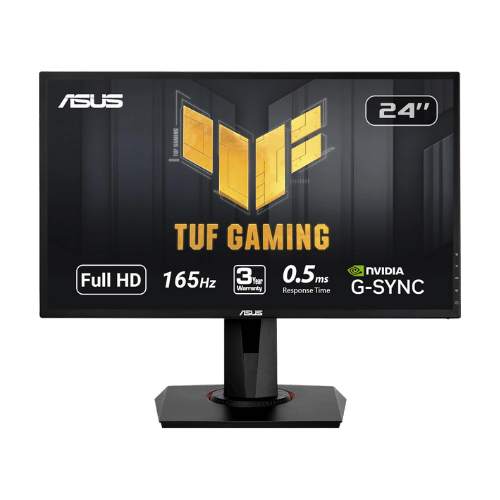
ASUS VG248QG 24" G-SYNC Gaming Monitor
24" Viewable (24" Class)
1920 x 1080 (FHD)
16:9
TN (Twisted Nematic)
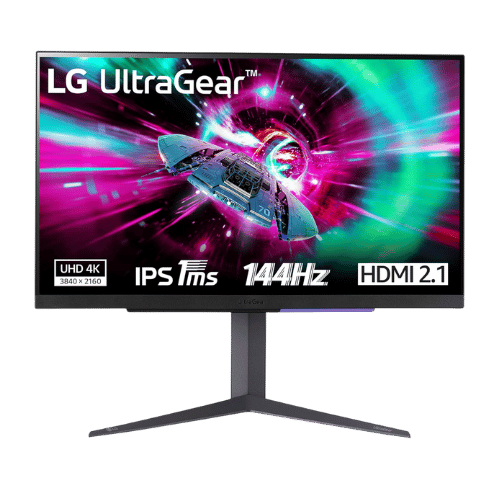
LG 27GR93U-B 27" UltraGear 4K 144Hz IPS Gaming Monitor
27" Viewable (27" Class)
3840 x 2160 (4K UHD)
16:9
IPS (In-Plane Switching)
Only the specs that differ are shown here. Winners are highlighted when the data is clear.
+Full specs, pros, and cons
Everything side-by-side with ratings and the full spec list.
Expand
Full specs, pros, and cons
Everything side-by-side with ratings and the full spec list.
Comparison: ASUS VG248QG 24" G-SYNC Gaming Monitor vs LG 27GR93U-B 27" UltraGear 4K 144Hz IPS Gaming Monitor
ASUS VG248QG 24" G-SYNC Gaming Monitor
LG 27GR93U-B 27" UltraGear 4K 144Hz IPS Gaming Monitor
| Criterion | ASUS VG248QG 24" G-SYNC Gaming Monitor | LG 27GR93U-B 27" UltraGear 4K 144Hz IPS Gaming Monitor |
|---|---|---|
| Rating | ★4.5(9,209)Amazon | ★4.3(488)Amazon |
Screen Size | 24" Viewable (24" Class) | 27" Viewable (27" Class) |
Resolution | 1920 x 1080 (FHD) | 3840 x 2160 (4K UHD) |
Aspect Ratio | 16:9 | 16:9 |
Screen Type | TN (Twisted Nematic) | IPS (In-Plane Switching) |
Refresh Rate | 165 Hz (Overclockable; via DisplayPort) | 144 Hz (via DisplayPort and HDMI 2.1) |
Response Time | 0.5 ms (GtG Min) / 1 ms (GtG Avg) | 1 ms (GtG Faster) |
Brightness | 350 nits (cd/m²) | 400 nits (Typical) / 500 nits (HDR Peak) |
Contrast | 1,000:1 (Static) / 100,000,000:1 (ASCR Dynamic) | 1,000:1 (Typical) |
Color Gamut | 72% NTSC (Approx. 99% sRGB) | 95% DCI-P3 (CIE1976) |
Color Depth | 16.7M (6-bit + FRC) | 1.07 Billion (10-bit) |
HDR | No (Not supported) | VESA DisplayHDR 400 (HDR10) |
Adaptive Sync | NVIDIA G-SYNC Compatible / AMD FreeSync Premium | AMD FreeSync Premium / NVIDIA G-SYNC Compatible |
Viewing Angles | 170° (H) / 160° (V) | 178° (H) / 178° (V) |
Curvature | Flat | Flat |
Speakers | 2x 2 W (Stereo) | No (None) |
Ports | 1x DisplayPort 1.2; 1x HDMI 1.4; 1x Dual-Link DVI-D; 1x 3.5mm Audio In; 1x 3.5mm Headphone Out | 2x HDMI 2.1; 1x DisplayPort 1.4 (DSC); 1x USB 3.0 Upstream; 2x USB 3.0 Downstream; 1x 4-Pole Headphone Out (DTS Headphone:X) |
USB C | No | No |
Kvm | No | No |
Vesa | 100 x 100 mm | 100 x 100 mm |
Ergonomics | Height (130mm), Swivel (±90°), Pivot (±90°), Tilt (+33° to -5°) | Height (110mm), Pivot (90°), Tilt (-5° to 15°); No Swivel |
Power Consumption | 40 W (Typical) / 0.5 W (Standby) | 50 W (Typical) / 55 W (Max) / 0.5 W (Sleep) |
Weight With Stand | 5,200 g (11.46 lbs) | 6,400 g (14.1 lbs) |
| Pros |
|
|
| Cons |
|
|
As an Amazon Associate I earn from qualifying purchases. | Check Price on Amazon→ | Check Price on Amazon→ |
ASUS VG248QG 24" G-SYNC Gaming Monitor
24" Viewable (24" Class)
1920 x 1080 (FHD)
16:9
TN (Twisted Nematic)
165 Hz (Overclockable; via DisplayPort)
0.5 ms (GtG Min) / 1 ms (GtG Avg)
Pros
- Ultra-fast 0.5ms (GtG) response time virtually eliminates motion blur and ghosting
- 165Hz refresh rate offers competitive fluidity for FPS titles (via DisplayPort)
Cons
- TN panel viewing angles (170°/160°) cause color shifting when viewed off-center
- Color accuracy is inferior to modern IPS panels (washed out blacks/colors)
LG 27GR93U-B 27" UltraGear 4K 144Hz IPS Gaming Monitor
27" Viewable (27" Class)
3840 x 2160 (4K UHD)
16:9
IPS (In-Plane Switching)
144 Hz (via DisplayPort and HDMI 2.1)
1 ms (GtG Faster)
Pros
- HDMI 2.1 ports support full 4K at 144Hz (PC) and 120Hz (PS5/Xbox Series X) without chroma subsampling
- Excellent motion clarity with 1ms GtG response time and official G-SYNC Compatibility
Cons
- No USB-C input or built-in KVM switch (unlike Gigabyte M27U/M28U competitors)
- Contrast is standard for IPS (1,000:1), meaning blacks appear grayish in dark rooms
Which one is better?
The LG 27GR93U-B 27" UltraGear 4K 144Hz IPS Gaming Monitor is the better buy for most people - its 3840 x 2160 resolution crushes the ASUS' 1920 x 1080. That said, grab the ASUS VG248QG 24" G-SYNC Gaming Monitor if you prioritize faster refresh rates for competitive gaming - it's 21Hz faster.
Who should buy each?
Choose the ASUS VG248QG 24" G-SYNC Gaming Monitor if: you prioritize ultra-fast response times for FPS gaming, require legacy DVI-D connections for older setups, or want to save money without sacrificing performance. (24" display, 165 Hz refresh)
Choose the LG 27GR93U-B 27" UltraGear 4K 144Hz IPS Gaming Monitor if: you want stunning 4K visuals for immersive gaming, enjoy console gaming at high refresh rates, or need a monitor that excels in color accuracy for design work.
Quality Seekers
Higher user rating (4.5★ vs 4.3★) indicates better overall satisfaction
→ Choose ASUS VG248QG
Safe Choice Buyers
More widely tested with 9,209 reviews vs 488
→ Choose ASUS VG248QG
Ultra-fast 0.5ms (GtG) Priority
Ultra-fast 0.5ms (GtG) response time virtually eliminates motion blur and ghosting
→ Choose ASUS VG248QG
HDMI 2.1 ports Priority
HDMI 2.1 ports support full 4K at 144Hz (PC) and 120Hz (PS5/Xbox Series X) without chroma subsampling
→ Choose LG 27GR93U-B
Conclusion
There is no wrong answer here. Focus on the features you will use daily and pick the model that aligns with them.
Bottom line: The ASUS VG248QG 24" G-SYNC Gaming Monitor edges ahead with a 4.5★ rating compared to 4.3★. However, LG 27GR93U-B 27" UltraGear 4K 144Hz IPS Gaming Monitor remains a strong contender if its strengths align better with your needs.
Frequently Asked Questions
+Which is better: ASUS VG248QG 24" G-SYNC Gaming Monitor or LG 27GR93U-B 27" UltraGear 4K 144Hz IPS Gaming Monitor?
ASUS VG248QG 24" G-SYNC Gaming Monitor is the better choice if you prioritize ultra-fast 0.5ms (gtg) response time virtually eliminates motion blur and ghosting. LG 27GR93U-B 27" UltraGear 4K 144Hz IPS Gaming Monitor wins if you value hdmi 2.1 ports support full 4k at 144hz (pc) and 120hz (ps5/xbox series x) without chroma subsampling. Both are rated highly (4.5★ vs 4.3★), so consider your specific needs and budget.
+What are the main differences between ASUS VG248QG 24" G-SYNC Gaming Monitor and LG 27GR93U-B 27" UltraGear 4K 144Hz IPS Gaming Monitor?
Key differences: ASUS VG248QG 24" G-SYNC Gaming Monitor offers ultra-fast 0.5ms (gtg) response time virtually eliminates motion blur and ghosting, while LG 27GR93U-B 27" UltraGear 4K 144Hz IPS Gaming Monitor stands out with hdmi 2.1 ports support full 4k at 144hz (pc) and 120hz (ps5/xbox series x) without chroma subsampling. Consider that ASUS VG248QG 24" G-SYNC Gaming Monitor tn panel viewing angles (170°/160°) cause color shifting when viewed off-center. Meanwhile, LG 27GR93U-B 27" UltraGear 4K 144Hz IPS Gaming Monitor no usb-c input or built-in kvm switch (unlike gigabyte m27u/m28u competitors). Check the detailed specs table above for a complete comparison.
+What should I prioritize when choosing between these monitors?
Focus on the features that matter most for your daily use. ASUS VG248QG 24" G-SYNC Gaming Monitor stands out for ultra-fast 0.5ms (gtg) response time virtually eliminates motion blur and ghosting and 165hz refresh rate offers competitive fluidity for fps titles (via displayport). LG 27GR93U-B 27" UltraGear 4K 144Hz IPS Gaming Monitor excels at hdmi 2.1 ports support full 4k at 144hz (pc) and 120hz (ps5/xbox series x) without chroma subsampling and excellent motion clarity with 1ms gtg response time and official g-sync compatibility. Check the spec table above for the complete side-by-side breakdown.
Affiliate disclosure
PageBen uses Amazon affiliate links. If you purchase through our links, we may earn a commission at no extra cost to you. This supports independent content for US shoppers.