
ASUS ZenScreen MB16ACE 15.6" FHD Portable Monitor vs Sceptre C248W-1920RN 23.6" Curved FHD 75Hz Monitor
ASUS ZenScreen MB16ACE 15.6" FHD Portable Monitor vs Sceptre C248W-1920RN 23.6" Curved FHD 75Hz Monitor: which is the right fit? We cover performance, value, and use cases to make the call easier.
As an Amazon Associate I earn from qualifying purchases.
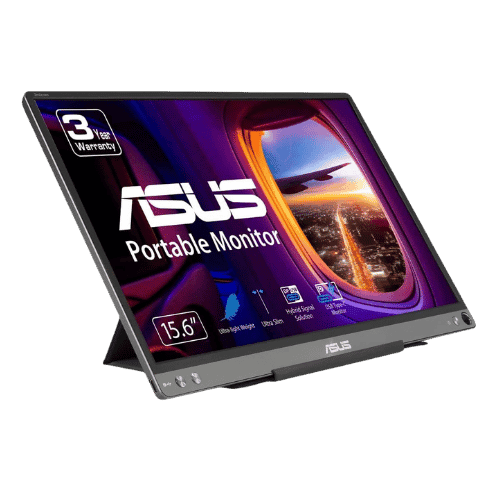
ASUS ZenScreen MB16ACE 15.6" FHD Portable Monitor

Sceptre C248W-1920RN 23.6" Curved FHD 75Hz Monitor
Comparison: ASUS ZenScreen MB16ACE 15.6" FHD Portable Monitor vs Sceptre C248W-1920RN 23.6" Curved FHD 75Hz Monitor
ASUS ZenScreen MB16ACE 15.6" FHD Portable Monitor
Sceptre C248W-1920RN 23.6" Curved FHD 75Hz Monitor
| Criterion | ASUS ZenScreen MB16ACE 15.6" FHD Portable Monitor | Sceptre C248W-1920RN 23.6" Curved FHD 75Hz Monitor |
|---|---|---|
| Rating | ★4.6(1,342)Best Buy | ★4.6(24,344)Amazon |
Screen Size | 15.6" (39.6 cm) | 23.6" Viewable (24" Class) |
Resolution | 1920 x 1080 (FHD) | 1920 x 1080 (FHD) |
Aspect Ratio | 16:9 | 16:9 |
Screen Type | IPS | VA (Vertical Alignment) |
Refresh Rate | 60 Hz | 75 Hz |
Response Time | 5 ms (GtG) | 8 ms (GtG) |
Brightness | 220 cd/m² (Typical); 250 cd/m² (Peak) | 250 nits (cd/m²) |
Contrast | 800:1 (Static) | 3,000:1 (Static) |
Color Gamut | 45% NTSC (approx. 62-70% sRGB) | 85% sRGB / 70% DCI-P3 |
Color Depth | 6-bit (262K colors) | 16.7M (8-bit) |
HDR | No (Not supported) | No (Not supported) |
Adaptive Sync | No (Not supported) | No (Not supported on 'RN' model) |
Viewing Angles | 178° (H) / 178° (V) | 178° (H) / 178° (V) |
Curvature | No (Flat panel) | 1800R |
Speakers | No | 2x 2 W (4Ω) |
Ports | 1x USB-C (Hybrid Signal Solution: Supports DP Alt Mode & USB 3.0 via driver) | 1x HDMI 1.4; 1x VGA; 1x 3.5mm Headphone Out; 1x 3.5mm Audio In |
USB C | Yes (1x USB-C for Video + Power) | No |
Kvm | No | No |
Vesa | No (Not supported) | 75 x 75 mm |
Ergonomics | Smart Case (Tilt); Auto-rotation (Portrait/Landscape via software); Pen hole prop | Tilt only (-5° to 15°) |
Power Consumption | 8 W (Typical); 0 W (Hard Switch Off) | 23 W (Typical) / 29 W (Max) / 0.5 W (Standby) |
Weight With Stand | 710 g (1.57 lbs) [Monitor only]; Case adds approx. 400g | 2,998 g (6.61 lbs) |
| Pros |
|
|
| Cons |
|
|
As an Amazon Associate I earn from qualifying purchases. | Check Price on Amazon→ | Check Price on Amazon→ |
ASUS ZenScreen MB16ACE 15.6" FHD Portable Monitor
✓ Pros:
- • Hybrid Signal Solution allows connection to both USB-C and USB-A (via driver) devices
- • Ultra-lightweight (1.57 lbs) and slim (8mm) design fits easily in laptop bags
- • Smart Case included; doubles as a protective cover and adjustable stand
- • Auto-rotation feature (Windows only) automatically adjusts orientation for documents
- • Includes a 'Pen Hole' that allows you to prop up the monitor with a pen if the case is not used
✗ Cons:
- • Low peak brightness (220 nits typical) makes it difficult to use in bright environments
- • 6-bit color depth (262K colors) results in inferior color accuracy and gradients
- • No built-in speakers or audio output jack
- • Does not have a built-in battery; drains the connected laptop's power
- • Lacks a standard 1/4" tripod socket (unlike the upgraded MB16ACV model)
As an Amazon Associate I earn from qualifying purchases.
Sceptre C248W-1920RN 23.6" Curved FHD 75Hz Monitor
✓ Pros:
- • High static contrast ratio (3,000:1) delivers deep blacks typical of VA panels
- • 1800R curvature adds a layer of immersion to the 24-inch viewing experience
- • 75Hz refresh rate offers smoother motion than standard 60Hz office displays
- • Includes both HDMI and legacy VGA ports for broad device compatibility
- • VESA 75x75mm compatible for mounting on monitor arms or walls
✗ Cons:
- • Slow 8ms response time can cause noticeable ghosting in fast-paced games
- • Lacks Adaptive Sync / FreeSync support (unlike the 'RNR' variant)
- • Color gamut (85% sRGB) is narrower than IPS competitors, leading to less vibrant colors
- • Stand offers only basic tilt adjustment with no height or swivel options
As an Amazon Associate I earn from qualifying purchases.
Which one is better?
ASUS ZenScreen MB16ACE 15.6" FHD Portable Monitor is stronger in specific features, but Sceptre C248W-1920RN 23.6" Curved FHD 75Hz Monitor could still be the better pick if you value its unique advantages.
Who should buy each?
Expert take:
- ASUS ZenScreen MB16ACE 15.6" FHD Portable Monitor suits buyers who need Hybrid Signal Solution allows connection to both USB-C and USB-A (via driver) devices, Ultra-lightweight (1.57 lbs) and slim (8mm) design fits easily in laptop bags
- Sceptre C248W-1920RN 23.6" Curved FHD 75Hz Monitor suits buyers who want High static contrast ratio (3,000:1) delivers deep blacks typical of VA panels, 1800R curvature adds a layer of immersion to the 24-inch viewing experience
Conclusion
There is no wrong answer here. Focus on the features you will use daily and pick the model that aligns with them.
Frequently Asked Questions
+Which has better value?
ASUS ZenScreen MB16ACE 15.6" FHD Portable Monitor excels if you value hybrid signal solution allows connection to both usb-c and usb-a (via driver) devices. Sceptre C248W-1920RN 23.6" Curved FHD 75Hz Monitor is better if you prioritize high static contrast ratio (3,000:1) delivers deep blacks typical of va panels. Pick based on your budget and daily use.
+Is this an independent review?
Yes. We use affiliate links for monetization, but recommendations are research-driven and unbiased.
+Do newer models exist?
Check release timelines from the manufacturers and compare pricing before you buy. We refresh this page when major updates land.
Affiliate disclosure
PageBen uses Amazon affiliate links. If you purchase through our links, we may earn a commission at no extra cost to you. This supports independent content for US shoppers.