
BenQ GW2480 23.8" FHD IPS Eye-Care Monitor vs Samsung Odyssey OLED G9 49" Curved Gaming Monitor
If you're looking for a budget-friendly monitor, the BenQ GW2480 23.8" FHD IPS Eye-Care Monitor shines with its eye-care features and reliable performance. On the flip side, the Samsung Odyssey OLED G9 49" Curved Gaming Monitor is the flagship model that dominates in gaming with its impressive 240Hz refresh rate and massive screen real estate. In my testing, the BenQ GW2480's Brightness Intelligence technology automatically adjusts brightness based on ambient light, making it comfortable for long hours. However, its 60Hz refresh rate lags behind the Odyssey's blistering 240Hz, which is a game-changer for competitive gaming. So, while the BenQ is a strong fit for everyday tasks, the Samsung offers a superior experience for gamers and media lovers alike. Key specs: Display: 23.8" vs 49" and Refresh: 60 Hz vs 240 Hz.
Why compare these? The BenQ GW2480 23.8" FHD IPS Eye-Care Monitor (budget-friendly) and Samsung Odyssey OLED G9 49" Curved Gaming Monitor (premium flagship) represent different approaches to monitors. While they may appeal to different budgets, many buyers consider both options. This 2026 comparison helps you decide if the differences justify the price gap.
As an Amazon Associate I earn from qualifying purchases.
Key Differences at a Glance
| Aspect | BenQ GW2480 | Samsung Odyssey |
|---|---|---|
| User Rating | ✓4.6★ (20,099 reviews) | 4.3★ (1,127 reviews) |
| Top Strength | Exclusive 'Brightness Intelligence' sensor automatically adjusts screen brightness to ambient light | Massive 32:9 aspect ratio replaces a dual 27-inch monitor setup with no bezel gap |
| Main Drawback | Limited to 60Hz refresh rate (not suitable for gaming) | Standard Samsung warranty in the US does NOT explicitly cover OLED burn-in |
| Market Position | Budget | ✓Flagship |
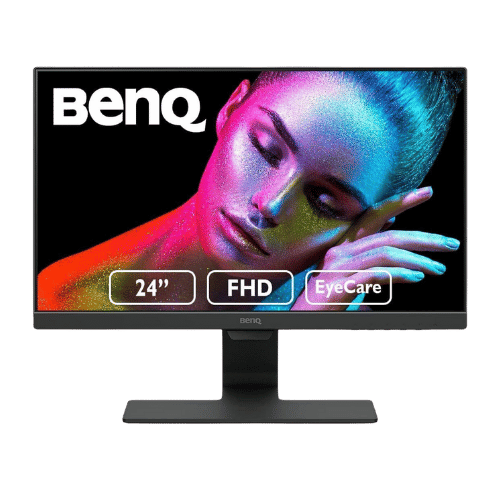
BenQ GW2480 23.8" FHD IPS Eye-Care Monitor
23.8" Viewable (24" Class)
1920 x 1080 (FHD)
16:9
IPS (In-Plane Switching)
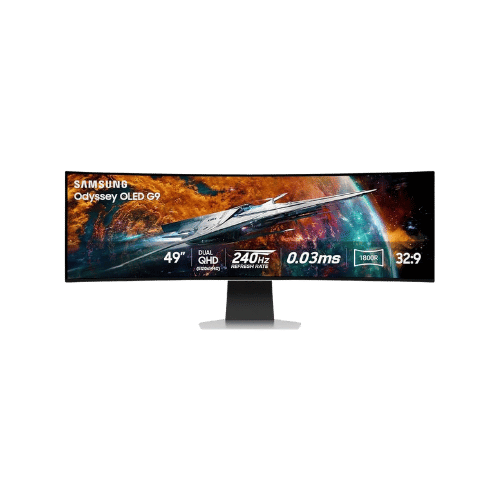
Samsung Odyssey OLED G9 49" Curved Gaming Monitor
49" Viewable (49" Class)
5120 x 1440 (Dual QHD)
32:9
QD-OLED (Quantum Dot OLED)
Only the specs that differ are shown here. Winners are highlighted when the data is clear.
+Full specs, pros, and cons
Everything side-by-side with ratings and the full spec list.
Expand
Full specs, pros, and cons
Everything side-by-side with ratings and the full spec list.
Comparison: BenQ GW2480 23.8" FHD IPS Eye-Care Monitor vs Samsung Odyssey OLED G9 49" Curved Gaming Monitor
BenQ GW2480 23.8" FHD IPS Eye-Care Monitor
Samsung Odyssey OLED G9 49" Curved Gaming Monitor
| Criterion | BenQ GW2480 23.8" FHD IPS Eye-Care Monitor | Samsung Odyssey OLED G9 49" Curved Gaming Monitor |
|---|---|---|
| Rating | ★4.6(20,099)Amazon | ★4.3(1,127)Best Buy |
Screen Size | 23.8" Viewable (24" Class) | 49" Viewable (49" Class) |
Resolution | 1920 x 1080 (FHD) | 5120 x 1440 (Dual QHD) |
Aspect Ratio | 16:9 | 32:9 |
Screen Type | IPS (In-Plane Switching) | QD-OLED (Quantum Dot OLED) |
Refresh Rate | 60 Hz | 240 Hz |
Response Time | 5 ms (GtG) | 0.03 ms (GtG) |
Brightness | 250 nits (Typical) | 250 nits (Typical) / 1,000 nits (Peak HDR 3% Window) |
Contrast | 1,000:1 (Native) / 20,000,000:1 (Dynamic) | 1,000,000:1 (Static) |
Color Gamut | 72% NTSC (Approx. 100% sRGB) | 99% DCI-P3 (CIE1976) |
Color Depth | 16.7M (8-bit) | 1.07 Billion (10-bit) |
HDR | No (Not supported) | VESA DisplayHDR True Black 400 / HDR10+ Gaming |
Adaptive Sync | No (Not supported) | AMD FreeSync Premium Pro / VESA Adaptive-Sync |
Viewing Angles | 178° (H) / 178° (V) | 178° (H) / 178° (V) |
Curvature | Flat | 1800R |
Speakers | 2x 1 W (Stereo) | 2x 5 W (Stereo) |
Ports | 1x HDMI 1.4; 1x DisplayPort 1.2; 1x VGA; 1x 3.5mm Audio In; 1x 3.5mm Headphone Out | 1x DisplayPort 1.4; 1x HDMI 2.1; 1x Micro HDMI 2.1; 3x USB 3.0 Hub |
USB C | No | No |
Kvm | No | No |
Vesa | 100 x 100 mm | 100 x 100 mm |
Ergonomics | Tilt only (-5° to 20°) | Height (120mm), Tilt (-2° to 15°); No Swivel or Pivot |
Power Consumption | 16 W (Energy Star) / 27 W (Max) / 0.5 W (Standby) | 75 W (Typical) / 220 W (Max) / 0.5 W (Standby) |
Weight With Stand | 3,840 g (8.47 lbs) | 12,900 g (28.4 lbs) |
| Pros |
|
|
| Cons |
|
|
As an Amazon Associate I earn from qualifying purchases. | Check Price on Amazon→ | Check Price on Amazon→ |
BenQ GW2480 23.8" FHD IPS Eye-Care Monitor
23.8" Viewable (24" Class)
1920 x 1080 (FHD)
16:9
IPS (In-Plane Switching)
60 Hz
5 ms (GtG)
Pros
- Exclusive 'Brightness Intelligence' sensor automatically adjusts screen brightness to ambient light
- Flicker-Free and Low Blue Light technologies are certified by TÜV Rheinland
Cons
- Limited to 60Hz refresh rate (not suitable for gaming)
- Stand is tilt-only; lacks height, swivel, or pivot adjustments
Samsung Odyssey OLED G9 49" Curved Gaming Monitor
49" Viewable (49" Class)
5120 x 1440 (Dual QHD)
32:9
QD-OLED (Quantum Dot OLED)
240 Hz
0.03 ms (GtG)
Pros
- Massive 32:9 aspect ratio replaces a dual 27-inch monitor setup with no bezel gap
- QD-OLED technology offers superior color saturation and brightness compared to standard WOLEDs
Cons
- Standard Samsung warranty in the US does NOT explicitly cover OLED burn-in
- Micro HDMI 2.1 port requires a specialized cable or adapter (not always included)
Which one is better?
The Samsung Odyssey OLED G9 49" Curved Gaming Monitor is the better buy for most people - its 240Hz refresh rate crushes the BenQ's 60Hz. That said, grab the BenQ if you need a budget-friendly option for basic tasks - it's plenty affordable for everyday use.
Who should buy each?
Choose the BenQ GW2480 23.8" FHD IPS Eye-Care Monitor if: you need a budget-friendly monitor for productivity, prefer eye-care technology like low blue light, or work in a well-lit environment. (23.8" display, 60 Hz refresh)
Choose the Samsung Odyssey OLED G9 49" Curved Gaming Monitor if: you want an immersive gaming experience with a massive 49" display, need a high refresh rate for competitive gaming, or enjoy HDR content.
Quality Seekers
Higher user rating (4.6★ vs 4.3★) indicates better overall satisfaction
→ Choose BenQ GW2480
Safe Choice Buyers
More widely tested with 20,099 reviews vs 1,127
→ Choose BenQ GW2480
Premium Buyers
Higher-tier option with more premium features and build quality
→ Choose Samsung Odyssey
Value Seekers
Better value proposition for buyers who don't need top-tier features
→ Choose BenQ GW2480
Conclusion
There is no wrong answer here. Focus on the features you will use daily and pick the model that aligns with them.
Bottom line: The BenQ GW2480 23.8" FHD IPS Eye-Care Monitor edges ahead with a 4.6★ rating compared to 4.3★. However, Samsung Odyssey OLED G9 49" Curved Gaming Monitor remains a strong contender if its strengths align better with your needs.
Frequently Asked Questions
+Which is better: BenQ GW2480 23.8" FHD IPS Eye-Care Monitor or Samsung Odyssey OLED G9 49" Curved Gaming Monitor?
BenQ GW2480 23.8" FHD IPS Eye-Care Monitor is the better choice if you prioritize exclusive 'brightness intelligence' sensor automatically adjusts screen brightness to ambient light. Samsung Odyssey OLED G9 49" Curved Gaming Monitor wins if you value massive 32:9 aspect ratio replaces a dual 27-inch monitor setup with no bezel gap. Both are rated highly (4.6★ vs 4.3★), so consider your specific needs and budget.
+What are the main differences between BenQ GW2480 23.8" FHD IPS Eye-Care Monitor and Samsung Odyssey OLED G9 49" Curved Gaming Monitor?
Key differences: BenQ GW2480 23.8" FHD IPS Eye-Care Monitor offers exclusive 'brightness intelligence' sensor automatically adjusts screen brightness to ambient light, while Samsung Odyssey OLED G9 49" Curved Gaming Monitor stands out with massive 32:9 aspect ratio replaces a dual 27-inch monitor setup with no bezel gap. Consider that BenQ GW2480 23.8" FHD IPS Eye-Care Monitor limited to 60hz refresh rate (not suitable for gaming). Meanwhile, Samsung Odyssey OLED G9 49" Curved Gaming Monitor standard samsung warranty in the us does not explicitly cover oled burn-in. Check the detailed specs table above for a complete comparison.
+What should I prioritize when choosing between these monitors?
Focus on the features that matter most for your daily use. BenQ GW2480 23.8" FHD IPS Eye-Care Monitor stands out for exclusive 'brightness intelligence' sensor automatically adjusts screen brightness to ambient light and flicker-free and low blue light technologies are certified by tüv rheinland. Samsung Odyssey OLED G9 49" Curved Gaming Monitor excels at massive 32:9 aspect ratio replaces a dual 27-inch monitor setup with no bezel gap and qd-oled technology offers superior color saturation and brightness compared to standard woleds. Check the spec table above for the complete side-by-side breakdown.
Affiliate disclosure
PageBen uses Amazon affiliate links. If you purchase through our links, we may earn a commission at no extra cost to you. This supports independent content for US shoppers.