
Dell S2721QS 27" 4K UHD IPS Monitor vs ASUS VG248QG 24" G-SYNC Gaming Monitor
If you are torn between Dell S2721QS 27" 4K UHD IPS Monitor and ASUS VG248QG 24" G-SYNC Gaming Monitor, this breakdown is for you. We compare specs, pros, and cons so you can decide confidently.
As an Amazon Associate I earn from qualifying purchases.
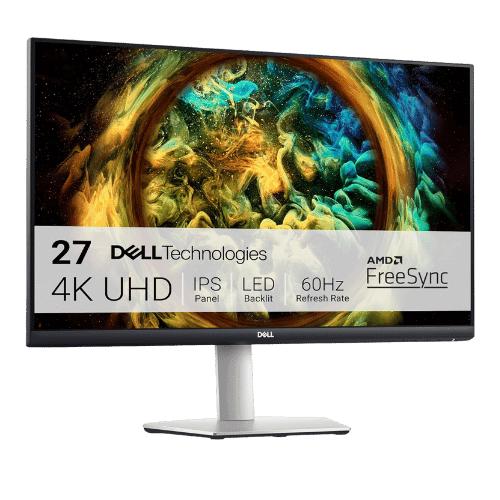
Dell S2721QS 27" 4K UHD IPS Monitor

ASUS VG248QG 24" G-SYNC Gaming Monitor
Comparison: Dell S2721QS 27" 4K UHD IPS Monitor vs ASUS VG248QG 24" G-SYNC Gaming Monitor
Dell S2721QS 27" 4K UHD IPS Monitor
ASUS VG248QG 24" G-SYNC Gaming Monitor
| Criterion | Dell S2721QS 27" 4K UHD IPS Monitor | ASUS VG248QG 24" G-SYNC Gaming Monitor |
|---|---|---|
| Rating | ★4.9(24)Best Buy | ★4.5(9,209)Amazon |
Screen Size | 27" Viewable (27" Class) | 24" Viewable (24" Class) |
Resolution | 3840 x 2160 (4K UHD) | 1920 x 1080 (FHD) |
Aspect Ratio | 16:9 | 16:9 |
Screen Type | IPS (In-Plane Switching) | TN (Twisted Nematic) |
Refresh Rate | 60 Hz | 165 Hz (Overclockable; via DisplayPort) |
Response Time | 4 ms (Gray-to-Gray Extreme Mode) | 0.5 ms (GtG Min) / 1 ms (GtG Avg) |
Brightness | 350 nits (Typical) | 350 nits (cd/m²) |
Contrast | 1,300:1 (Typical) | 1,000:1 (Static) / 100,000,000:1 (ASCR Dynamic) |
Color Gamut | 99% sRGB | 72% NTSC (Approx. 99% sRGB) |
Color Depth | 1.07 Billion (10-bit via 8-bit + FRC) | 16.7M (6-bit + FRC) |
HDR | HDR Playback Support (Not VESA Certified) | No (Not supported) |
Adaptive Sync | AMD FreeSync (40Hz - 60Hz) | NVIDIA G-SYNC Compatible / AMD FreeSync Premium |
Viewing Angles | 178° (H) / 178° (V) | 170° (H) / 160° (V) |
Curvature | Flat | Flat |
Speakers | 2x 3 W (Stereo) | 2x 2 W (Stereo) |
Ports | 2x HDMI 2.0; 1x DisplayPort 1.2; 1x 3.5mm Audio Line-out | 1x DisplayPort 1.2; 1x HDMI 1.4; 1x Dual-Link DVI-D; 1x 3.5mm Audio In; 1x 3.5mm Headphone Out |
USB C | No | No |
Kvm | No | No |
Vesa | 100 x 100 mm | 100 x 100 mm |
Ergonomics | Height (110mm), Tilt (-5° to 21°), Swivel (-30° to 30°), Pivot (90°) | Height (130mm), Swivel (±90°), Pivot (±90°), Tilt (+33° to -5°) |
Power Consumption | 28 W (Typical) / 52 W (Max) / 0.3 W (Standby) | 40 W (Typical) / 0.5 W (Standby) |
Weight With Stand | 6,400 g (14.11 lbs) | 5,200 g (11.46 lbs) |
| Pros |
|
|
| Cons |
|
|
As an Amazon Associate I earn from qualifying purchases. | Check Price on Amazon→ | Check Price on Amazon→ |
Dell S2721QS 27" 4K UHD IPS Monitor
✓ Pros:
- • Razor-sharp 4K resolution (163 PPI) delivers excellent text clarity
- • Fully adjustable ergonomic stand (Height, Pivot, Swivel, Tilt) included
- • High 1,300:1 contrast ratio is better than the standard 1,000:1 found on most IPS panels
- • Modern design with ultra-thin bezels on three sides and a textured silver back
- • Supports Picture-by-Picture (PBP) and Picture-in-Picture (PIP) for multitasking
✗ Cons:
- • Limited to 60Hz, making it less suitable for fast-paced gaming
- • Lacks USB-C connectivity and USB data hub
- • HDR support is software-based 'playback' only; lacks local dimming for true HDR
- • Response time overdrive (Extreme mode) can cause inverse ghosting artifacts
As an Amazon Associate I earn from qualifying purchases.
ASUS VG248QG 24" G-SYNC Gaming Monitor
✓ Pros:
- • Ultra-fast 0.5ms (GtG) response time virtually eliminates motion blur and ghosting
- • 165Hz refresh rate offers competitive fluidity for FPS titles (via DisplayPort)
- • Officially certified as 'G-SYNC Compatible' for tear-free gaming on NVIDIA GPUs
- • Fully ergonomic stand supports height, swivel, pivot, and tilt adjustments
- • Legacy connectivity (DVI-D) supports older gaming rigs
✗ Cons:
- • TN panel viewing angles (170°/160°) cause color shifting when viewed off-center
- • Color accuracy is inferior to modern IPS panels (washed out blacks/colors)
- • Thicker bezels compared to modern 'frameless' designs
- • 165Hz requires DisplayPort; HDMI is typically capped at lower rates
As an Amazon Associate I earn from qualifying purchases.
Which one is better?
Overall, Dell S2721QS 27" 4K UHD IPS Monitor delivers better satisfaction. ASUS VG248QG 24" G-SYNC Gaming Monitor is still a quality option with specific strengths worth considering.
Who should buy each?
Dell S2721QS 27" 4K UHD IPS Monitor excels at: Razor-sharp 4K resolution (163 PPI) delivers excellent text clarity, Fully adjustable ergonomic stand (Height, Pivot, Swivel, Tilt) included
Watch for: Limited to 60Hz, making it less suitable for fast-paced gaming
ASUS VG248QG 24" G-SYNC Gaming Monitor excels at: Ultra-fast 0.5ms (GtG) response time virtually eliminates motion blur and ghosting, 165Hz refresh rate offers competitive fluidity for FPS titles (via DisplayPort)
Watch for: TN panel viewing angles (170°/160°) cause color shifting when viewed off-center
Conclusion
With the key differences outlined, the decision should be clearer. Both options deliver quality—choose the one that fits your priorities.
Frequently Asked Questions
+Which has better value?
Dell S2721QS 27" 4K UHD IPS Monitor excels if you value razor-sharp 4k resolution (163 ppi) delivers excellent text clarity. ASUS VG248QG 24" G-SYNC Gaming Monitor is better if you prioritize ultra-fast 0.5ms (gtg) response time virtually eliminates motion blur and ghosting. Pick based on your budget and daily use.
+Is this an independent review?
Yes. We use affiliate links for monetization, but recommendations are research-driven and unbiased.
+Do newer models exist?
Check release timelines from the manufacturers and compare pricing before you buy. We refresh this page when major updates land.
Affiliate disclosure
PageBen uses Amazon affiliate links. If you purchase through our links, we may earn a commission at no extra cost to you. This supports independent content for US shoppers.