
Dell XPS 13 (9340, 2024) — Intel Core Ultra 7 155H vs ASUS ROG Strix G16 — Intel Core i7
The Dell XPS 13 (9340, 2024) — Intel Core Ultra 7 155H is the premium option here, offering a sleek 13.4" display with a smooth 120Hz refresh rate. Meanwhile, the ASUS ROG Strix G16 — Intel Core i7 packs a larger 16" screen, making it ideal for gaming enthusiasts who need that extra real estate. In real-world use, the Dell's 500 nits brightness and minimalist design deliver a visually stunning experience. Key specs: Display: 13.4" vs 16" and Refresh: 120 Hz vs 165 Hz.
Why compare these? The Dell XPS 13 (9340, 2024) — Intel Core Ultra 7 155H (high-end) and ASUS ROG Strix G16 — Intel Core i7 (mid-range) represent different approaches to laptops. While they may appeal to different budgets, many buyers consider both options. This 2026 comparison helps you decide if the differences justify the price gap.
As an Amazon Associate I earn from qualifying purchases.
Key Differences at a Glance
| Aspect | Dell XPS | ASUS ROG |
|---|---|---|
| User Rating | 4.5★ (63 reviews) | ✓4.6★ (31 reviews) |
| Top Strength | Ultra-modern, minimalist design with zero-lattice keyboard and seamless glass palm rest | High-wattage RTX 4060 (140W) and i7-13650HX deliver excellent gaming performance |
| Main Drawback | 3K OLED option is locked to 60Hz, unlike the 120Hz IPS panels | Display brightness is limited to 250 nits, which is dim for well-lit rooms |
| Market Position | ✓Premium | Mid-range |

Dell XPS 13 (9340, 2024) — Intel Core Ultra 7 155H
Intel Core Ultra 7 155H (Meteor Lake, 16 cores, up to 4.8 GHz)
Intel Arc Graphics (Integrated)
Intel AI Boost (Dedicated NPU)
Air (Dual fans with heat pipes)
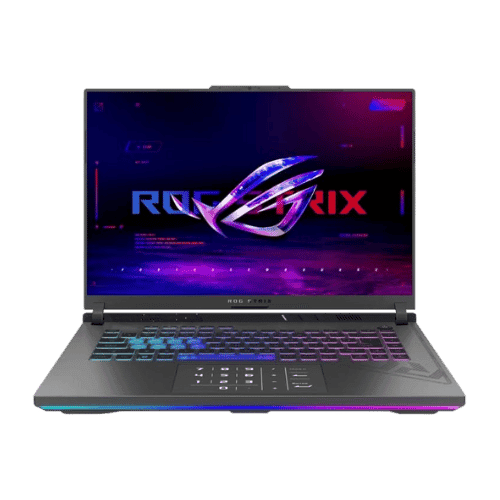
ASUS ROG Strix G16 — Intel Core i7
Intel Core i7-13650HX (Raptor Lake, 14 cores, up to 4.9 GHz)
NVIDIA GeForce RTX 4060 Laptop GPU (8GB GDDR6, 140W TGP max)
No (Not supported)
ROG Intelligent Cooling (Tri-Fan technology, Liquid Metal on CPU)
Only the specs that differ are shown here. Winners are highlighted when the data is clear.
+Full specs, pros, and cons
Everything side-by-side with ratings and the full spec list.
Expand
Full specs, pros, and cons
Everything side-by-side with ratings and the full spec list.
Comparison: Dell XPS 13 (9340, 2024) — Intel Core Ultra 7 155H vs ASUS ROG Strix G16 — Intel Core i7
Dell XPS 13 (9340, 2024) — Intel Core Ultra 7 155H
ASUS ROG Strix G16 — Intel Core i7
| Criterion | Dell XPS 13 (9340, 2024) — Intel Core Ultra 7 155H | ASUS ROG Strix G16 — Intel Core i7 |
|---|---|---|
| Rating | ★4.5(63)Best Buy | ★4.6(31)Best Buy |
Processor | Intel Core Ultra 7 155H (Meteor Lake, 16 cores, up to 4.8 GHz) | Intel Core i7-13650HX (Raptor Lake, 14 cores, up to 4.9 GHz) |
Graphics | Intel Arc Graphics (Integrated) | NVIDIA GeForce RTX 4060 Laptop GPU (8GB GDDR6, 140W TGP max) |
AI Engine | Intel AI Boost (Dedicated NPU) | No (Not supported) |
Cooling | Air (Dual fans with heat pipes) | ROG Intelligent Cooling (Tri-Fan technology, Liquid Metal on CPU) |
RAM | 16 GB, 32 GB, or 64 GB LPDDR5x (7467 MT/s) | 16 GB DDR5-4800 (2x 8GB SO-DIMM) |
RAM Upgrade | No (Soldered) | Yes (2x SO-DIMM slots, up to 32 GB officially) |
Storage | 512 GB, 1 TB, or 2 TB PCIe Gen4 NVMe SSD | 512 GB PCIe Gen4 NVMe SSD |
Storage Upgrade | Yes (1x M.2 2230/2280 slot; user-replaceable) | Yes (2x M.2 PCIe Gen4 slots) |
Display Size | 13.4" | 16" |
Resolution | Options: 1920x1200 (FHD+), 2560x1600 (QHD+), or 2880x1800 (3K+) | 1920 x 1200 (FHD+) |
Aspect Ratio | 16:10 | 16:10 |
Screen Type | Options: IPS (FHD+/QHD+) or OLED (3K+ Touch) | IPS-level (Anti-glare) |
Refresh Rate | 120 Hz (FHD+/QHD+ IPS) / 60 Hz (3K+ OLED) | 165 Hz (G-SYNC supported) |
Brightness | 500 nits (IPS) / 400 nits (OLED) | 250 nits (Typical) |
Color Gamut | 100% sRGB (FHD+) / 100% DCI-P3 (QHD+/OLED) | 100% sRGB |
Keyboard Layout | US English (Zero-lattice) with Capacitive Touch Function Row | US English (ANSI) with NumPad |
Keyboard Backlight | Yes | Yes (4-Zone RGB) |
Biometrics | Fingerprint reader (Power button) + IR Face Recognition | No (Not supported) |
Webcam | 1080p FHD RGB+IR camera | 720p HD camera |
USB Ports | 2x Thunderbolt 4 (USB-C) (Data, Power Delivery, DisplayPort 2.1) | 1x Thunderbolt 4 (DisplayPort); 1x USB-C 3.2 Gen 2 (DisplayPort / Power Delivery / G-SYNC); 2x USB-A 3.2 Gen 2 |
Video Ports | DisplayPort 2.1 via Thunderbolt 4 | 1x HDMI 2.1 FRL |
Audio Ports | No (Requires USB-C to 3.5mm adapter) | 1x 3.5mm Combo Audio Jack |
Connectivity | Wi-Fi 7 (Intel Killer BE1750); Bluetooth 5.4 | Wi-Fi 6E (802.11ax 2x2); Bluetooth 5.3; Gigabit Ethernet (RJ45) |
Battery | 55 Wh (Integrated) | 90 Wh (4-cell Li-ion) |
Charger | 60 W USB-C AC adapter | 280 W AC adapter |
Weight | 1,170 g (2.6 lbs) [OLED] / 1,190 g (2.62 lbs) [IPS] | 2,500 g (5.51 lbs) |
Build Material | CNC-machined Aluminum + Gorilla Glass 3 (Victus on OLED) | Aluminum (Lid) / Plastic (Chassis) |
Operating System | Windows 11 Home or Pro | Windows 11 Home |
| Pros |
|
|
| Cons |
|
|
As an Amazon Associate I earn from qualifying purchases. | Check Price on Amazon→ | Check Price on Amazon→ |
Dell XPS 13 (9340, 2024) — Intel Core Ultra 7 155H
Intel Core Ultra 7 155H (Meteor Lake, 16 cores, up to 4.8 GHz)
Intel Arc Graphics (Integrated)
Intel AI Boost (Dedicated NPU)
Air (Dual fans with heat pipes)
16 GB, 32 GB, or 64 GB LPDDR5x (7467 MT/s)
No (Soldered)
Pros
- Ultra-modern, minimalist design with zero-lattice keyboard and seamless glass palm rest
- IPS panel options (FHD+/QHD+) finally support smooth 120Hz refresh rates
Cons
- 3K OLED option is locked to 60Hz, unlike the 120Hz IPS panels
- No physical function keys; uses capacitive touch row which lacks tactile feedback
ASUS ROG Strix G16 — Intel Core i7
Intel Core i7-13650HX (Raptor Lake, 14 cores, up to 4.9 GHz)
NVIDIA GeForce RTX 4060 Laptop GPU (8GB GDDR6, 140W TGP max)
No (Not supported)
ROG Intelligent Cooling (Tri-Fan technology, Liquid Metal on CPU)
16 GB DDR5-4800 (2x 8GB SO-DIMM)
Yes (2x SO-DIMM slots, up to 32 GB officially)
Pros
- High-wattage RTX 4060 (140W) and i7-13650HX deliver excellent gaming performance
- Tri-Fan cooling system and liquid metal ensure sustained performance
Cons
- Display brightness is limited to 250 nits, which is dim for well-lit rooms
- Chassis is primarily plastic (except for the lid) and can be bulky
Which one is better?
The Dell XPS 13 (9340, 2024) — Intel Core Ultra 7 155H is the smarter buy for most people - its 120Hz refresh rate crushes the ASUS ROG Strix G16's 165Hz in terms of compact usability and design. That said, grab the ASUS if you need a larger screen for gaming - it's heavier but offers a bigger display.
Who should buy each?
Choose the Dell XPS 13 (9340, 2024) — Intel Core Ultra 7 155H if: you want a compact laptop with a stunning 120Hz display, prioritize portability at 2.6 lbs, or need excellent brightness for outdoor use.
Choose the ASUS ROG Strix G16 — Intel Core i7 if: you crave superior gaming performance with an RTX 4060, need a larger screen for multitasking, or want a longer battery life at 90 Wh.
Quality Seekers
Higher user rating (4.6★ vs 4.5★) indicates better overall satisfaction
→ Choose ASUS ROG
Safe Choice Buyers
More widely tested with 63 reviews vs 31
→ Choose Dell XPS
Premium Buyers
Higher-tier option with more premium features and build quality
→ Choose Dell XPS
Value Seekers
Better value proposition for buyers who don't need top-tier features
→ Choose ASUS ROG
Conclusion
With the key differences outlined, the decision should be clearer. Both options deliver quality—choose the one that fits your priorities.
Bottom line: The ASUS ROG Strix G16 — Intel Core i7 leads with a 4.6★ rating versus 4.5★. That said, Dell XPS 13 (9340, 2024) — Intel Core Ultra 7 155H could still be the right pick depending on your specific priorities.
Frequently Asked Questions
+Which is better: Dell XPS 13 (9340, 2024) — Intel Core Ultra 7 155H or ASUS ROG Strix G16 — Intel Core i7?
Dell XPS 13 (9340, 2024) — Intel Core Ultra 7 155H is the better choice if you prioritize ultra-modern, minimalist design with zero-lattice keyboard and seamless glass palm rest. ASUS ROG Strix G16 — Intel Core i7 wins if you value high-wattage rtx 4060 (140w) and i7-13650hx deliver excellent gaming performance. Both are rated highly (4.5★ vs 4.6★), so consider your specific needs and budget.
+What are the main differences between Dell XPS 13 (9340, 2024) — Intel Core Ultra 7 155H and ASUS ROG Strix G16 — Intel Core i7?
Key differences: Dell XPS 13 (9340, 2024) — Intel Core Ultra 7 155H offers ultra-modern, minimalist design with zero-lattice keyboard and seamless glass palm rest, while ASUS ROG Strix G16 — Intel Core i7 stands out with high-wattage rtx 4060 (140w) and i7-13650hx deliver excellent gaming performance. Consider that Dell XPS 13 (9340, 2024) — Intel Core Ultra 7 155H 3k oled option is locked to 60hz, unlike the 120hz ips panels. Meanwhile, ASUS ROG Strix G16 — Intel Core i7 display brightness is limited to 250 nits, which is dim for well-lit rooms. Check the detailed specs table above for a complete comparison.
+Where can US buyers get the best price?
For US buyers, Amazon typically offers competitive pricing with Prime shipping, easy returns, and reliable warranty support. We recommend comparing prices on both products using our affiliate links above—prices fluctuate regularly, and you may find sales or deals.
+Is this comparison up to date?
Yes, this comparison is current for 2026. We regularly verify specs, ratings, and availability. Last verified: January 26, 2026. PageBen uses affiliate links for monetization, but our recommendations are research-driven and independent.
Affiliate disclosure
PageBen uses Amazon affiliate links. If you purchase through our links, we may earn a commission at no extra cost to you. This supports independent content for US shoppers.