
Garmin Forerunner 265 vs Garmin Vivoactive 5
The Garmin Forerunner 265 and Garmin Vivoactive 5 are both exceptional smartwatches designed to cater to fitness enthusiasts and those seeking advanced health monitoring features. While they share some similarities, such as AMOLED displays and a variety of health sensors, they target slightly different audiences. The Forerunner 265 is positioned as a more advanced running watch, offering features like dual-frequency GPS and extensive music storage. In contrast, the Vivoactive 5 focuses on a lightweight design and a range of built-in sports apps, appealing to users who prioritize comfort and versatility in daily use.
Why compare these? Both the Garmin Forerunner 265 and Garmin Vivoactive 5 are mid-range smartwatches competing in the same market segment. This makes them direct rivals for buyers looking for mid-range features and performance in 2026. Understanding their differences helps you choose the right one for your specific needs.
As an Amazon Associate I earn from qualifying purchases.
Key Differences at a Glance
| Aspect | Garmin Forerunner | Garmin Vivoactive |
|---|---|---|
| User Rating | ✓4.7★ (2,570 reviews) | 4.4★ (9,944 reviews) |
| Top Strength | Dual-frequency multi-band GPS delivers the best positioning accuracy in Garmin's mid-tier | Ultra-lightweight design at just 23g (case only) — extremely comfortable all day |
| Main Drawback | Heavier than rivals at 47 g — noticeable on longer runs | No music storage — unlike the Forerunner 165/265 |
| Market Position | Mid-range | Mid-range |
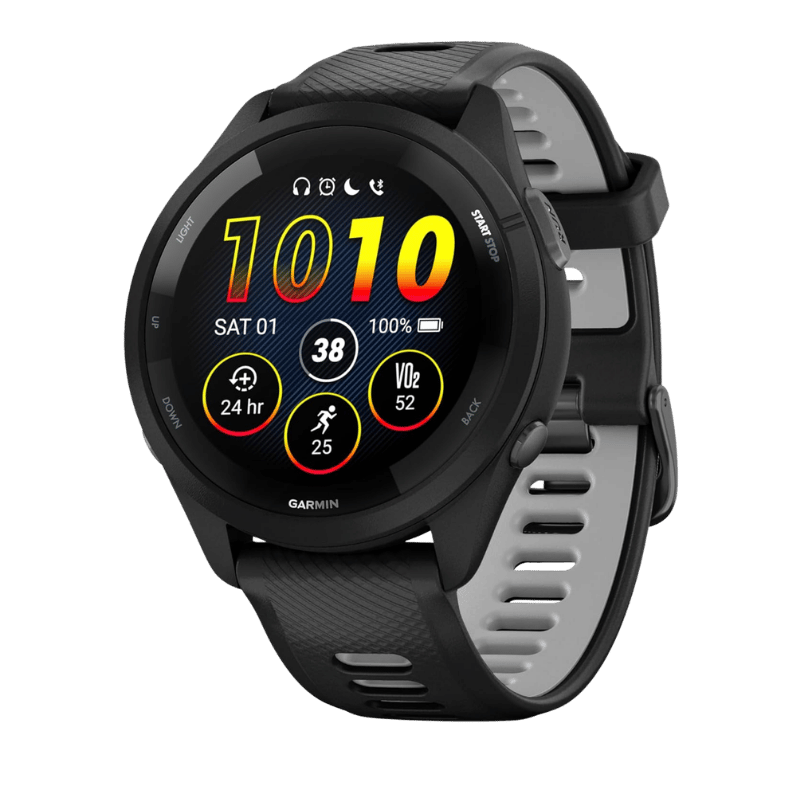
Garmin Forerunner 265
1.3 inches (265) / 1.1 inches (265S)
AMOLED, always-on capable
416 x 416 pixels (265) / 360 x 360 pixels (265S)
8 GB (music: Spotify, Deezer, Amazon Music)
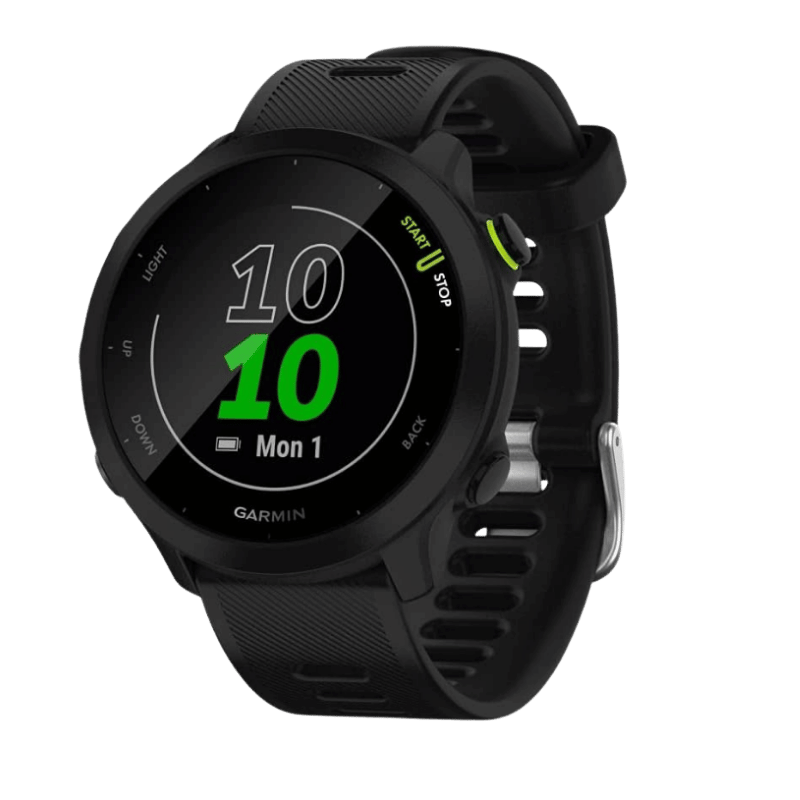
Garmin Vivoactive 5
1.2 inches
AMOLED, always-on capable
390 x 390 pixels
4 GB
Only the specs that differ are shown here. Winners are highlighted when the data is clear.
+Full specs, pros, and cons
Everything side-by-side with ratings and the full spec list.
Expand
Full specs, pros, and cons
Everything side-by-side with ratings and the full spec list.
Comparison: Garmin Forerunner 265 vs Garmin Vivoactive 5
Garmin Forerunner 265
Garmin Vivoactive 5
| Criterion | Garmin Forerunner 265 | Garmin Vivoactive 5 |
|---|---|---|
| Rating | ★4.7(2,570)Amazon | ★4.4(9,944)Amazon |
Display Size | 1.3 inches (265) / 1.1 inches (265S) | 1.2 inches |
Screen Type | AMOLED, always-on capable | AMOLED, always-on capable |
Resolution | 416 x 416 pixels (265) / 360 x 360 pixels (265S) | 390 x 390 pixels |
Storage | 8 GB (music: Spotify, Deezer, Amazon Music) | 4 GB |
Sensors | Multi-band GPS/GNSS (dual-frequency), wrist HR, SpO2, body temperature (skin), barometric altimeter, compass, gyroscope | GPS/GNSS, wrist HR, SpO2, barometric altimeter, compass, accelerometer, stress |
Battery Life | Up to 13 days (smartwatch) / up to 20 hours (GPS) / up to 10 hours (GPS + music) | Up to 11 days (smartwatch mode) / up to 21 hours (GPS mode) |
Water Resistance | 5 ATM (50 m) | 5 ATM (50 m) |
Connectivity | Bluetooth, ANT+, Wi-Fi, dual-frequency multi-band GPS | Bluetooth, ANT+, Wi-Fi, GPS (multi-GNSS) |
Operating System | Garmin Connect app (iOS and Android) | Garmin Connect app (iOS and Android) |
Weight | 47 g (265) / 39 g (265S) | 23 g (without band) |
Extras | Training Readiness, HRV Status, morning report, Garmin Pay, race predictor, stamina tracking | 30+ built-in sports apps, Garmin Pay, Body Battery, sleep tracking, women's health, animated on-device workouts |
| Pros |
|
|
| Cons |
|
|
As an Amazon Associate I earn from qualifying purchases. | Check Price on Amazon→ | Check Price on Amazon→ |
Garmin Forerunner 265
1.3 inches (265) / 1.1 inches (265S)
AMOLED, always-on capable
416 x 416 pixels (265) / 360 x 360 pixels (265S)
8 GB (music: Spotify, Deezer, Amazon Music)
Multi-band GPS/GNSS (dual-frequency), wrist HR, SpO2, body temperature (skin), barometric altimeter, compass, gyroscope
Up to 13 days (smartwatch) / up to 20 hours (GPS) / up to 10 hours (GPS + music)
Pros
- Dual-frequency multi-band GPS delivers the best positioning accuracy in Garmin's mid-tier
- 13-day AMOLED battery life sets the standard for this feature class
Cons
- Heavier than rivals at 47 g — noticeable on longer runs
- No onscreen turn-by-turn navigation maps
Garmin Vivoactive 5
1.2 inches
AMOLED, always-on capable
390 x 390 pixels
4 GB
GPS/GNSS, wrist HR, SpO2, barometric altimeter, compass, accelerometer, stress
Up to 11 days (smartwatch mode) / up to 21 hours (GPS mode)
Pros
- Ultra-lightweight design at just 23g (case only) — extremely comfortable all day
- AMOLED always-on display with 11-day battery — best balance in its class
Cons
- No music storage — unlike the Forerunner 165/265
- No multi-band/dual-frequency GPS
Which one is better?
Overall, the Garmin Forerunner 265 stands out as the superior choice for serious athletes and fitness enthusiasts thanks to its advanced GPS capabilities, extended battery life, and comprehensive health monitoring features. However, the Vivoactive 5 offers a compelling option for those who prefer a lighter watch for everyday wear and casual fitness tracking. For users who need robust running metrics and music storage, the Forerunner 265 is the clear winner.
Who should buy each?
For serious runners and athletes, the Garmin Forerunner 265 is the ideal choice due to its advanced features like dual-frequency GPS and extensive training metrics. On the other hand, casual users looking for a comfortable, lightweight smartwatch with essential fitness tracking capabilities will find the Garmin Vivoactive 5 to be a perfect fit.
Quality Seekers
Higher user rating (4.7★ vs 4.4★) indicates better overall satisfaction
→ Choose Garmin Forerunner
Safe Choice Buyers
More widely tested with 9,944 reviews vs 2,570
→ Choose Garmin Vivoactive
Dual-frequency multi-band GPS Priority
Dual-frequency multi-band GPS delivers the best positioning accuracy in Garmin's mid-tier
→ Choose Garmin Forerunner
Ultra-lightweight design at Priority
Ultra-lightweight design at just 23g (case only) — extremely comfortable all day
→ Choose Garmin Vivoactive
Conclusion
There is no wrong answer here. Focus on the features you will use daily and pick the model that aligns with them.
Bottom line: The Garmin Forerunner 265 edges ahead with a 4.7★ rating compared to 4.4★. However, Garmin Vivoactive 5 remains a strong contender if its strengths align better with your needs.
Frequently Asked Questions
+Which is better: Garmin Forerunner 265 or Garmin Vivoactive 5?
Garmin Forerunner 265 is the better choice if you prioritize dual-frequency multi-band gps delivers the best positioning accuracy in garmin's mid-tier. Garmin Vivoactive 5 wins if you value ultra-lightweight design at just 23g (case only) — extremely comfortable all day. Both are rated highly (4.7★ vs 4.4★), so consider your specific needs and budget.
+What are the main differences between Garmin Forerunner 265 and Garmin Vivoactive 5?
Key differences: Garmin Forerunner 265 offers dual-frequency multi-band gps delivers the best positioning accuracy in garmin's mid-tier, while Garmin Vivoactive 5 stands out with ultra-lightweight design at just 23g (case only) — extremely comfortable all day. Consider that Garmin Forerunner 265 heavier than rivals at 47 g — noticeable on longer runs. Meanwhile, Garmin Vivoactive 5 no music storage — unlike the forerunner 165/265. Check the detailed specs table above for a complete comparison.
+What should I prioritize when choosing between these smartwatches?
Focus on the features that matter most for your daily use. Garmin Forerunner 265 stands out for dual-frequency multi-band gps delivers the best positioning accuracy in garmin's mid-tier and 13-day amoled battery life sets the standard for this feature class. Garmin Vivoactive 5 excels at ultra-lightweight design at just 23g (case only) — extremely comfortable all day and amoled always-on display with 11-day battery — best balance in its class. Check the spec table above for the complete side-by-side breakdown.
Affiliate disclosure
PageBen uses Amazon affiliate links. If you purchase through our links, we may earn a commission at no extra cost to you. This supports independent content for US shoppers.