
Garmin Forerunner 965 vs Samsung Galaxy Watch 8 Classic
When comparing the Garmin Forerunner 965 and the Samsung Galaxy Watch 8 Classic, the clear choice for serious athletes is the Garmin. Its lightweight design at just 1.87 oz makes it perfect for long races, and the impressive 23-day battery life means you can train without constant recharging. On the flip side, the Samsung Galaxy Watch 8 Classic shines with its vibrant 3,000-nit display, ideal for outdoor use. However, its battery lasts up to 49 hours, which is significantly less than Garmin's offering. The trade-off? You'll have to charge it more often, especially if you’re using its smart features regularly. Key specs: Weight: 1.87 oz vs 2.24 oz and Storage: 32 GB vs 64 GB.
Why compare these? The Garmin Forerunner 965 (premium flagship) and Samsung Galaxy Watch 8 Classic (high-end) represent different approaches to smartwatches. While they may appeal to different budgets, many buyers consider both options. This 2026 comparison helps you decide if the differences justify the price gap.
As an Amazon Associate I earn from qualifying purchases.
Key Differences at a Glance
| Aspect | Garmin Forerunner | Samsung Galaxy |
|---|---|---|
| User Rating | ✓4.7★ (1,717 reviews) | 4.5★ (920 reviews) |
| Top Strength | Bright, high-resolution 1.4" AMOLED makes maps easy to read | Iconic physical rotating bezel for intuitive navigation |
| Main Drawback | Uses older Elevate Gen 4 sensor (lacks ECG hardware found in Fenix 8) | Small 1.34" screen relative to the large 46mm case size (bezel takes up space) |
| Market Position | ✓Flagship | Premium |
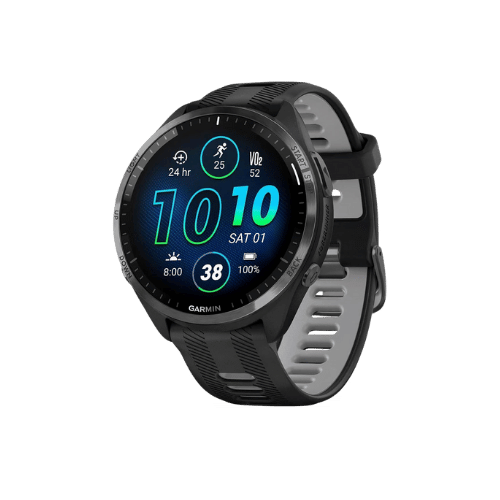
Garmin Forerunner 965
iPhone, Android (Garmin Connect app required)
Garmin OS (Proprietary)
47.2 x 47.2 x 13.2 mm
Fiber-reinforced polymer case; Titanium bezel; Corning Gorilla Glass 3 DX lens
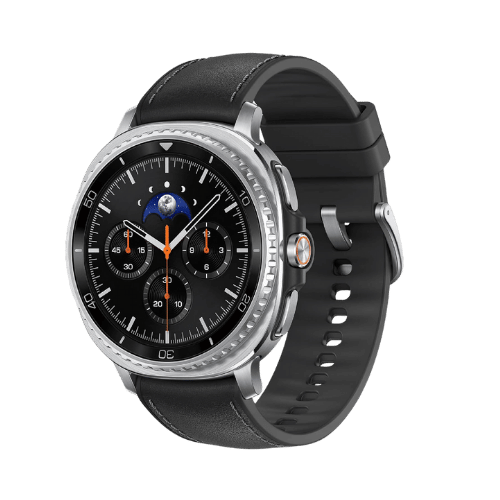
Samsung Galaxy Watch 8 Classic
Android 12.0 or higher with 1.5GB+ RAM (Galaxy phone required for full feature set)
Wear OS 6 (Powered by Samsung) with One UI 8 Watch
46mm (46.4 x 46.0 x 10.6 mm)
Stainless steel case; Sapphire Crystal glass (Front and Back)
Only the specs that differ are shown here. Winners are highlighted when the data is clear.
+Full specs, pros, and cons
Everything side-by-side with ratings and the full spec list.
Expand
Full specs, pros, and cons
Everything side-by-side with ratings and the full spec list.
Comparison: Garmin Forerunner 965 vs Samsung Galaxy Watch 8 Classic
Garmin Forerunner 965
Samsung Galaxy Watch 8 Classic
| Criterion | Garmin Forerunner 965 | Samsung Galaxy Watch 8 Classic |
|---|---|---|
| Rating | ★4.7(1,717)Amazon | ★4.5(920)Amazon |
Compatibility | iPhone, Android (Garmin Connect app required) | Android 12.0 or higher with 1.5GB+ RAM (Galaxy phone required for full feature set) |
Operating System | Garmin OS (Proprietary) | Wear OS 6 (Powered by Samsung) with One UI 8 Watch |
Case Size | 47.2 x 47.2 x 13.2 mm | 46mm (46.4 x 46.0 x 10.6 mm) |
Case Material | Fiber-reinforced polymer case; Titanium bezel; Corning Gorilla Glass 3 DX lens | Stainless steel case; Sapphire Crystal glass (Front and Back) |
Display Type | AMOLED; Always-On Mode available | Super AMOLED Color Always-On Display |
Display Size | 1.4 in (35.4 mm) diameter | 1.34 in (34.0 mm) |
Resolution | 454 x 454 pixels | 438 x 438 pixels (327 ppi) |
Always On Display | Yes (optional) | Yes (Up to 3,000 nits peak brightness) |
Water Resistance | 5 ATM (water pressure equivalent to 50 meters); Swimproof | 5 ATM + IP68 (Water resistant up to 50 meters) |
Durability | Corning Gorilla Glass 3 DX lens; Titanium bezel adds rigidity | MIL-STD-810H military standard; Stainless steel frame |
GPS | Multi-band GNSS with SatIQ technology; GPS, GLONASS, Galileo | Dual-band GPS (L1+L5); GLONASS, Galileo, BeiDou |
Connectivity | Bluetooth; ANT+; Wi-Fi | LTE (Optional); Bluetooth 5.3; Wi-Fi 802.11 a/b/g/n (2.4+5GHz); NFC |
NFC Payments | Garmin Pay | Samsung Wallet; Google Pay |
Sensors | Elevate Gen 4 optical heart rate sensor; Pulse Ox blood oxygen saturation monitor; Barometric altimeter; Compass; Gyroscope; Accelerometer; Thermometer; Ambient light sensor | Samsung BioActive Sensor (Optical Bio-signal + Electrical Heart Signal + BIA); Temperature sensor; Accelerometer; Barometer; Gyro sensor; Geomagnetic sensor; Light sensor; 3D Hall sensor |
Health Features | Morning Report; Training Readiness; HRV Status; Sleep Score; Body Battery; Pulse Ox; Women’s Health Tracking; Health Snapshot | Vascular Load monitoring; Antioxidant Index (AGEs); Sleep Apnea detection; ECG; Blood Pressure (market dependent); Body Composition (BIA); Cycle Tracking with skin temp |
Workout Modes | Triathlon; Duathlon; Brick Workouts; Track Run; Ultra Run; Virtual Run; Cycling (Road, MTB, Gravel, eBike); Swimming (Pool, Open Water); Hiking; Strength; HIIT; Yoga; Pilates | Advanced Running Coach; Multisport tile; Race partner; Heart Rate Zones; Auto-detection for workouts |
Storage | 32GB | 64GB |
Speaker Mic | None (Audio prompts via connected Bluetooth headphones only) | Speaker (supports media/calls/Gemini); Microphone |
Calls | No (Can accept/decline calls to control phone; Android users can send text replies) | Yes (via Bluetooth or standalone on LTE models) |
Battery | Smartwatch mode: Up to 23 days; GPS Only: Up to 31 hours; SatIQ (AutoSelect) GNSS: Up to 22 hours; All-Systems GNSS + Multi-Band: Up to 19 hours | 445 mAh; Up to 49 hours (typical usage); Fast wireless charging (WPC) |
Charging | Garmin proprietary plug charger (USB-C cable included) | Fast Wireless Charging |
Weight | 53 g | 63.5 g (without strap) |
Band Sizes | Fits wrists 135–205 mm (Silicone band included); Compatible with 22mm QuickFit bands (requires tool to remove original pin) | 20mm standard (One Click system supported) |
Extras | Preloaded TopoActive Maps; Full-color mapping navigation; Garmin Music (Spotify/Deezer/Amazon Music offline); PacePro; ClimbPro; Real-time Stamina | Physical rotating bezel; Integrated Google Gemini AI; Gesture controls (Double pinch); Customizable Quick Button |
| Pros |
|
|
| Cons |
|
|
As an Amazon Associate I earn from qualifying purchases. | Check Price on Amazon→ | Check Price on Amazon→ |
Garmin Forerunner 965
iPhone, Android (Garmin Connect app required)
Garmin OS (Proprietary)
47.2 x 47.2 x 13.2 mm
Fiber-reinforced polymer case; Titanium bezel; Corning Gorilla Glass 3 DX lens
AMOLED; Always-On Mode available
1.4 in (35.4 mm) diameter
Pros
- Bright, high-resolution 1.4" AMOLED makes maps easy to read
- Lightweight (53g) and slim profile ideal for racing and sleep
Cons
- Uses older Elevate Gen 4 sensor (lacks ECG hardware found in Fenix 8)
- No built-in microphone or speaker for voice notes/calls
Samsung Galaxy Watch 8 Classic
Android 12.0 or higher with 1.5GB+ RAM (Galaxy phone required for full feature set)
Wear OS 6 (Powered by Samsung) with One UI 8 Watch
46mm (46.4 x 46.0 x 10.6 mm)
Stainless steel case; Sapphire Crystal glass (Front and Back)
Super AMOLED Color Always-On Display
1.34 in (34.0 mm)
Pros
- Iconic physical rotating bezel for intuitive navigation
- Display brightness doubled to 3,000 nits (matches Ultra model)
Cons
- Small 1.34" screen relative to the large 46mm case size (bezel takes up space)
- Significantly heavier (63.5g) than the aluminum standard models
Which one is better?
The Garmin Forerunner 965 is the better buy for most people - its 23-day battery life crushes the Samsung Galaxy Watch 8 Classic's 49-hour capacity. That said, grab the Samsung if you want advanced health tracking features and a stylish design - it's heavier but offers a more premium feel.
Who should buy each?
Choose the Garmin Forerunner 965 if: you prioritize long battery life, need a lightweight design for racing, or rely on advanced training metrics. (1.87 oz weight, 32 GB storage)
Choose the Samsung Galaxy Watch 8 Classic if: you want a stunning display for outdoor visibility, enjoy smart features like calling and messaging, or prefer a classic watch look with a physical bezel. (2.24 oz weight, 64 GB storage)
Quality Seekers
Higher user rating (4.7★ vs 4.5★) indicates better overall satisfaction
→ Choose Garmin Forerunner
Safe Choice Buyers
More widely tested with 1,717 reviews vs 920
→ Choose Garmin Forerunner
Premium Buyers
Higher-tier option with more premium features and build quality
→ Choose Garmin Forerunner
Value Seekers
Better value proposition for buyers who don't need top-tier features
→ Choose Samsung Galaxy
Conclusion
Garmin Forerunner 965 and Samsung Galaxy Watch 8 Classic are both solid choices. Match the strengths above to your budget and workflow to make the best call.
Bottom line: The Garmin Forerunner 965 edges ahead with a 4.7★ rating compared to 4.5★. However, Samsung Galaxy Watch 8 Classic remains a strong contender if its strengths align better with your needs.
Frequently Asked Questions
+Which is better: Garmin Forerunner 965 or Samsung Galaxy Watch 8 Classic?
Garmin Forerunner 965 is the better choice if you prioritize bright, high-resolution 1.4" amoled makes maps easy to read. Samsung Galaxy Watch 8 Classic wins if you value iconic physical rotating bezel for intuitive navigation. Both are rated highly (4.7★ vs 4.5★), so consider your specific needs and budget.
+What are the main differences between Garmin Forerunner 965 and Samsung Galaxy Watch 8 Classic?
Key differences: Garmin Forerunner 965 offers bright, high-resolution 1.4" amoled makes maps easy to read, while Samsung Galaxy Watch 8 Classic stands out with iconic physical rotating bezel for intuitive navigation. Consider that Garmin Forerunner 965 uses older elevate gen 4 sensor (lacks ecg hardware found in fenix 8). Meanwhile, Samsung Galaxy Watch 8 Classic small 1.34" screen relative to the large 46mm case size (bezel takes up space). Check the detailed specs table above for a complete comparison.
+What should I prioritize when choosing between these smartwatches?
Focus on the features that matter most for your daily use. Garmin Forerunner 965 stands out for bright, high-resolution 1.4" amoled makes maps easy to read and lightweight (53g) and slim profile ideal for racing and sleep. Samsung Galaxy Watch 8 Classic excels at iconic physical rotating bezel for intuitive navigation and display brightness doubled to 3,000 nits (matches ultra model). Check the spec table above for the complete side-by-side breakdown.
Affiliate disclosure
PageBen uses Amazon affiliate links. If you purchase through our links, we may earn a commission at no extra cost to you. This supports independent content for US shoppers.