
Intel Core i3-12100F vs Intel Core i5-13400F
The Intel Core i5-13400F is the better buy for most people - its 10 cores and 4.6GHz boost clock crushes the competition. In real-world use, the extra cores translate to smoother multitasking and better performance during gaming or productivity tasks, making it a no-brainer for anyone looking to build a capable budget system. If you're focused on single-threaded tasks or basic gaming, you might find it sufficient. However, with its limitations in multitasking, I wouldn’t recommend it if you plan to run demanding applications parallelly or game intensively. Key specs: Cores: 4 vs 10 and Boost Clock: 4.3GHz vs 4.6GHz.
Why compare these? The Intel Core i3-12100F (entry-level) and Intel Core i5-13400F (mid-range) represent different approaches to processors. While they may appeal to different budgets, many buyers consider both options. This 2026 comparison helps you decide if the differences justify the price gap.
As an Amazon Associate I earn from qualifying purchases.
Key Differences at a Glance
| Aspect | Intel Core | Intel Core |
|---|---|---|
| User Rating | ✓4.7★ (1,621 reviews) | 4.6★ (660 reviews) |
| Top Strength | Superior single-core performance typically beating older flagships | Excellent price-to-performance ratio for budget gaming/workstation builds |
| Main Drawback | Limited to 4 cores (struggles with heavy multi-threaded production workloads) | Locked multiplier prevents overclocking |
| Market Position | Entry | ✓Mid-range |
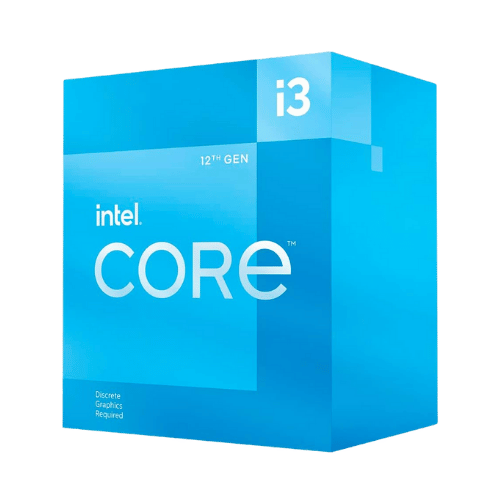
Intel Core i3-12100F
Alder Lake (12th Gen Intel Core)
LGA1700
4 Cores (4 Performance + 0 Efficient) / 8 Threads
3.3 GHz Base / Up to 4.3 GHz Max Turbo
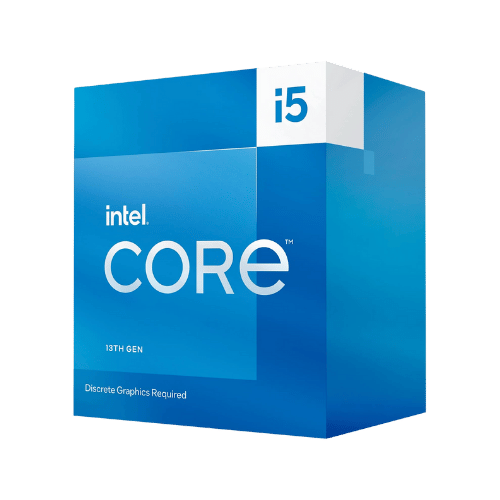
Intel Core i5-13400F
13th Gen Intel Core (Raptor Lake / Alder Lake Refresh)
LGA1700
10 cores (6 P-cores + 4 E-cores) / 16 threads
P-core 2.5 GHz base / 4.6 GHz turbo; E-core 1.8 GHz base / 3.3 GHz turbo
Only the specs that differ are shown here. Winners are highlighted when the data is clear.
+Full specs, pros, and cons
Everything side-by-side with ratings and the full spec list.
Expand
Full specs, pros, and cons
Everything side-by-side with ratings and the full spec list.
Comparison: Intel Core i3-12100F vs Intel Core i5-13400F
Intel Core i3-12100F
Intel Core i5-13400F
| Criterion | Intel Core i3-12100F | Intel Core i5-13400F |
|---|---|---|
| Rating | ★4.7(1,621)Amazon | ★4.6(660)Amazon |
Architecture Gen | Alder Lake (12th Gen Intel Core) | 13th Gen Intel Core (Raptor Lake / Alder Lake Refresh) |
Socket Platform | LGA1700 | LGA1700 |
Cores Threads | 4 Cores (4 Performance + 0 Efficient) / 8 Threads | 10 cores (6 P-cores + 4 E-cores) / 16 threads |
Base Boost Clock | 3.3 GHz Base / Up to 4.3 GHz Max Turbo | P-core 2.5 GHz base / 4.6 GHz turbo; E-core 1.8 GHz base / 3.3 GHz turbo |
Cache L2 L3 | 12 MB Intel® Smart Cache (L3) + 5 MB L2 | 9.5 MB L2 + 20 MB Intel Smart Cache (29.5 MB total) |
TDP Power | 58 W (Processor Base Power) | 65W Processor Base Power |
Max Turbo Power | 89 W (Maximum Turbo Power) | 148W Maximum Turbo Power (PL2) |
Process Node | Intel 7 (10nm Enhanced SuperFin) | Intel 7 (10nm Enhanced SuperFin) |
Memory Support | DDR5-4800 MT/s / DDR4-3200 MT/s (Up to 128 GB) | Up to 192GB; DDR5-4800 (native) or DDR4-3200; ECC supported (W680 chipset only) |
Memory Bandwidth Max | 76.8 GB/s | Up to 76.8 GB/s (DDR5) |
Pcie Version | PCIe 5.0 and 4.0 | PCIe 5.0 and 4.0 |
Pcie Lanes | 20 (16 PCIe 5.0 + 4 PCIe 4.0) | 20 total (16x Gen 5 + 4x Gen 4) |
Igpu | No (F-Series; Discrete GPU Required) | None (discrete graphics card required) |
Instruction Features | SSE4.1/4.2, AVX2, Intel 64, VT-x/VT-d, AES-NI | Intel 64; SSE4.1; SSE4.2; AVX2; AES-NI; VT-x; VT-d; GNA 3.0 |
Cooler Included | Yes (Intel Laminar RM1) | Yes (Intel Laminar RM1 Cooler included) |
Max Temp | 100°C (212°F) Tjunction | 100°C (Tjunction) |
Notes Limits | F-series requires a discrete graphics card. Excellent pairing with H610 or B660 chipsets for budget builds. | Locked multiplier (no overclocking); F-series requires discrete GPU; widely compatible with B660/B760 motherboards |
Chipset Support | Intel 600 and 700 Series (H610, B660, H670, Z690, etc.) | Intel 600 Series (H610, B660, H670, Z690) and 700 Series (B760, H770, Z790) |
| Pros |
|
|
| Cons |
|
|
As an Amazon Associate I earn from qualifying purchases. | Check Price on Amazon→ | Check Price on Amazon→ |
Intel Core i3-12100F
Alder Lake (12th Gen Intel Core)
LGA1700
4 Cores (4 Performance + 0 Efficient) / 8 Threads
3.3 GHz Base / Up to 4.3 GHz Max Turbo
12 MB Intel® Smart Cache (L3) + 5 MB L2
58 W (Processor Base Power)
Pros
- Superior single-core performance typically beating older flagships
- Highly efficient 58W base power draw
Cons
- Limited to 4 cores (struggles with heavy multi-threaded production workloads)
- No integrated graphics (requires a discrete GPU)
Intel Core i5-13400F
13th Gen Intel Core (Raptor Lake / Alder Lake Refresh)
LGA1700
10 cores (6 P-cores + 4 E-cores) / 16 threads
P-core 2.5 GHz base / 4.6 GHz turbo; E-core 1.8 GHz base / 3.3 GHz turbo
9.5 MB L2 + 20 MB Intel Smart Cache (29.5 MB total)
65W Processor Base Power
Pros
- Excellent price-to-performance ratio for budget gaming/workstation builds
- Hybrid architecture (6P+4E) destroys older 6-core CPUs in multitasking
Cons
- Locked multiplier prevents overclocking
- No integrated graphics (troubleshooting is harder without a spare GPU)
Which one is better?
The Intel Core i5-13400F is the better buy for most people - its 10 cores provide superior multitasking capabilities compared to the Intel Core i3-12100F's 4 cores.
Who should buy each?
Choose the Intel Core i3-12100F if: you need a budget processor for light gaming, you don't run multiple applications at once, or you want a simple setup without fuss.
Choose the Intel Core i5-13400F if: you plan to multitask heavily, you want great performance for gaming at 1080p, or you require a future-proof CPU for productivity.
Quality Seekers
Higher user rating (4.7★ vs 4.6★) indicates better overall satisfaction
→ Choose Intel Core
Safe Choice Buyers
More widely tested with 1,621 reviews vs 660
→ Choose Intel Core
Premium Buyers
Higher-tier option with more premium features and build quality
→ Choose Intel Core
Value Seekers
Better value proposition for buyers who don't need top-tier features
→ Choose Intel Core
Conclusion
We hope this comparison helps you buy with confidence. Both products are dependable; the right one depends on how you will use it.
Bottom line: The Intel Core i3-12100F edges ahead with a 4.7★ rating compared to 4.6★. However, Intel Core i5-13400F remains a strong contender if its strengths align better with your needs.
Frequently Asked Questions
+Which is better: Intel Core i3-12100F or Intel Core i5-13400F?
Intel Core i3-12100F is the better choice if you prioritize superior single-core performance typically beating older flagships. Intel Core i5-13400F wins if you value excellent price-to-performance ratio for budget gaming/workstation builds. Both are rated highly (4.7★ vs 4.6★), so consider your specific needs and budget.
+What are the main differences between Intel Core i3-12100F and Intel Core i5-13400F?
Key differences: Intel Core i3-12100F offers superior single-core performance typically beating older flagships, while Intel Core i5-13400F stands out with excellent price-to-performance ratio for budget gaming/workstation builds. Consider that Intel Core i3-12100F limited to 4 cores (struggles with heavy multi-threaded production workloads). Meanwhile, Intel Core i5-13400F locked multiplier prevents overclocking. Check the detailed specs table above for a complete comparison.
+What should I prioritize when choosing between these processors?
Focus on the features that matter most for your daily use. Intel Core i3-12100F stands out for superior single-core performance typically beating older flagships and highly efficient 58w base power draw. Intel Core i5-13400F excels at excellent price-to-performance ratio for budget gaming/workstation builds and hybrid architecture (6p+4e) destroys older 6-core cpus in multitasking. Check the spec table above for the complete side-by-side breakdown.
Affiliate disclosure
PageBen uses Amazon affiliate links. If you purchase through our links, we may earn a commission at no extra cost to you. This supports independent content for US shoppers.