
Intel Core i9-14900K vs AMD Ryzen 7 7800X3D
Time to compare Intel Core i9-14900K with AMD Ryzen 7 7800X3D. We will cover the essentials so you can buy with confidence.
As an Amazon Associate I earn from qualifying purchases.
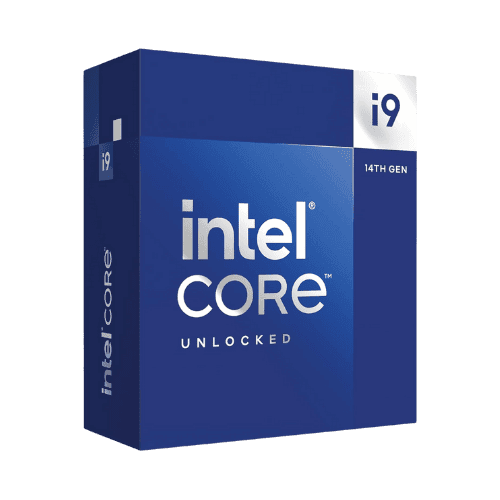
Intel Core i9-14900K

AMD Ryzen 7 7800X3D
Comparison: Intel Core i9-14900K vs AMD Ryzen 7 7800X3D
Intel Core i9-14900K
AMD Ryzen 7 7800X3D
| Criterion | Intel Core i9-14900K | AMD Ryzen 7 7800X3D |
|---|---|---|
| Rating | ★4.2(1,274)Amazon | ★4.8(6,921)Amazon |
Architecture Gen | Raptor Lake Refresh (14th Gen Intel Core i9) | Zen 4 (Ryzen 7000 Series with 3D V-Cache) |
Socket Platform | Socket LGA1700 (FCLGA1700) | Socket AM5 (LGA 1718) |
Cores Threads | 24 Cores (8P + 16E) / 32 Threads | 8 Cores / 16 Threads |
Base Boost Clock | P-Core: 3.2 / 5.6 GHz; E-Core: 2.4 / 4.4 GHz; Thermal Velocity Boost: 6.0 GHz | 4.2 GHz Base / Up to 5.0 GHz Boost |
Cache L2 L3 | 32 MB L2 + 36 MB L3 (68 MB Total) | 8 MB L2 + 96 MB L3 (104 MB Total) |
TDP Power | 125 W (Processor Base Power) | 120 W |
Max Turbo Power | 253 W (Maximum Turbo Power) | 162 W (PPT) |
Process Node | Intel 7 (10nm Enhanced SuperFin) | TSMC 5nm FinFET (Core Complex) / 6nm (I/O Die) |
Memory Support | DDR5-5600 or DDR4-3200; Dual-Channel; Up to 192 GB; ECC Support: Yes (W680 chipset required) | DDR5-5200 MT/s (Official); Dual-Channel; Up to 192 GB; ECC Support |
Memory Bandwidth Max | 89.6 GB/s (DDR5-5600) | N/A (Dependent on RAM config, theoretical max ~83.2 GB/s @ 5200 MT/s) |
Pcie Version | PCIe 5.0 (x16 lanes) + PCIe 4.0 (x4 lanes) | PCIe 5.0 |
Pcie Lanes | 20 Total (16 CPU PCIe 5.0 + 4 CPU PCIe 4.0) | 28 Total (24 Usable for Graphics/Storage) |
Igpu | Intel UHD Graphics 770 (32 EUs, 300 – 1650 MHz) | AMD Radeon Graphics (2 Cores, 2200 MHz) |
Instruction Features | Intel 64, AVX2, AES-NI, VT-x, VT-d, SSE4.1/4.2, Gaussian & Neural Accelerator 3.0 | AMD-V, AVX, AVX2, AVX-512, FMA3, AES-NI, SHA, SSE4.1/4.2 |
Cooler Included | No (360mm or 420mm Liquid Cooler required for optimal performance) | No (Liquid cooler recommended) |
Max Temp | 100°C (212°F) TjMax | 89°C (192°F) TjMax |
Notes Limits | Features Thermal Velocity Boost (TVB) to hit 6.0 GHz only if thermal headroom allows. Notorious for extreme power usage; recent BIOS updates (0x129 microcode) recommended to prevent degradation. | Features AMD 3D V-Cache technology for elite gaming performance. Overclocking limited (Precision Boost Overdrive/Curve Optimizer supported). No stock cooler. |
Chipset Support | Intel 700 Series (Z790, B760, etc.) & 600 Series (BIOS update required) | A620, B650, B650E, X670, X670E, B840, B850, X870, X870E |
| Pros |
|
|
| Cons |
|
|
As an Amazon Associate I earn from qualifying purchases. | Check Price on Amazon→ | Check Price on Amazon→ |
Intel Core i9-14900K
✓ Pros:
- • One of the fastest consumer CPUs for mixed gaming and heavy multi-threaded productivity
- • Extremely high 6.0 GHz clock speed out of the box
- • Retains support for DDR4 memory for cost-effective platform choices
✗ Cons:
- • Extremely high power consumption and heat output; requires top-tier cooling
- • Dead-end platform (LGA1700) with no upgrade path to Core Ultra
- • Expensive compared to competitive options with similar gaming performance
As an Amazon Associate I earn from qualifying purchases.
AMD Ryzen 7 7800X3D
✓ Pros:
- • Market-leading gaming performance via 3D V-Cache
- • Excellent power efficiency in gaming workloads
- • Future-proof AM5 platform with PCIe 5.0 support
✗ Cons:
- • Lower productivity performance compared to non-X3D high-core counts
- • Lower thermal limit (89°C) requires decent cooling
- • No cooler included in the box
As an Amazon Associate I earn from qualifying purchases.
Which one is better?
Based on ratings and feature balance, AMD Ryzen 7 7800X3D has a slight edge for overall satisfaction. Intel Core i9-14900K remains a strong alternative if its strengths match your needs.
Who should buy each?
For performance and polish: Intel Core i9-14900K (One of the fastest consumer CPUs for mixed gaming and heavy multi-threaded productivity, Extremely high 6.0 GHz clock speed out of the box)
For value or versatility: AMD Ryzen 7 7800X3D (Market-leading gaming performance via 3D V-Cache, Excellent power efficiency in gaming workloads)
Conclusion
Intel Core i9-14900K and AMD Ryzen 7 7800X3D are both solid choices. Match the strengths above to your budget and workflow to make the best call.
Frequently Asked Questions
+Which has better value?
Intel Core i9-14900K excels if you value one of the fastest consumer cpus for mixed gaming and heavy multi-threaded productivity. AMD Ryzen 7 7800X3D is better if you prioritize market-leading gaming performance via 3d v-cache. Pick based on your budget and daily use.
+Is this an independent review?
Yes. We use affiliate links for monetization, but recommendations are research-driven and unbiased.
+Do newer models exist?
Check release timelines from the manufacturers and compare pricing before you buy. We refresh this page when major updates land.
Affiliate disclosure
PageBen uses Amazon affiliate links. If you purchase through our links, we may earn a commission at no extra cost to you. This supports independent content for US shoppers.