
Apple iPhone 17 Air vs Nothing Phone (2)
The Apple iPhone 17 Air is the premium option here, boasting the thinnest iPhone ever at just 5.6mm. Key specs: Display: 6.6" vs 6.7" and Battery: 3150 mAh vs 4700 mAh.
Why compare these? Both the Apple iPhone 17 Air and Nothing Phone (2) are high-end smartphones competing in the same market segment. This makes them direct rivals for buyers looking for high-end features and performance in 2026. Understanding their differences helps you choose the right one for your specific needs.
As an Amazon Associate I earn from qualifying purchases.
Key Differences at a Glance
| Aspect | Apple iPhone | Nothing Phone |
|---|---|---|
| User Rating | ✓4.9★ (13 reviews) | 4.6★ (397 reviews) |
| Top Strength | Thinnest iPhone ever (5.6mm) featuring a premium Titanium chassis | Iconic transparent design with functional Glyph Interface lighting |
| Main Drawback | High price for a single-camera system (no Ultra Wide or Telephoto lenses) | IP54 rating is lower than IP68 found in competitors (Pixel 7/8, Galaxy S23 FE) |
| Market Position | Premium | Premium |
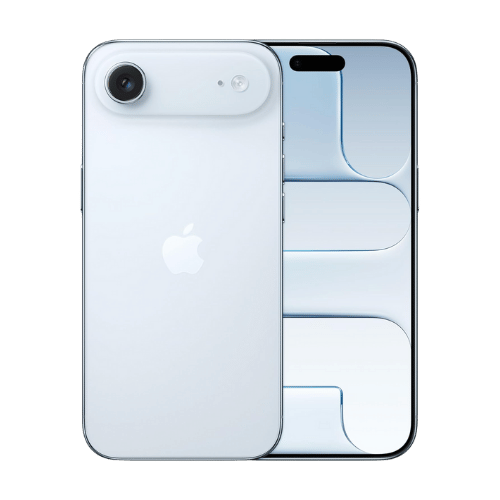
Apple iPhone 17 Air
iOS
Minimum 5 years from release date (guaranteed security updates); historically supports 6+ years of OS upgrades
Apple A19 Pro chip (3nm; 6-core CPU: 2 performance + 4 efficiency; 16-core Neural Engine)
Apple 5-core GPU with Neural Accelerators (A19 Pro)
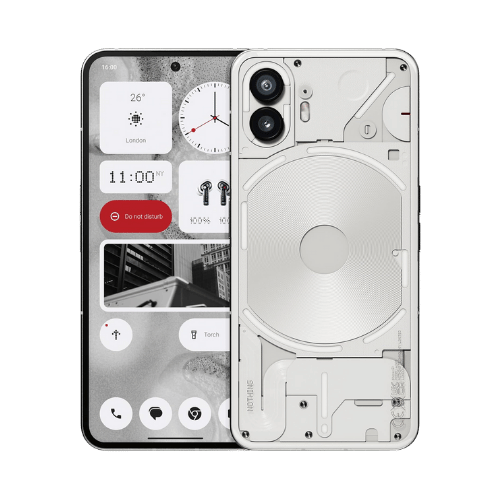
Nothing Phone (2)
Android
3 years of Android OS upgrades and 4 years of security updates (bimonthly)
Qualcomm Snapdragon 8+ Gen 1 (4nm)
Adreno 730
Only the specs that differ are shown here. Winners are highlighted when the data is clear.
+Full specs, pros, and cons
Everything side-by-side with ratings and the full spec list.
Expand
Full specs, pros, and cons
Everything side-by-side with ratings and the full spec list.
Comparison: Apple iPhone 17 Air vs Nothing Phone (2)
Apple iPhone 17 Air
Nothing Phone (2)
| Criterion | Apple iPhone 17 Air | Nothing Phone (2) |
|---|---|---|
| Rating | ★4.9(13)Best Buy | ★4.6(397)Amazon |
Operating System | iOS | Android |
Software Support | Minimum 5 years from release date (guaranteed security updates); historically supports 6+ years of OS upgrades | 3 years of Android OS upgrades and 4 years of security updates (bimonthly) |
Processor | Apple A19 Pro chip (3nm; 6-core CPU: 2 performance + 4 efficiency; 16-core Neural Engine) | Qualcomm Snapdragon 8+ Gen 1 (4nm) |
Graphics | Apple 5-core GPU with Neural Accelerators (A19 Pro) | Adreno 730 |
RAM | 12 GB (LPDDR5X) | 8GB / 12GB LPDDR5 |
Storage | 256GB / 512GB / 1TB (NVMe) | 128GB / 256GB / 512GB UFS 3.1 |
Display Size | 6.6" (6.55" measured diagonally as a standard rectangle; actual viewable area is less) | 6.7" |
Screen Type | Super Retina XDR OLED | LTPO OLED, 1-120Hz Adaptive, 1,600 nits (Peak Pixel Brightness) |
Resolution | 2736 x 1260 pixels (460 ppi) | 2412 x 1080 (FHD+) at 394 ppi |
Refresh Rate | Up to 120 Hz (ProMotion adaptive 1-120Hz); Always-On display | 1Hz - 120Hz (LTPO Adaptive) |
Peak Brightness | 1000 nits max (typical); 1600 nits peak (HDR); 3000 nits peak (outdoor); 1 nit minimum | 1,600 nits (HDR Peak); 1,000 nits (Outdoor Full Screen) |
Main Camera | 48MP Fusion (26 mm, f/1.6), sensor-shift optical image stabilization, 100% Focus Pixels, support for super-high-resolution photos (24MP and 48MP) | 50MP Sony IMX890, f/1.88, OIS, EIS, 24mm equivalent |
Ultra-Wide Camera | No dedicated Ultra Wide camera (functionality limited to panoramic stitching via software) | 50MP Samsung JN1, f/2.2, 114-degree FOV, 4cm Macro Mode |
Telephoto Camera | No dedicated telephoto lens; 12MP 2x Telephoto enabled by 48MP Fusion sensor (52 mm, f/1.6), sensor-shift OIS | No (Not supported) |
Optical Zoom | 1x, 2x optical-quality zoom steps (2x optical zoom range) | No (Not supported) |
Digital Zoom | Up to 10x | Up to 10x |
Video Recording | 4K Dolby Vision at 24/25/30/60 fps; Cinematic mode up to 4K HDR at 30 fps; Action mode up to 2.8K at 60 fps | 4K @ 60fps (Main & Ultrawide); Live HDR at 4K/30fps |
Front Camera | 24MP Center Stage (f/1.9), autofocus with Focus Pixels, 4K Dolby Vision at 24/25/30/60 fps | 32MP Sony IMX615, f/2.45, 1080p @ 60fps |
Battery | 3150 mAh (Li-ion); Up to 26 hours video playback (20 hours streamed) | 4,700mAh |
Wired Charging | USB-C; Up to 50% charge in ~30 minutes with 20W adapter or higher | 45W PPS (Full charge in 55 mins) |
Wireless Charging | MagSafe up to 25W (with 30W+ adapter); Qi2 up to 25W; Qi up to 7.5W | 15W Qi Dual-coil (Full charge in 130 mins); 5W Reverse Wireless |
Connectivity | 5G (sub-6 GHz only, no mmWave) using Apple-designed modem; Gigabit LTE; Wi-Fi 7 (802.11be) with 2x2 MIMO; Bluetooth 6.0; Ultra Wideband (Second-generation); Thread networking technology; NFC with reader mode | 5G (Sub-6), Wi-Fi 6 (802.11ax), Bluetooth 5.3, NFC |
USB | USB-C connector with USB 2 speeds (up to 480 Mb/s); Native DisplayPort output | USB Type-C 2.0 |
Durability | IP68 (maximum depth of 6 meters up to 30 minutes); Ceramic Shield 2 front; Grade 5 Titanium alloy frame (internal aluminum structure); Ceramic Shield back | IP54 (Splash, Water, and Dust Resistant); Corning Gorilla Glass 5 (Front & Back) |
Dimensions | 6.15" x 2.94" x 0.22" (156.2 x 74.7 x 5.6 mm) | 6.38 x 3.01 x 0.34 in (162.1 x 76.4 x 8.6 mm) |
Weight | 5.82 oz (165 g) | 7.09 oz (201.2 g) |
Biometrics | Face ID | Optical under-display fingerprint sensor, Face Unlock |
Extras | Apple Intelligence support; Camera Control button; Action button; Dynamic Island; Dual eSIM (US models); Emergency SOS via satellite; Crash Detection; Roadside Assistance via satellite | Glyph Interface (33 addressable LED zones), Glyph Composer, Essential Notifications, Stereo Speakers |
| Pros |
|
|
| Cons |
|
|
As an Amazon Associate I earn from qualifying purchases. | Check Price on Amazon→ | Check Price on Amazon→ |
Apple iPhone 17 Air
iOS
Minimum 5 years from release date (guaranteed security updates); historically supports 6+ years of OS upgrades
Apple A19 Pro chip (3nm; 6-core CPU: 2 performance + 4 efficiency; 16-core Neural Engine)
Apple 5-core GPU with Neural Accelerators (A19 Pro)
12 GB (LPDDR5X)
256GB / 512GB / 1TB (NVMe)
Pros
- Thinnest iPhone ever (5.6mm) featuring a premium Titanium chassis
- 120Hz ProMotion display finally arrives on non-Pro tier
Cons
- High price for a single-camera system (no Ultra Wide or Telephoto lenses)
- Battery life is shorter than the 'Plus' model it replaces due to thinness
Nothing Phone (2)
Android
3 years of Android OS upgrades and 4 years of security updates (bimonthly)
Qualcomm Snapdragon 8+ Gen 1 (4nm)
Adreno 730
8GB / 12GB LPDDR5
128GB / 256GB / 512GB UFS 3.1
Pros
- Iconic transparent design with functional Glyph Interface lighting
- Excellent performance stability with Snapdragon 8+ Gen 1
Cons
- IP54 rating is lower than IP68 found in competitors (Pixel 7/8, Galaxy S23 FE)
- Camera system lacks a dedicated telephoto/optical zoom lens
Which one is better?
Grab the iPhone if you prioritize premium build quality and Apple's ecosystem - it’s the thinnest iPhone at just 5.6mm.
Who should buy each?
Choose the Apple iPhone 17 Air if: you want the thinnest iPhone at 5.6mm, enjoy high-quality video calls with a 24MP front camera, or prefer the iOS ecosystem.
Choose the Nothing Phone (2) if: you need a long-lasting battery for 34 hours of video playback, appreciate a unique design with Glyph Interface, or want a budget-friendly premium smartphone.
Quality Seekers
Higher user rating (4.9★ vs 4.6★) indicates better overall satisfaction
→ Choose Apple iPhone
Safe Choice Buyers
More widely tested with 397 reviews vs 13
→ Choose Nothing Phone
Thinnest iPhone ever Priority
Thinnest iPhone ever (5.6mm) featuring a premium Titanium chassis
→ Choose Apple iPhone
Iconic transparent design Priority
Iconic transparent design with functional Glyph Interface lighting
→ Choose Nothing Phone
Conclusion
We hope this comparison helps you buy with confidence. Both products are dependable; the right one depends on how you will use it.
Bottom line: The Apple iPhone 17 Air edges ahead with a 4.9★ rating compared to 4.6★. However, Nothing Phone (2) remains a strong contender if its strengths align better with your needs.
Frequently Asked Questions
+Which is better: Apple iPhone 17 Air or Nothing Phone (2)?
Apple iPhone 17 Air is the better choice if you prioritize thinnest iphone ever (5.6mm) featuring a premium titanium chassis. Nothing Phone (2) wins if you value iconic transparent design with functional glyph interface lighting. Both are rated highly (4.9★ vs 4.6★), so consider your specific needs and budget.
+What are the main differences between Apple iPhone 17 Air and Nothing Phone (2)?
Key differences: Apple iPhone 17 Air offers thinnest iphone ever (5.6mm) featuring a premium titanium chassis, while Nothing Phone (2) stands out with iconic transparent design with functional glyph interface lighting. Consider that Apple iPhone 17 Air high price for a single-camera system (no ultra wide or telephoto lenses). Meanwhile, Nothing Phone (2) ip54 rating is lower than ip68 found in competitors (pixel 7/8, galaxy s23 fe). Check the detailed specs table above for a complete comparison.
+What should I prioritize when choosing between these smartphones?
Focus on the features that matter most for your daily use. Apple iPhone 17 Air stands out for thinnest iphone ever (5.6mm) featuring a premium titanium chassis and 120hz promotion display finally arrives on non-pro tier. Nothing Phone (2) excels at iconic transparent design with functional glyph interface lighting and excellent performance stability with snapdragon 8+ gen 1. Check the spec table above for the complete side-by-side breakdown.
Affiliate disclosure
PageBen uses Amazon affiliate links. If you purchase through our links, we may earn a commission at no extra cost to you. This supports independent content for US shoppers.