
KOORUI 24E3 165Hz Gaming Monitor vs LG 27GR93U-B 27" UltraGear 4K 144Hz IPS Gaming Monitor
Get the KOORUI 24E3 165Hz Gaming Monitor unless you need 4K resolution. The numbers tell the story: 23.8" at 165Hz vs LG's 27" at 144Hz. If you're into competitive gaming, that 165Hz is a game-changer, providing smoother gameplay that can give you the edge over your opponents. In real-world use, the KOORUI’s 1ms response time and vibrant 99% sRGB color coverage shine for fast-paced gaming. However, if you're after stunning visuals and higher resolution, the LG 27GR93U-B delivers with its 4K UHD at 400 nits brightness, making it a no-brainer for those who prioritize graphic fidelity in their gaming or photography setup. 2026 is shaping up to be a big year for monitor tech, and these two are leading the charge. Key specs: Display: 23.8" vs 27" and Refresh: 165 Hz vs 144 Hz.
Why compare these? The KOORUI 24E3 165Hz Gaming Monitor (budget-friendly) and LG 27GR93U-B 27" UltraGear 4K 144Hz IPS Gaming Monitor (mid-range) represent different approaches to monitors. While they may appeal to different budgets, many buyers consider both options. This 2026 comparison helps you decide if the differences justify the price gap.
As an Amazon Associate I earn from qualifying purchases.
Key Differences at a Glance
| Aspect | KOORUI 24E3 | LG 27GR93U-B |
|---|---|---|
| User Rating | 4.3★ (3,500 reviews) | 4.3★ (488 reviews) |
| Top Strength | True Fast IPS panel delivers 1ms response times with vibrant 99% sRGB colors | HDMI 2.1 ports support full 4K at 144Hz (PC) and 120Hz (PS5/Xbox Series X) without chroma subsampling |
| Main Drawback | Stand ergonomics are poor (Tilt only; no height adjustment) | No USB-C input or built-in KVM switch (unlike Gigabyte M27U/M28U competitors) |
| Market Position | Budget | ✓Mid-range |
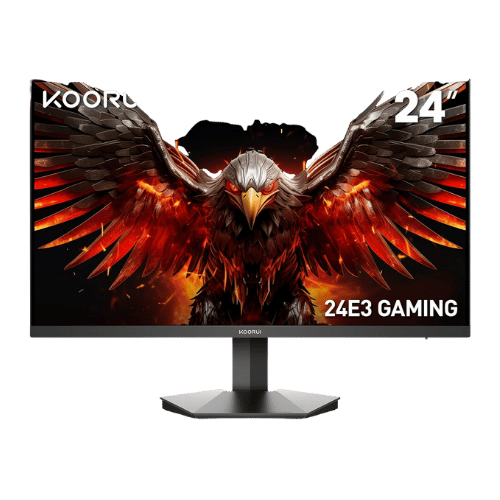
KOORUI 24E3 165Hz Gaming Monitor
23.8" Viewable (24" Class)
1920 x 1080 (FHD)
16:9
IPS (Fast IPS)
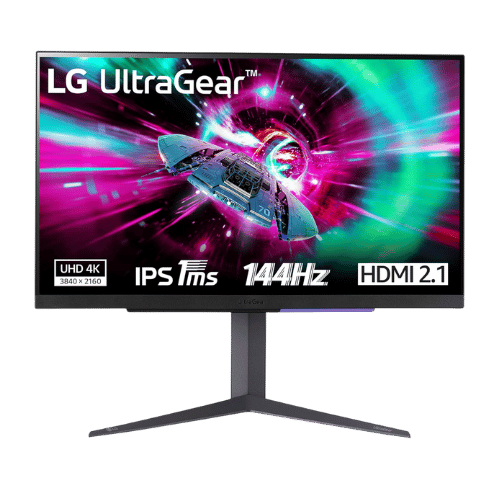
LG 27GR93U-B 27" UltraGear 4K 144Hz IPS Gaming Monitor
27" Viewable (27" Class)
3840 x 2160 (4K UHD)
16:9
IPS (In-Plane Switching)
Only the specs that differ are shown here. Winners are highlighted when the data is clear.
+Full specs, pros, and cons
Everything side-by-side with ratings and the full spec list.
Expand
Full specs, pros, and cons
Everything side-by-side with ratings and the full spec list.
Comparison: KOORUI 24E3 165Hz Gaming Monitor vs LG 27GR93U-B 27" UltraGear 4K 144Hz IPS Gaming Monitor
KOORUI 24E3 165Hz Gaming Monitor
LG 27GR93U-B 27" UltraGear 4K 144Hz IPS Gaming Monitor
| Criterion | KOORUI 24E3 165Hz Gaming Monitor | LG 27GR93U-B 27" UltraGear 4K 144Hz IPS Gaming Monitor |
|---|---|---|
| Rating | ★4.3(3,500)Amazon | ★4.3(488)Amazon |
Screen Size | 23.8" Viewable (24" Class) | 27" Viewable (27" Class) |
Resolution | 1920 x 1080 (FHD) | 3840 x 2160 (4K UHD) |
Aspect Ratio | 16:9 | 16:9 |
Screen Type | IPS (Fast IPS) | IPS (In-Plane Switching) |
Refresh Rate | 165 Hz (via DisplayPort) / 144 Hz (via HDMI) | 144 Hz (via DisplayPort and HDMI 2.1) |
Response Time | 1 ms (GtG) | 1 ms (GtG Faster) |
Brightness | 250 nits (Typical) | 400 nits (Typical) / 500 nits (HDR Peak) |
Contrast | 1,000:1 (Static) / 20,000,000:1 (Dynamic) | 1,000:1 (Typical) |
Color Gamut | 99% sRGB / 72% NTSC | 95% DCI-P3 (CIE1976) |
Color Depth | 16.7M (8-bit) | 1.07 Billion (10-bit) |
HDR | No (Not supported) | VESA DisplayHDR 400 (HDR10) |
Adaptive Sync | AMD FreeSync (G-Sync Compatible) | AMD FreeSync Premium / NVIDIA G-SYNC Compatible |
Viewing Angles | 178° (H) / 178° (V) | 178° (H) / 178° (V) |
Curvature | Flat | Flat |
Speakers | No (None) | No (None) |
Ports | 2x HDMI 1.4; 1x DisplayPort 1.2; 1x 3.5mm Audio Out | 2x HDMI 2.1; 1x DisplayPort 1.4 (DSC); 1x USB 3.0 Upstream; 2x USB 3.0 Downstream; 1x 4-Pole Headphone Out (DTS Headphone:X) |
USB C | No | No |
Kvm | No | No |
Vesa | 75 x 75 mm | 100 x 100 mm |
Ergonomics | Tilt only (-5° to 20°) | Height (110mm), Pivot (90°), Tilt (-5° to 15°); No Swivel |
Power Consumption | 30 W (Max) / 0.5 W (Standby) | 50 W (Typical) / 55 W (Max) / 0.5 W (Sleep) |
Weight With Stand | 3,060 g (6.75 lbs) | 6,400 g (14.1 lbs) |
| Pros |
|
|
| Cons |
|
|
As an Amazon Associate I earn from qualifying purchases. | Check Price on Amazon→ | Check Price on Amazon→ |
KOORUI 24E3 165Hz Gaming Monitor
23.8" Viewable (24" Class)
1920 x 1080 (FHD)
16:9
IPS (Fast IPS)
165 Hz (via DisplayPort) / 144 Hz (via HDMI)
1 ms (GtG)
Pros
- True Fast IPS panel delivers 1ms response times with vibrant 99% sRGB colors
- High 165Hz refresh rate (via DisplayPort) for competitive esports gaming
Cons
- Stand ergonomics are poor (Tilt only; no height adjustment)
- HDMI ports are limited to 144Hz (must use DisplayPort for full 165Hz)
LG 27GR93U-B 27" UltraGear 4K 144Hz IPS Gaming Monitor
27" Viewable (27" Class)
3840 x 2160 (4K UHD)
16:9
IPS (In-Plane Switching)
144 Hz (via DisplayPort and HDMI 2.1)
1 ms (GtG Faster)
Pros
- HDMI 2.1 ports support full 4K at 144Hz (PC) and 120Hz (PS5/Xbox Series X) without chroma subsampling
- Excellent motion clarity with 1ms GtG response time and official G-SYNC Compatibility
Cons
- No USB-C input or built-in KVM switch (unlike Gigabyte M27U/M28U competitors)
- Contrast is standard for IPS (1,000:1), meaning blacks appear grayish in dark rooms
Which one is better?
The KOORUI 24E3 165Hz Gaming Monitor is the better buy for most people - its 165Hz refresh rate crushes the LG 27GR93U-B's 144Hz, providing a smoother gaming experience. That said, grab the LG if you want 4K resolution and don't mind spending more - it's 27% heavier but offers stunning clarity.
Who should buy each?
Choose the KOORUI 24E3 165Hz Gaming Monitor if: you game competitively, need a budget-friendly option, or prioritize a fast refresh rate. (23.8" display, 165 Hz refresh)
Choose the LG 27GR93U-B 27" UltraGear 4K 144Hz IPS Gaming Monitor if: you want stunning 4K visuals, play on next-gen consoles, or need higher brightness for HDR gaming.
Safe Choice Buyers
More widely tested with 3,500 reviews vs 488
→ Choose KOORUI 24E3
Premium Buyers
Higher-tier option with more premium features and build quality
→ Choose LG 27GR93U-B
Value Seekers
Better value proposition for buyers who don't need top-tier features
→ Choose KOORUI 24E3
True Fast IPS Priority
True Fast IPS panel delivers 1ms response times with vibrant 99% sRGB colors
→ Choose KOORUI 24E3
Conclusion
We hope this comparison helps you buy with confidence. Both products are dependable; the right one depends on how you will use it.
Bottom line: Both products share a 4.3★ rating, making this comparison particularly close. Your decision should come down to which specific features matter most to you.
Frequently Asked Questions
+Which is better: KOORUI 24E3 165Hz Gaming Monitor or LG 27GR93U-B 27" UltraGear 4K 144Hz IPS Gaming Monitor?
KOORUI 24E3 165Hz Gaming Monitor is the better choice if you prioritize true fast ips panel delivers 1ms response times with vibrant 99% srgb colors. LG 27GR93U-B 27" UltraGear 4K 144Hz IPS Gaming Monitor wins if you value hdmi 2.1 ports support full 4k at 144hz (pc) and 120hz (ps5/xbox series x) without chroma subsampling. Both are rated highly (4.3★ vs 4.3★), so consider your specific needs and budget.
+What are the main differences between KOORUI 24E3 165Hz Gaming Monitor and LG 27GR93U-B 27" UltraGear 4K 144Hz IPS Gaming Monitor?
Key differences: KOORUI 24E3 165Hz Gaming Monitor offers true fast ips panel delivers 1ms response times with vibrant 99% srgb colors, while LG 27GR93U-B 27" UltraGear 4K 144Hz IPS Gaming Monitor stands out with hdmi 2.1 ports support full 4k at 144hz (pc) and 120hz (ps5/xbox series x) without chroma subsampling. Consider that KOORUI 24E3 165Hz Gaming Monitor stand ergonomics are poor (tilt only; no height adjustment). Meanwhile, LG 27GR93U-B 27" UltraGear 4K 144Hz IPS Gaming Monitor no usb-c input or built-in kvm switch (unlike gigabyte m27u/m28u competitors). Check the detailed specs table above for a complete comparison.
+What should I prioritize when choosing between these monitors?
Focus on the features that matter most for your daily use. KOORUI 24E3 165Hz Gaming Monitor stands out for true fast ips panel delivers 1ms response times with vibrant 99% srgb colors and high 165hz refresh rate (via displayport) for competitive esports gaming. LG 27GR93U-B 27" UltraGear 4K 144Hz IPS Gaming Monitor excels at hdmi 2.1 ports support full 4k at 144hz (pc) and 120hz (ps5/xbox series x) without chroma subsampling and excellent motion clarity with 1ms gtg response time and official g-sync compatibility. Check the spec table above for the complete side-by-side breakdown.
Affiliate disclosure
PageBen uses Amazon affiliate links. If you purchase through our links, we may earn a commission at no extra cost to you. This supports independent content for US shoppers.