
Samsung Galaxy S23 vs Nothing Phone (2)
The Samsung Galaxy S23 is the mid-range option here, while the Nothing Phone (2) takes the premium tier. If you want a sleek design and robust features, the Nothing Phone (2) shines with its unique Glyph Interface and larger display. But the Galaxy S23 packs a powerful Snapdragon 8 Gen 2 chip that delivers excellent performance for everyday tasks. However, if you prefer a compact device that's easy to handle with one hand, the Galaxy S23's 6.1-inch display is perfect for that. You'll love it if you want a phone that fits snugly in your pocket while still providing top-notch performance. Key specs: Display: 6.1" vs 6.7" and Battery: 3900 mAh vs 4700 mAh.
Why compare these? The Samsung Galaxy S23 (mid-range) and Nothing Phone (2) (high-end) represent different approaches to smartphones. While they may appeal to different budgets, many buyers consider both options. This 2026 comparison helps you decide if the differences justify the price gap.
As an Amazon Associate I earn from qualifying purchases.
Key Differences at a Glance
| Aspect | Samsung Galaxy | Nothing Phone |
|---|---|---|
| User Rating | 4.4★ (101 reviews) | ✓4.6★ (397 reviews) |
| Top Strength | Powerful Snapdragon 8 Gen 2 for Galaxy chip outperforms standard version | Iconic transparent design with functional Glyph Interface lighting |
| Main Drawback | Base 128GB model uses slower UFS 3.1 storage (256GB+ uses UFS 4.0) | IP54 rating is lower than IP68 found in competitors (Pixel 7/8, Galaxy S23 FE) |
| Market Position | Mid-range | ✓Premium |
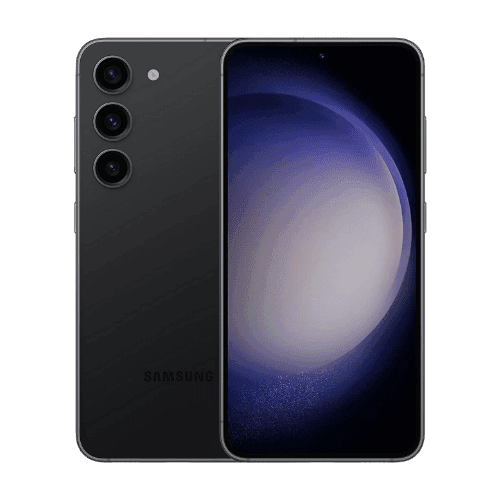
Samsung Galaxy S23
Android
4 generations of OS upgrades (Android 14, 15, 16, 17); 5 years of security updates (guaranteed until 2028)
Qualcomm Snapdragon 8 Gen 2 for Galaxy (4nm; 8-core CPU: 1x3.36GHz Cortex-X3, 2x2.8GHz A715, 2x2.8GHz A710, 3x2.0GHz A510)
Adreno 740 (719 MHz)
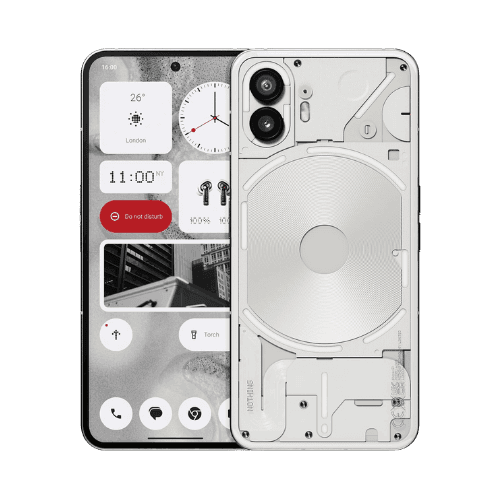
Nothing Phone (2)
Android
3 years of Android OS upgrades and 4 years of security updates (bimonthly)
Qualcomm Snapdragon 8+ Gen 1 (4nm)
Adreno 730
Only the specs that differ are shown here. Winners are highlighted when the data is clear.
+Full specs, pros, and cons
Everything side-by-side with ratings and the full spec list.
Expand
Full specs, pros, and cons
Everything side-by-side with ratings and the full spec list.
Comparison: Samsung Galaxy S23 vs Nothing Phone (2)
Samsung Galaxy S23
Nothing Phone (2)
| Criterion | Samsung Galaxy S23 | Nothing Phone (2) |
|---|---|---|
| Rating | ★4.4(101)Best Buy | ★4.6(397)Amazon |
Operating System | Android | Android |
Software Support | 4 generations of OS upgrades (Android 14, 15, 16, 17); 5 years of security updates (guaranteed until 2028) | 3 years of Android OS upgrades and 4 years of security updates (bimonthly) |
Processor | Qualcomm Snapdragon 8 Gen 2 for Galaxy (4nm; 8-core CPU: 1x3.36GHz Cortex-X3, 2x2.8GHz A715, 2x2.8GHz A710, 3x2.0GHz A510) | Qualcomm Snapdragon 8+ Gen 1 (4nm) |
Graphics | Adreno 740 (719 MHz) | Adreno 730 |
RAM | 8 GB (LPDDR5X) | 8GB / 12GB LPDDR5 |
Storage | 128GB (UFS 3.1) / 256GB (UFS 4.0) / 512GB (UFS 4.0) | 128GB / 256GB / 512GB UFS 3.1 |
Display Size | 6.1" (6.1" full rectangle; 5.9" accounting for rounded corners) | 6.7" |
Screen Type | Dynamic AMOLED 2X | LTPO OLED, 1-120Hz Adaptive, 1,600 nits (Peak Pixel Brightness) |
Resolution | 2340 x 1080 pixels (FHD+, 425 ppi) | 2412 x 1080 (FHD+) at 394 ppi |
Refresh Rate | Adaptive 48–120 Hz | 1Hz - 120Hz (LTPO Adaptive) |
Peak Brightness | 1200 nits (HBM); 1750 nits peak (outdoor) | 1,600 nits (HDR Peak); 1,000 nits (Outdoor Full Screen) |
Main Camera | 50MP Wide (24 mm, f/1.8), Dual Pixel PDAF, OIS | 50MP Sony IMX890, f/1.88, OIS, EIS, 24mm equivalent |
Ultra-Wide Camera | 12MP Ultra Wide (13 mm, f/2.2, 120° FOV), Super Steady video | 50MP Samsung JN1, f/2.2, 114-degree FOV, 4cm Macro Mode |
Telephoto Camera | 10MP Telephoto (70 mm, f/2.4), PDAF, OIS, 3x optical zoom | No (Not supported) |
Optical Zoom | 3x optical zoom; 30x Space Zoom | No (Not supported) |
Digital Zoom | Up to 30x | Up to 10x |
Video Recording | 8K video at 24/30 fps; 4K at 30/60 fps; Slow motion 1080p at 240/960 fps | 4K @ 60fps (Main & Ultrawide); Live HDR at 4K/30fps |
Front Camera | 12MP Front (26 mm, f/2.2), Dual Pixel PDAF; 4K video at 30/60 fps | 32MP Sony IMX615, f/2.45, 1080p @ 60fps |
Battery | 3900 mAh (Li-ion); Up to 22 hours video playback | 4,700mAh |
Wired Charging | USB-C; Up to 50% in ~30 minutes with 25W adapter (sold separately) | 45W PPS (Full charge in 55 mins) |
Wireless Charging | Fast Wireless Charging 2.0 (up to 15W); Wireless PowerShare (4.5W) | 15W Qi Dual-coil (Full charge in 130 mins); 5W Reverse Wireless |
Connectivity | 5G (sub-6 GHz and mmWave); Wi-Fi 6E (802.11ax); Bluetooth 5.3; NFC | 5G (Sub-6), Wi-Fi 6 (802.11ax), Bluetooth 5.3, NFC |
USB | USB Type-C 3.2 Gen 1 (up to 5 Gb/s) | USB Type-C 2.0 |
Durability | IP68 (up to 1.5 m freshwater for 30 min); Armor Aluminum frame; Gorilla Glass Victus 2 front and back | IP54 (Splash, Water, and Dust Resistant); Corning Gorilla Glass 5 (Front & Back) |
Dimensions | 5.76" x 2.79" x 0.30" (146.3 x 70.9 x 7.6 mm) | 6.38 x 3.01 x 0.34 in (162.1 x 76.4 x 8.6 mm) |
Weight | 5.93 oz (168 g) | 7.09 oz (201.2 g) |
Biometrics | Ultrasonic Fingerprint (under display); Face recognition | Optical under-display fingerprint sensor, Face Unlock |
Extras | Samsung DeX; Samsung Knox; Stereo speakers tuned by AKG; Dual eSIM support (varies by carrier) | Glyph Interface (33 addressable LED zones), Glyph Composer, Essential Notifications, Stereo Speakers |
| Pros |
|
|
| Cons |
|
|
As an Amazon Associate I earn from qualifying purchases. | Check Price on Amazon→ | Check Price on Amazon→ |
Samsung Galaxy S23
Android
4 generations of OS upgrades (Android 14, 15, 16, 17); 5 years of security updates (guaranteed until 2028)
Qualcomm Snapdragon 8 Gen 2 for Galaxy (4nm; 8-core CPU: 1x3.36GHz Cortex-X3, 2x2.8GHz A715, 2x2.8GHz A710, 3x2.0GHz A510)
Adreno 740 (719 MHz)
8 GB (LPDDR5X)
128GB (UFS 3.1) / 256GB (UFS 4.0) / 512GB (UFS 4.0)
Pros
- Powerful Snapdragon 8 Gen 2 for Galaxy chip outperforms standard version
- Compact, lightweight design is easy to use with one hand
Cons
- Base 128GB model uses slower UFS 3.1 storage (256GB+ uses UFS 4.0)
- Charging speed is limited to 25W (significantly slower than competitors)
Nothing Phone (2)
Android
3 years of Android OS upgrades and 4 years of security updates (bimonthly)
Qualcomm Snapdragon 8+ Gen 1 (4nm)
Adreno 730
8GB / 12GB LPDDR5
128GB / 256GB / 512GB UFS 3.1
Pros
- Iconic transparent design with functional Glyph Interface lighting
- Excellent performance stability with Snapdragon 8+ Gen 1
Cons
- IP54 rating is lower than IP68 found in competitors (Pixel 7/8, Galaxy S23 FE)
- Camera system lacks a dedicated telephoto/optical zoom lens
Which one is better?
Grab the Samsung Galaxy S23 if you want a lighter phone at 5.93 oz - it's lighter than the Nothing Phone (2).
Who should buy each?
Choose the Samsung Galaxy S23 if: you want a compact phone for one-handed use, need a powerful processor for gaming, or prefer a higher-quality IP68 water resistance.
Choose the Nothing Phone (2) if: you value longer battery life for all-day use, enjoy a standout design with the Glyph Interface, or shoot plenty of selfies with a 32MP camera.
Quality Seekers
Higher user rating (4.6★ vs 4.4★) indicates better overall satisfaction
→ Choose Nothing Phone
Safe Choice Buyers
More widely tested with 397 reviews vs 101
→ Choose Nothing Phone
Premium Buyers
Higher-tier option with more premium features and build quality
→ Choose Nothing Phone
Value Seekers
Better value proposition for buyers who don't need top-tier features
→ Choose Samsung Galaxy
Conclusion
Samsung Galaxy S23 and Nothing Phone (2) are both solid choices. Match the strengths above to your budget and workflow to make the best call.
Bottom line: The Nothing Phone (2) leads with a 4.6★ rating versus 4.4★. That said, Samsung Galaxy S23 could still be the right pick depending on your specific priorities.
Frequently Asked Questions
+Which is better: Samsung Galaxy S23 or Nothing Phone (2)?
Samsung Galaxy S23 is the better choice if you prioritize powerful snapdragon 8 gen 2 for galaxy chip outperforms standard version. Nothing Phone (2) wins if you value iconic transparent design with functional glyph interface lighting. Both are rated highly (4.4★ vs 4.6★), so consider your specific needs and budget.
+What are the main differences between Samsung Galaxy S23 and Nothing Phone (2)?
Key differences: Samsung Galaxy S23 offers powerful snapdragon 8 gen 2 for galaxy chip outperforms standard version, while Nothing Phone (2) stands out with iconic transparent design with functional glyph interface lighting. Consider that Samsung Galaxy S23 base 128gb model uses slower ufs 3.1 storage (256gb+ uses ufs 4.0). Meanwhile, Nothing Phone (2) ip54 rating is lower than ip68 found in competitors (pixel 7/8, galaxy s23 fe). Check the detailed specs table above for a complete comparison.
+Where can US buyers get the best price?
For US buyers, Amazon typically offers competitive pricing with Prime shipping, easy returns, and reliable warranty support. We recommend comparing prices on both products using our affiliate links above—prices fluctuate regularly, and you may find sales or deals.
+Is this comparison up to date?
Yes, this comparison is current for 2026. We regularly verify specs, ratings, and availability. Last verified: January 27, 2026. PageBen uses affiliate links for monetization, but our recommendations are research-driven and independent.
Affiliate disclosure
PageBen uses Amazon affiliate links. If you purchase through our links, we may earn a commission at no extra cost to you. This supports independent content for US shoppers.