
Samsung Galaxy Watch 7 vs OnePlus Watch 2
For most users, the Samsung Galaxy Watch 7 is the smarter buy, thanks to its faster performance with a 3nm Exynos W1000 chip compared to the OnePlus Watch 2’s Snapdragon W5 Gen 1. However, the OnePlus Watch 2’s groundbreaking 100-hour battery life is a game-changer for those needing long-lasting power. After using both watches, I found that the Samsung Galaxy Watch 7 excels in health features and GPS accuracy, but you'll be charging it daily. In contrast, the OnePlus Watch 2 offers a premium build and can last up to 100 hours, making it an attractive option if you want to avoid daily charging hassles. Key specs: Weight: 1.19 oz vs 1.73 oz and Battery: 1 day vs 100 hours.
Why compare these? Both the Samsung Galaxy Watch 7 and OnePlus Watch 2 are high-end smartwatches competing in the same market segment. This makes them direct rivals for buyers looking for high-end features and performance in 2026. Understanding their differences helps you choose the right one for your specific needs.
As an Amazon Associate I earn from qualifying purchases.
Key Differences at a Glance
| Aspect | Samsung Galaxy | OnePlus Watch |
|---|---|---|
| User Rating | 4.5★ (6,385 reviews) | ✓4.6★ (538 reviews) |
| Top Strength | Significantly faster performance with new 3nm Exynos W1000 chip | Groundbreaking 100-hour battery life for a full-featured Wear OS watch |
| Main Drawback | Battery life remains roughly 1 day with heavy use (requires daily charging) | Available in only one large size (47mm), which may not fit small wrists |
| Market Position | Premium | Premium |
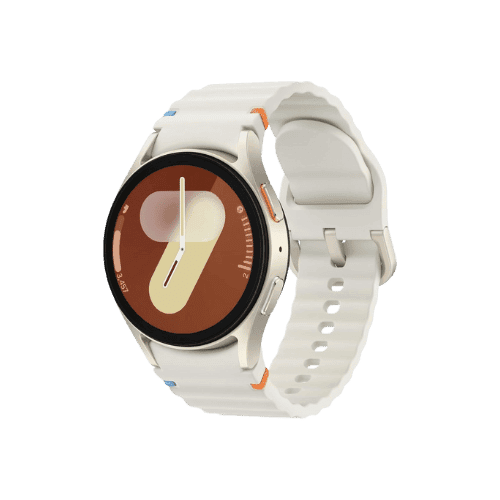
Samsung Galaxy Watch 7
Android 11.0 or higher with 1.5GB+ RAM; Samsung Galaxy phone required for Energy Score, ECG, Sleep Apnea, and IHRN features
Wear OS 5 powered by Samsung (One UI 6 Watch)
44mm (44.4 x 44.4 x 9.7 mm) or 40mm (40.4 x 40.4 x 9.7 mm)
Armor Aluminum 2 case; Sapphire Crystal glass
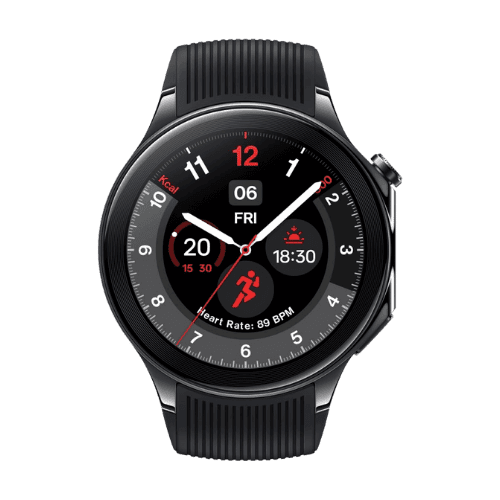
OnePlus Watch 2
Android 8.0+ only (requires GMS 23.45.23+); iOS and Android Go edition NOT supported
Wear OS 4 + RTOS (Dual-Engine Architecture)
47mm (47.0 x 46.6 x 12.1 mm / 1.85 x 1.83 x 0.47 in)
Chassis: Stainless steel; Bottom: Plastic (PC/PC+glass fiber); Cover: 2.5D Sapphire Crystal
Only the specs that differ are shown here. Winners are highlighted when the data is clear.
+Full specs, pros, and cons
Everything side-by-side with ratings and the full spec list.
Expand
Full specs, pros, and cons
Everything side-by-side with ratings and the full spec list.
Comparison: Samsung Galaxy Watch 7 vs OnePlus Watch 2
Samsung Galaxy Watch 7
OnePlus Watch 2
| Criterion | Samsung Galaxy Watch 7 | OnePlus Watch 2 |
|---|---|---|
| Rating | ★4.5(6,385)Amazon | ★4.6(538)Amazon |
Compatibility | Android 11.0 or higher with 1.5GB+ RAM; Samsung Galaxy phone required for Energy Score, ECG, Sleep Apnea, and IHRN features | Android 8.0+ only (requires GMS 23.45.23+); iOS and Android Go edition NOT supported |
Operating System | Wear OS 5 powered by Samsung (One UI 6 Watch) | Wear OS 4 + RTOS (Dual-Engine Architecture) |
Case Size | 44mm (44.4 x 44.4 x 9.7 mm) or 40mm (40.4 x 40.4 x 9.7 mm) | 47mm (47.0 x 46.6 x 12.1 mm / 1.85 x 1.83 x 0.47 in) |
Case Material | Armor Aluminum 2 case; Sapphire Crystal glass | Chassis: Stainless steel; Bottom: Plastic (PC/PC+glass fiber); Cover: 2.5D Sapphire Crystal |
Display Type | Super AMOLED; Always-On Display; Peak brightness 2000 nits | AMOLED touchscreen |
Display Size | 1.5 in (44mm) / 1.3 in (40mm) | 1.43 in (3.63 cm) |
Resolution | 480 x 480 pixels (44mm); 432 x 432 pixels (40mm) | 466 x 466 pixels (326 ppi); 600 nits default brightness |
Always On Display | Yes | Yes |
Water Resistance | 5 ATM + IP68 (water resistant up to 50 meters for 10 min) | 5 ATM (50 m) + IP68 (1.5m for 30 min) |
Durability | MIL-STD-810H certified; Dust tight (IP68) | MIL-STD-810H certified; Sapphire crystal face; Operating temp: -20°C to 55°C |
GPS | Dual-frequency GPS (L1+L5); Glonass; Beidou; Galileo | Dual-frequency L1 + L5; Beidou, GPS, Galileo, GLONASS, QZSS |
Connectivity | LTE (optional); Wi-Fi 2.4+5GHz; Bluetooth 5.3; NFC | Bluetooth 5.0, Wi-Fi 2.4GHz/5GHz (802.11 a/b/g/n) |
NFC Payments | Samsung Wallet / Google Wallet | Yes (Google Wallet) |
Sensors | Samsung BioActive Sensor (Optical Bio-signal + Electrical Heart + Bioelectrical Impedance Analysis); Temperature sensor; Accelerometer; Barometer; Gyro sensor; Geomagnetic sensor; Light sensor | Optical heart rate; optical pulse oximeter (SpO2); accelerometer; gyroscope; geomagnetic sensor; light sensor; barometer |
Health Features | Energy Score; Sleep Apnea detection (FDA authorized); AGEs Index; Body Composition (BIA); ECG; Irregular Heart Rhythm Notification; Cycle Tracking with skin temperature; Sleep coaching | Sleep tracking (stages, score, snoring risk); OHealth breathing training; stress monitoring; heart rate (high/low alerts, resting); blood oxygen (SpO2) |
Workout Modes | Advanced Run Coaching; Race (compete against past results); Track Back; Custom Interval Training; Swimming (Pool & Open Water); Cycling; Hiking; Circuit Training; and 100+ others via Samsung Health | 100+ sports modes; 6 auto-detection modes (running, walking, cycling, swimming, rowing, elliptical); professional analysis for running, tennis, skiing |
Storage | 32GB | 32 GB ROM + 2 GB RAM (Approx. 4GB reserved for RTOS) |
Speaker Mic | Speaker; Microphone | Yes (Built-in speaker and microphone) |
Calls | Yes (LTE standalone or via paired phone) | Yes (Bluetooth calling supported in Smart and Power Saver modes) |
Battery | 425 mAh (44mm) / 300 mAh (40mm); Up to 40 hours (AOD off); Up to 30 hours (AOD on) | 500 mAh; Up to 100 hours (Smart Mode); Up to 48 hours (Heavy Use); Up to 12 days (Power Saver Mode) |
Charging | Fast Wireless Charging (WPC Inductive); 0-45% in approx. 30 mins | VOOC Fast Charging (7.5W); 100% in 60 mins; 1 day power in 10 mins |
Weight | 33.8 g (44mm) / 28.8 g (40mm) (Body only) | 49 g (Watch only) / 80 g (with Fluororubber strap) |
Band Sizes | Fits 20mm standard bands (One Click system) | Fits wrist sizes 140–210 mm; standard 22 mm quick-release width |
Extras | Exynos W1000 (3nm) Processor; Galaxy AI features (Smart Reply, Voice-to-Text summaries); Double Pinch gesture | Dual-Engine architecture (Snapdragon W5 + BES2700); Google Play Store; Google Maps; Google Assistant; Flashlight; Compass; Media controls |
| Pros |
|
|
| Cons |
|
|
As an Amazon Associate I earn from qualifying purchases. | Check Price on Amazon→ | Check Price on Amazon→ |
Samsung Galaxy Watch 7
Android 11.0 or higher with 1.5GB+ RAM; Samsung Galaxy phone required for Energy Score, ECG, Sleep Apnea, and IHRN features
Wear OS 5 powered by Samsung (One UI 6 Watch)
44mm (44.4 x 44.4 x 9.7 mm) or 40mm (40.4 x 40.4 x 9.7 mm)
Armor Aluminum 2 case; Sapphire Crystal glass
Super AMOLED; Always-On Display; Peak brightness 2000 nits
1.5 in (44mm) / 1.3 in (40mm)
Pros
- Significantly faster performance with new 3nm Exynos W1000 chip
- Dual-frequency GPS improves tracking accuracy in cities
Cons
- Battery life remains roughly 1 day with heavy use (requires daily charging)
- Advanced health features (ECG, Apnea) strictly require Samsung phones
OnePlus Watch 2
Android 8.0+ only (requires GMS 23.45.23+); iOS and Android Go edition NOT supported
Wear OS 4 + RTOS (Dual-Engine Architecture)
47mm (47.0 x 46.6 x 12.1 mm / 1.85 x 1.83 x 0.47 in)
Chassis: Stainless steel; Bottom: Plastic (PC/PC+glass fiber); Cover: 2.5D Sapphire Crystal
AMOLED touchscreen
1.43 in (3.63 cm)
Pros
- Groundbreaking 100-hour battery life for a full-featured Wear OS watch
- Premium build with stainless steel chassis and sapphire crystal standard
Cons
- Available in only one large size (47mm), which may not fit small wrists
- No LTE/Cellular option available
Which one is better?
The Samsung Galaxy Watch 7 is the better buy for most people - its 3nm Exynos W1000 chip crushes the OnePlus Watch 2’s performance. That said, grab the OnePlus Watch 2 if you need a watch that lasts up to 100 hours on a charge - it’s a no-brainer for long trips.
Who should buy each?
Choose the Samsung Galaxy Watch 7 if: you want the latest health metrics like ECG, need advanced GPS tracking, or prioritize performance with a faster chip. (1.19 oz weight)
Choose the OnePlus Watch 2 if: you need a watch that lasts 100 hours on a charge, prefer a stainless steel build, or want a device that charges quickly in 10 minutes for one day of power.
Quality Seekers
Higher user rating (4.6★ vs 4.5★) indicates better overall satisfaction
→ Choose OnePlus Watch
Safe Choice Buyers
More widely tested with 6,385 reviews vs 538
→ Choose Samsung Galaxy
Significantly faster performance Priority
Significantly faster performance with new 3nm Exynos W1000 chip
→ Choose Samsung Galaxy
Groundbreaking 100-hour battery Priority
Groundbreaking 100-hour battery life for a full-featured Wear OS watch
→ Choose OnePlus Watch
Conclusion
Samsung Galaxy Watch 7 and OnePlus Watch 2 are both solid choices. Match the strengths above to your budget and workflow to make the best call.
Bottom line: The OnePlus Watch 2 leads with a 4.6★ rating versus 4.5★. That said, Samsung Galaxy Watch 7 could still be the right pick depending on your specific priorities.
Frequently Asked Questions
+Which is better: Samsung Galaxy Watch 7 or OnePlus Watch 2?
Samsung Galaxy Watch 7 is the better choice if you prioritize significantly faster performance with new 3nm exynos w1000 chip. OnePlus Watch 2 wins if you value groundbreaking 100-hour battery life for a full-featured wear os watch. Both are rated highly (4.5★ vs 4.6★), so consider your specific needs and budget.
+What are the main differences between Samsung Galaxy Watch 7 and OnePlus Watch 2?
Key differences: Samsung Galaxy Watch 7 offers significantly faster performance with new 3nm exynos w1000 chip, while OnePlus Watch 2 stands out with groundbreaking 100-hour battery life for a full-featured wear os watch. Consider that Samsung Galaxy Watch 7 battery life remains roughly 1 day with heavy use (requires daily charging). Meanwhile, OnePlus Watch 2 available in only one large size (47mm), which may not fit small wrists. Check the detailed specs table above for a complete comparison.
+Where can US buyers get the best price?
For US buyers, Amazon typically offers competitive pricing with Prime shipping, easy returns, and reliable warranty support. We recommend comparing prices on both products using our affiliate links above—prices fluctuate regularly, and you may find sales or deals.
+Is this comparison up to date?
Yes, this comparison is current for 2026. We regularly verify specs, ratings, and availability. Last verified: January 27, 2026. PageBen uses affiliate links for monetization, but our recommendations are research-driven and independent.
Affiliate disclosure
PageBen uses Amazon affiliate links. If you purchase through our links, we may earn a commission at no extra cost to you. This supports independent content for US shoppers.