
Samsung OLED S90D Series (2024) vs VIZIO Quantum Pro QLED 4K TV (2023)
When comparing the Samsung OLED S90D Series (2024) and the VIZIO Quantum Pro QLED 4K TV (2023), the Samsung emerges as the superior choice, especially for gamers. With a peak brightness of 1200 nits versus VIZIO's 800 nits, the Samsung delivers breathtaking visuals that pop, making it a no-brainer for anyone invested in stunning picture quality. The Samsung OLED S90D Series (2024) is the premium option here, boasting a refresh rate of 144Hz. This means smoother motion in fast-paced scenes, ideal for gaming or action-packed movies. In contrast, VIZIO's 120Hz is still good but doesn't quite match the Samsung's capabilities, especially if you're a serious gamer looking for that edge. Key specs: Refresh: 144 Hz vs 120 Hz and Peak Brightness: 1200 nits vs 800 nits.
Why compare these? Both the Samsung OLED S90D Series (2024) and VIZIO Quantum Pro QLED 4K TV (2023) are high-end tvs competing in the same market segment. This makes them direct rivals for buyers looking for high-end features and performance in 2026. Understanding their differences helps you choose the right one for your specific needs.
As an Amazon Associate I earn from qualifying purchases.
How We Compare These Products
PageBen prioritizes usefulness for US shoppers. Affiliate commission does not decide recommendations, rankings, or verdicts.
Sources Checked
Official specifications, Retailer ratings, Manufacturer documentation, Buyer feedback.
Decision Factors
We weigh panel technology, contrast, brightness, HDR support, gaming features, size value, and smart platform.
Editorial Standard
Hands-on notes are labeled when available; otherwise analysis is based on documented specs and buyer evidence.
Key Differences at a Glance
| Aspect | Samsung OLED | VIZIO Quantum |
|---|---|---|
| User Rating | 4★ (1,047 reviews) | ✓4.2★ (1,606 reviews) |
| Top Strength | Perfect black levels and infinite contrast (all sizes) | Integrated Wi-Fi 6E (Tri-band) provides faster streaming speed than most competitors |
| Main Drawback | No Dolby Vision support (Samsung remains exclusive to HDR10+) | Low native contrast causes blacks to appear gray in dark rooms (IPS characteristic) |
| Market Position | Premium | Premium |
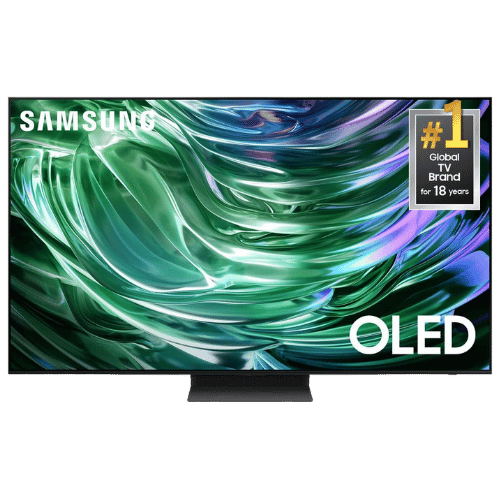
Samsung OLED S90D Series (2024)
42" / 48" / 55" / 65" / 77" / 83"
4K (3,840 x 2,160)
QD-OLED (55"/65"/77"); WOLED (42"/48"/83") – US Market standard distribution
144 Hz native (PC); 120 Hz (Consoles)
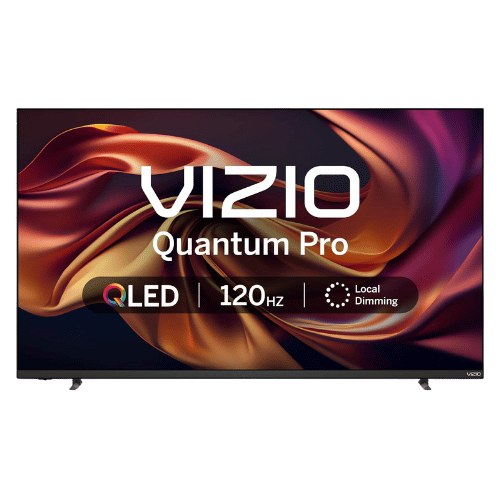
VIZIO Quantum Pro QLED 4K TV (2023)
65" / 75"
4K (3840 x 2160)
QLED LCD (IPS-type / ADS Panel)
120 Hz native (Supports up to 240Hz @ 1080p for PC)
Only the specs that differ are shown here. Winners are highlighted when the data is clear.
+Full specs, pros, and cons
Everything side-by-side with ratings and the full spec list.
Expand
Full specs, pros, and cons
Everything side-by-side with ratings and the full spec list.
Comparison: Samsung OLED S90D Series (2024) vs VIZIO Quantum Pro QLED 4K TV (2023)
Samsung OLED S90D Series (2024)
VIZIO Quantum Pro QLED 4K TV (2023)
| Criterion | Samsung OLED S90D Series (2024) | VIZIO Quantum Pro QLED 4K TV (2023) |
|---|---|---|
| Rating | ★4(1,047)Amazon | ★4.2(1,606)Amazon |
Screen Size | 42" / 48" / 55" / 65" / 77" / 83" | 65" / 75" |
Resolution | 4K (3,840 x 2,160) | 4K (3840 x 2160) |
Screen Type | QD-OLED (55"/65"/77"); WOLED (42"/48"/83") – US Market standard distribution | QLED LCD (IPS-type / ADS Panel) |
Refresh Rate | 144 Hz native (PC); 120 Hz (Consoles) | 120 Hz native (Supports up to 240Hz @ 1080p for PC) |
Processor | NQ4 AI Gen2 Processor | IQ Ultra+ Processor |
Upscaling | 4K AI Upscaling (20 neural networks) | Spatial Scaling Engine |
HDR Formats | OLED HDR+, HDR10+, HLG (No Dolby Vision) | Dolby Vision, HDR10+, HDR10, HLG |
Peak Brightness | ≈1,200 nits (QD-OLED HDR 2% window); ≈700-800 nits (WOLED models) – varies by panel type | ≈1,000 nits (Marketed); ≈750-800 nits (HDR Real Scene tested) |
Local Dimming | No (Self-illuminating pixels) | Yes (Active Full Array; 40 zones on 65"; 80 zones on 75") |
Contrast | Infinite (Perfect Black) | ≈1,600:1 (Native) – Low native contrast due to IPS panel |
Color Gamut | ≈99% DCI-P3 (QD-OLED models); ≈96-98% DCI-P3 (WOLED models) | ≈97% DCI-P3 (Quantum Color) |
HDMI Ports | 4x HDMI 2.1 (All ports support 4K@144Hz) | 4x HDMI |
HDMI 2 1 | Yes (4 ports) | Partial (Only HDMI 3 supports 4K@120Hz; HDMI 1 is eARC but 4K@60Hz) |
VRR | Yes (FreeSync Premium, G-SYNC Compatible, VRR) | Yes (AMD FreeSync Premium Pro, HDMI Forum VRR; 48-120Hz) |
Allm | Yes (Auto Game Mode) | Yes (Auto Low Latency Mode) |
Input Lag | ≈10 ms @ 60Hz; ≈5 ms @ 120Hz; ≈3 ms @ 144Hz | ≈14 ms @ 60Hz; ≈6 ms @ 120Hz |
Audio Channels | 2.1 Channel | 2.0 Channel |
Audio Power | 40 W | 20 W (10W x 2) |
Audio Features | Dolby Atmos; Object Tracking Sound Lite (OTS Lite); Q-Symphony; Active Voice Amplifier Pro | DTS:X; DTS Virtual:X; Dolby Atmos (Passthrough); Bluetooth Headphone capable |
Smart Platform | Samsung Tizen OS (2024) | VIZIO Home (formerly SmartCast) |
App Store | Samsung Smart Hub (Tizen); Samsung Gaming Hub | VIZIO Home (Cloud-based apps, no local store) |
Voice Assistants | Alexa Built-in; Bixby; Works with Google Assistant | VIZIO Voice (Built-in to remote); Works with Alexa/Google/Apple Home |
Casting | Apple AirPlay 2; Multi View; Tap View | Apple AirPlay 2; Chromecast Built-in |
Connectivity | Wi-Fi 5 (802.11ac); Bluetooth 5.2; Ethernet (LAN); Optical Audio | Wi-Fi 6E (Tri-band 802.11ax); Bluetooth 5.2; Ethernet (LAN); USB 2.0 |
Tuner | ATSC 3.0 (NextGen TV) / Clear QAM | ATSC 1.0 (Digital) / Clear QAM (No ATSC 3.0) |
Vesa | 300 x 200 mm (55"/65"); 400 x 300 mm (77"); 400 x 400 mm (83") | 400 x 300 mm (65"/75") |
Dimensions With Stand | 65": 56.9 x 35.3 x 10.4 in; 77": 67.6 x 41.3 x 11.3 in | 65": 56.9 x 35.5 x 12.7 in; 75": 65.7 x 40.5 x 13.4 in |
Weight | 65": 49.6 lbs; 77": 88.2 lbs (with stand) | 65": 41.0 lbs; 75": 59.8 lbs (with stand) |
| Pros |
|
|
| Cons |
|
|
As an Amazon Associate I earn from qualifying purchases. | Check Price on Amazon→ | Check Price on Amazon→ |
Samsung OLED S90D Series (2024)
42" / 48" / 55" / 65" / 77" / 83"
4K (3,840 x 2,160)
QD-OLED (55"/65"/77"); WOLED (42"/48"/83") – US Market standard distribution
144 Hz native (PC); 120 Hz (Consoles)
NQ4 AI Gen2 Processor
4K AI Upscaling (20 neural networks)
Pros
- Perfect black levels and infinite contrast (all sizes)
- QD-OLED models (55"-77") deliver class-leading color brightness and volume
Cons
- No Dolby Vision support (Samsung remains exclusive to HDR10+)
- Significant performance difference between QD-OLED and WOLED sizes
VIZIO Quantum Pro QLED 4K TV (2023)
65" / 75"
4K (3840 x 2160)
QLED LCD (IPS-type / ADS Panel)
120 Hz native (Supports up to 240Hz @ 1080p for PC)
IQ Ultra+ Processor
Spatial Scaling Engine
Pros
- Integrated Wi-Fi 6E (Tri-band) provides faster streaming speed than most competitors
- IPS-type panel delivers wide viewing angles suitable for large group seating
Cons
- Low native contrast causes blacks to appear gray in dark rooms (IPS characteristic)
- Only one HDMI port supports 4K@120Hz (limiting for multi-console owners)
Which one is better?
The Samsung OLED S90D Series (2024) is the better buy for most people - its peak brightness of 1200 nits crushes the VIZIO Quantum Pro QLED 4K TV (2023)'s 800 nits. That said, grab the VIZIO if you need better viewing angles for a large group - it's often lighter on the wallet.
Who should buy each?
Choose the Samsung OLED S90D Series (2024) if: you want the brightest display at 1200 nits, you game often and need a 144Hz refresh rate, or you enjoy immersive audio with 40W power.
Choose the VIZIO Quantum Pro QLED 4K TV (2023) if: you watch in bright rooms and need wide viewing angles, you prefer a lower price point, or you only need a decent 120Hz refresh rate.
Quality Seekers
Higher user rating (4.2★ vs 4★) indicates better overall satisfaction
→ Choose VIZIO Quantum
Safe Choice Buyers
More widely tested with 1,606 reviews vs 1,047
→ Choose VIZIO Quantum
Perfect black levels Priority
Perfect black levels and infinite contrast (all sizes)
→ Choose Samsung OLED
Integrated Wi-Fi 6E Priority
Integrated Wi-Fi 6E (Tri-band) provides faster streaming speed than most competitors
→ Choose VIZIO Quantum
Conclusion
With the key differences outlined, the decision should be clearer. Both options deliver quality—choose the one that fits your priorities.
Bottom line: The VIZIO Quantum Pro QLED 4K TV (2023) leads with a 4.2★ rating versus 4★. That said, Samsung OLED S90D Series (2024) could still be the right pick depending on your specific priorities.
Frequently Asked Questions
+Which is better: Samsung OLED S90D Series (2024) or VIZIO Quantum Pro QLED 4K TV (2023)?
Samsung OLED S90D Series (2024) is the better choice if you prioritize perfect black levels and infinite contrast (all sizes). VIZIO Quantum Pro QLED 4K TV (2023) wins if you value integrated wi-fi 6e (tri-band) provides faster streaming speed than most competitors. Both are rated highly (4★ vs 4.2★), so consider your specific needs and budget.
+What are the main differences between Samsung OLED S90D Series (2024) and VIZIO Quantum Pro QLED 4K TV (2023)?
Key differences: Samsung OLED S90D Series (2024) offers perfect black levels and infinite contrast (all sizes), while VIZIO Quantum Pro QLED 4K TV (2023) stands out with integrated wi-fi 6e (tri-band) provides faster streaming speed than most competitors. Consider that Samsung OLED S90D Series (2024) no dolby vision support (samsung remains exclusive to hdr10+). Meanwhile, VIZIO Quantum Pro QLED 4K TV (2023) low native contrast causes blacks to appear gray in dark rooms (ips characteristic). Check the detailed specs table above for a complete comparison.
+What should I prioritize when choosing between these tvs?
Focus on the features that matter most for your daily use. Samsung OLED S90D Series (2024) stands out for perfect black levels and infinite contrast (all sizes) and qd-oled models (55"-77") deliver class-leading color brightness and volume. VIZIO Quantum Pro QLED 4K TV (2023) excels at integrated wi-fi 6e (tri-band) provides faster streaming speed than most competitors and ips-type panel delivers wide viewing angles suitable for large group seating. Check the spec table above for the complete side-by-side breakdown.
Affiliate disclosure
PageBen uses Amazon affiliate links. If you purchase through our links, we may earn a commission at no extra cost to you. This supports independent content for US shoppers.