
Sony BRAVIA 8 OLED (XR80, 2024) vs Sony BRAVIA XR X90L Full Array LED 4K TV (2023)
Time to compare Sony BRAVIA 8 OLED (XR80, 2024) with Sony BRAVIA XR X90L Full Array LED 4K TV (2023). We will cover the essentials so you can buy with confidence.
As an Amazon Associate I earn from qualifying purchases.
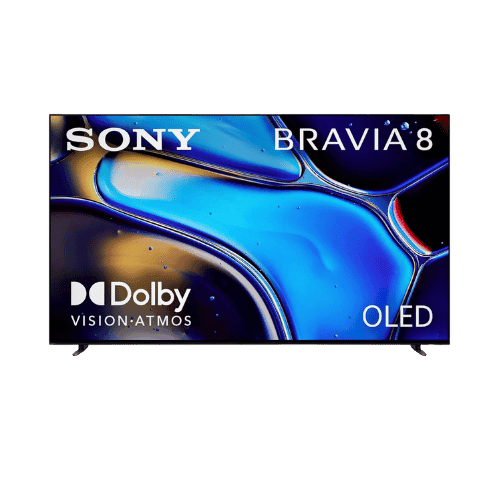
Sony BRAVIA 8 OLED (XR80, 2024)

Sony BRAVIA XR X90L Full Array LED 4K TV (2023)
Comparison: Sony BRAVIA 8 OLED (XR80, 2024) vs Sony BRAVIA XR X90L Full Array LED 4K TV (2023)
Sony BRAVIA 8 OLED (XR80, 2024)
Sony BRAVIA XR X90L Full Array LED 4K TV (2023)
| Criterion | Sony BRAVIA 8 OLED (XR80, 2024) | Sony BRAVIA XR X90L Full Array LED 4K TV (2023) |
|---|---|---|
| Rating | ★4.1(416)Amazon | ★4.4(995)Amazon |
Screen Size | 55" / 65" / 77" | 55" / 65" / 75" / 85" / 98" |
Resolution | 4K (3840 x 2160) | 4K (3840 x 2160) |
Screen Type | WOLED (White OLED by LG Display) | LED LCD (VA Panel; Full Array Local Dimming) |
Refresh Rate | 120 Hz native | 120 Hz native |
Processor | Cognitive Processor XR | Cognitive Processor XR |
Upscaling | XR 4K Upscaling (XR Clear Image) | XR 4K Upscaling (XR Clear Image) |
HDR Formats | Dolby Vision, HDR10, HLG (No HDR10+) | Dolby Vision, HDR10, HLG (No HDR10+) |
Peak Brightness | ≈750-800 nits (HDR 2% window); ≈400-450 nits (SDR Real Scene) – Approx. 10% brighter than A80L | ≈775 nits (SDR Real Scene); ≈1,200 nits (HDR 10% Window) – Brighter than previous X90K |
Local Dimming | No (Self-illuminating pixels) | Yes (Full Array Local Dimming; Zone count varies by size) |
Contrast | Infinite (Perfect Black) | ≈42,000:1 (with Local Dimming enabled) – Excellent black levels for non-OLED |
Color Gamut | ≈99% DCI-P3 (XR Triluminos Pro) | ≈90% DCI-P3 (XR Triluminos Pro) |
HDMI Ports | 4x HDMI (2x HDMI 2.1; 2x HDMI 2.0b) | 4x HDMI (2x HDMI 2.1; 2x HDMI 2.0b) |
HDMI 2 1 | Yes (Ports 3 & 4 only support 4K@120Hz; Port 3 is eARC/ARC) | Yes (Ports 3 & 4 only support 4K@120Hz) |
VRR | Yes (HDMI Forum VRR, G-SYNC Compatible) | Yes (HDMI Forum VRR, G-SYNC Compatible) |
Allm | Yes (Auto Low Latency Mode) | Yes (Auto Low Latency Mode) |
Input Lag | ≈13 ms @ 4K 60Hz; ≈5 ms @ 4K 120Hz | ≈18 ms @ 4K 60Hz; ≈9 ms @ 4K 120Hz |
Audio Channels | 2.1 Channel (Acoustic Surface Audio+) | 2.0 Channel (Acoustic Multi-Audio) |
Audio Power | 50 W (10W x 5 actuators/tweeters) | 30 W (10W x 2 Full Range + 5W x 2 Tweeters) |
Audio Features | Acoustic Surface Audio+ (screen vibrates to produce sound); Dolby Atmos; Acoustic Center Sync; 3D Surround Upscaling | Acoustic Multi-Audio; Dolby Atmos; Acoustic Center Sync (with compatible Sony soundbars); DTS Digital Surround |
Smart Platform | Google TV (Android 12) | Google TV (Android 10) |
App Store | Google Play Store | Google Play Store |
Voice Assistants | Google Assistant Built-in; Works with Alexa; Works with Siri | Google Assistant Built-in; Works with Alexa; Works with Siri |
Casting | Chromecast Built-in; Apple AirPlay 2 | Chromecast Built-in; Apple AirPlay 2 |
Connectivity | Wi-Fi 6E (802.11ax); Bluetooth 5.3; Ethernet (LAN); Digital Audio Output (Optical) | Wi-Fi 5 (802.11ac); Bluetooth 4.2; Ethernet (LAN); Optical Audio; Composite In (Hybrid) |
Tuner | ATSC 3.0 (NextGen TV) / Clear QAM | ATSC 3.0 (NextGen TV) / Clear QAM |
Vesa | 300 x 300 mm (55"/65"); 400 x 300 mm (77") | 300 x 300 mm (55"/65"/75"); 400 x 400 mm (85"); 600 x 400 mm (98") |
Dimensions With Stand | 55": 48.4 x 29.1 x 9.8 in; 65": 57.0 x 33.8 x 9.8 in; 77": 67.5 x 39.9 x 14.6 in | 65": 57.0 x 34.0 x 13.6 in; 75": 65.7 x 39.1 x 15.6 in; 85": 74.5 x 44.0 x 18.0 in |
Weight | 55": 39.9 lbs; 65": 51.2 lbs; 77": 84.7 lbs (with stand) | 65": 55.1 lbs; 75": 78.5 lbs; 85": 109.3 lbs; 98": 151.8 lbs (with stand) |
| Pros |
|
|
| Cons |
|
|
As an Amazon Associate I earn from qualifying purchases. | Check Price on Amazon→ | Check Price on Amazon→ |
Sony BRAVIA 8 OLED (XR80, 2024)
✓ Pros:
- • Cognitive Processor XR delivers industry-leading image processing and upscaling
- • Acoustic Surface Audio+ creates sound that comes directly from the screen
- • Includes ATSC 3.0 tuner for NextGen TV (unlike 2024 LG OLEDs which dropped it)
- • Perfect blacks and infinite contrast ideal for dark room movie watching
✗ Cons:
- • Only two HDMI 2.1 ports, with one shared as the eARC port (major bottleneck)
- • Not as bright as QD-OLED (A95L) or MLA-OLED (G4) competitors
- • Price-to-performance ratio is often lower than rival LG C4 or Samsung S90D
- • Aggressive ABL (Auto Brightness Limiter) can dim full-screen bright scenes
As an Amazon Associate I earn from qualifying purchases.
Sony BRAVIA XR X90L Full Array LED 4K TV (2023)
✓ Pros:
- • Cognitive Processor XR delivers industry-leading upscaling and motion processing
- • Significantly brighter than previous models, making HDR highlights pop
- • Full Array Local Dimming provides deep blacks and minimal blooming for the price
- • Includes ATSC 3.0 tuner for NextGen TV broadcasts (unlike many competitors)
✗ Cons:
- • Only two HDMI 2.1 ports, and one is shared with eARC (challenging for users with 2+ consoles and a soundbar)
- • Viewing angles are narrow (VA panel typical; picture washes out from sides)
- • Blooming is still noticeable around subtitles or very bright objects in dark scenes
- • Refection handling is decent but struggles with direct sunlight compared to the X93L/X95L
As an Amazon Associate I earn from qualifying purchases.
Which one is better?
Looking at user satisfaction (Sony BRAVIA XR X90L Full Array LED 4K TV (2023): 4.1★ vs Sony BRAVIA 8 OLED (XR80, 2024): 4.4★), Sony BRAVIA XR X90L Full Array LED 4K TV (2023) pulls ahead. The gap is small—choose based on the priorities below.
Who should buy each?
Sony BRAVIA 8 OLED (XR80, 2024) excels at: Cognitive Processor XR delivers industry-leading image processing and upscaling, Acoustic Surface Audio+ creates sound that comes directly from the screen
Watch for: Only two HDMI 2.1 ports, with one shared as the eARC port (major bottleneck)
Sony BRAVIA XR X90L Full Array LED 4K TV (2023) excels at: Cognitive Processor XR delivers industry-leading upscaling and motion processing, Significantly brighter than previous models, making HDR highlights pop
Watch for: Only two HDMI 2.1 ports, and one is shared with eARC (challenging for users with 2+ consoles and a soundbar)
Conclusion
We hope this comparison helps you buy with confidence. Both products are dependable; the right one depends on how you will use it.
Frequently Asked Questions
+Which has better value?
Sony BRAVIA 8 OLED (XR80, 2024) excels if you value cognitive processor xr delivers industry-leading image processing and upscaling. Sony BRAVIA XR X90L Full Array LED 4K TV (2023) is better if you prioritize cognitive processor xr delivers industry-leading upscaling and motion processing. Pick based on your budget and daily use.
+Is this an independent review?
Yes. We use affiliate links for monetization, but recommendations are research-driven and unbiased.
+Do newer models exist?
Check release timelines from the manufacturers and compare pricing before you buy. We refresh this page when major updates land.
Affiliate disclosure
PageBen uses Amazon affiliate links. If you purchase through our links, we may earn a commission at no extra cost to you. This supports independent content for US shoppers.