
Sony BRAVIA XR X90L Full Array LED 4K TV (2023) vs Sony BRAVIA 8 OLED (XR80, 2024)
The Sony BRAVIA XR X90L Full Array LED 4K TV (2023) shines in brightness with a peak of 1,200 nits, whereas the Sony BRAVIA 8 OLED (XR80, 2024) maxes out around 800 nits. This difference makes the X90L a no-brainer for bright rooms or HDR content, where those highlights truly pop. In real-world use, the X90L's lower input lag of 9 ms compared to the XR80's 5 ms means better performance for gaming. However, the XR80 excels with its stunning sound powered by 50W, creating an immersive audio experience directly from the screen. So, if sound quality is paramount, the XR80 might be worth your consideration. Key specs: Peak Brightness: 1,200 nits vs 800 nits and Input Lag: 9 ms vs 5 ms.
Why compare these? Both the Sony BRAVIA XR X90L Full Array LED 4K TV (2023) and Sony BRAVIA 8 OLED (XR80, 2024) are high-end tvs competing in the same market segment. This makes them direct rivals for buyers looking for high-end features and performance in 2026. Understanding their differences helps you choose the right one for your specific needs.
As an Amazon Associate I earn from qualifying purchases.
Key Differences at a Glance
| Aspect | Sony BRAVIA | Sony BRAVIA |
|---|---|---|
| User Rating | ✓4.4★ (995 reviews) | 4.2★ (429 reviews) |
| Top Strength | Cognitive Processor XR delivers industry-leading upscaling and motion processing | Cognitive Processor XR delivers industry-leading image processing and upscaling |
| Main Drawback | Only two HDMI 2.1 ports, and one is shared with eARC (challenging for users with 2+ consoles and a soundbar) | Only two HDMI 2.1 ports, with one shared as the eARC port (major bottleneck) |
| Market Position | Premium | Premium |

Sony BRAVIA XR X90L Full Array LED 4K TV (2023)
55" / 65" / 75" / 85" / 98"
4K (3840 x 2160)
LED LCD (VA Panel; Full Array Local Dimming)
120 Hz native
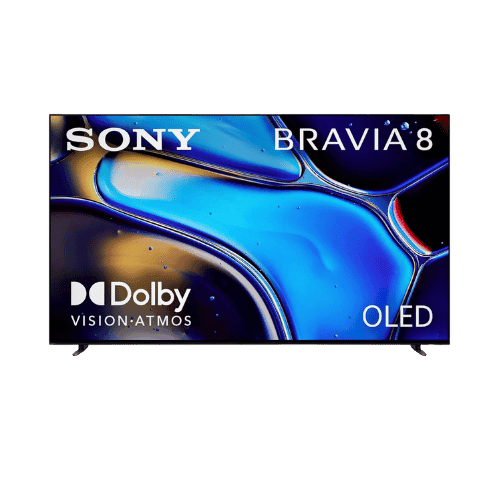
Sony BRAVIA 8 OLED (XR80, 2024)
55" / 65" / 77"
4K (3840 x 2160)
WOLED (White OLED by LG Display)
120 Hz native
Only the specs that differ are shown here. Winners are highlighted when the data is clear.
+Full specs, pros, and cons
Everything side-by-side with ratings and the full spec list.
Expand
Full specs, pros, and cons
Everything side-by-side with ratings and the full spec list.
Comparison: Sony BRAVIA XR X90L Full Array LED 4K TV (2023) vs Sony BRAVIA 8 OLED (XR80, 2024)
Sony BRAVIA XR X90L Full Array LED 4K TV (2023)
Sony BRAVIA 8 OLED (XR80, 2024)
| Criterion | Sony BRAVIA XR X90L Full Array LED 4K TV (2023) | Sony BRAVIA 8 OLED (XR80, 2024) |
|---|---|---|
| Rating | ★4.4(995)Amazon | ★4.2(429)Amazon |
Screen Size | 55" / 65" / 75" / 85" / 98" | 55" / 65" / 77" |
Resolution | 4K (3840 x 2160) | 4K (3840 x 2160) |
Screen Type | LED LCD (VA Panel; Full Array Local Dimming) | WOLED (White OLED by LG Display) |
Refresh Rate | 120 Hz native | 120 Hz native |
Processor | Cognitive Processor XR | Cognitive Processor XR |
Upscaling | XR 4K Upscaling (XR Clear Image) | XR 4K Upscaling (XR Clear Image) |
HDR Formats | Dolby Vision, HDR10, HLG (No HDR10+) | Dolby Vision, HDR10, HLG (No HDR10+) |
Peak Brightness | ≈775 nits (SDR Real Scene); ≈1,200 nits (HDR 10% Window) – Brighter than previous X90K | ≈750-800 nits (HDR 2% window); ≈400-450 nits (SDR Real Scene) – Approx. 10% brighter than A80L |
Local Dimming | Yes (Full Array Local Dimming; Zone count varies by size) | No (Self-illuminating pixels) |
Contrast | ≈42,000:1 (with Local Dimming enabled) – Excellent black levels for non-OLED | Infinite (Perfect Black) |
Color Gamut | ≈90% DCI-P3 (XR Triluminos Pro) | ≈99% DCI-P3 (XR Triluminos Pro) |
HDMI Ports | 4x HDMI (2x HDMI 2.1; 2x HDMI 2.0b) | 4x HDMI (2x HDMI 2.1; 2x HDMI 2.0b) |
HDMI 2 1 | Yes (Ports 3 & 4 only support 4K@120Hz) | Yes (Ports 3 & 4 only support 4K@120Hz; Port 3 is eARC/ARC) |
VRR | Yes (HDMI Forum VRR, G-SYNC Compatible) | Yes (HDMI Forum VRR, G-SYNC Compatible) |
Allm | Yes (Auto Low Latency Mode) | Yes (Auto Low Latency Mode) |
Input Lag | ≈18 ms @ 4K 60Hz; ≈9 ms @ 4K 120Hz | ≈13 ms @ 4K 60Hz; ≈5 ms @ 4K 120Hz |
Audio Channels | 2.0 Channel (Acoustic Multi-Audio) | 2.1 Channel (Acoustic Surface Audio+) |
Audio Power | 30 W (10W x 2 Full Range + 5W x 2 Tweeters) | 50 W (10W x 5 actuators/tweeters) |
Audio Features | Acoustic Multi-Audio; Dolby Atmos; Acoustic Center Sync (with compatible Sony soundbars); DTS Digital Surround | Acoustic Surface Audio+ (screen vibrates to produce sound); Dolby Atmos; Acoustic Center Sync; 3D Surround Upscaling |
Smart Platform | Google TV (Android 10) | Google TV (Android 12) |
App Store | Google Play Store | Google Play Store |
Voice Assistants | Google Assistant Built-in; Works with Alexa; Works with Siri | Google Assistant Built-in; Works with Alexa; Works with Siri |
Casting | Chromecast Built-in; Apple AirPlay 2 | Chromecast Built-in; Apple AirPlay 2 |
Connectivity | Wi-Fi 5 (802.11ac); Bluetooth 4.2; Ethernet (LAN); Optical Audio; Composite In (Hybrid) | Wi-Fi 6E (802.11ax); Bluetooth 5.3; Ethernet (LAN); Digital Audio Output (Optical) |
Tuner | ATSC 3.0 (NextGen TV) / Clear QAM | ATSC 3.0 (NextGen TV) / Clear QAM |
Vesa | 300 x 300 mm (55"/65"/75"); 400 x 400 mm (85"); 600 x 400 mm (98") | 300 x 300 mm (55"/65"); 400 x 300 mm (77") |
Dimensions With Stand | 65": 57.0 x 34.0 x 13.6 in; 75": 65.7 x 39.1 x 15.6 in; 85": 74.5 x 44.0 x 18.0 in | 55": 48.4 x 29.1 x 9.8 in; 65": 57.0 x 33.8 x 9.8 in; 77": 67.5 x 39.9 x 14.6 in |
Weight | 65": 55.1 lbs; 75": 78.5 lbs; 85": 109.3 lbs; 98": 151.8 lbs (with stand) | 55": 39.9 lbs; 65": 51.2 lbs; 77": 84.7 lbs (with stand) |
| Pros |
|
|
| Cons |
|
|
As an Amazon Associate I earn from qualifying purchases. | Check Price on Amazon→ | Check Price on Amazon→ |
Sony BRAVIA XR X90L Full Array LED 4K TV (2023)
55" / 65" / 75" / 85" / 98"
4K (3840 x 2160)
LED LCD (VA Panel; Full Array Local Dimming)
120 Hz native
Cognitive Processor XR
XR 4K Upscaling (XR Clear Image)
Pros
- Cognitive Processor XR delivers industry-leading upscaling and motion processing
- Significantly brighter than previous models, making HDR highlights pop
Cons
- Only two HDMI 2.1 ports, and one is shared with eARC (challenging for users with 2+ consoles and a soundbar)
- Viewing angles are narrow (VA panel typical; picture washes out from sides)
Sony BRAVIA 8 OLED (XR80, 2024)
55" / 65" / 77"
4K (3840 x 2160)
WOLED (White OLED by LG Display)
120 Hz native
Cognitive Processor XR
XR 4K Upscaling (XR Clear Image)
Pros
- Cognitive Processor XR delivers industry-leading image processing and upscaling
- Acoustic Surface Audio+ creates sound that comes directly from the screen
Cons
- Only two HDMI 2.1 ports, with one shared as the eARC port (major bottleneck)
- Not as bright as QD-OLED (A95L) or MLA-OLED (G4) competitors
Which one is better?
The Sony BRAVIA XR X90L Full Array LED 4K TV (2023) is the better buy for most people - its peak brightness of 1,200 nits crushes the OLED's 800 nits. That said, grab the Sony BRAVIA 8 OLED (XR80, 2024) if you prioritize superior sound quality with 50 watts of audio power.
Who should buy each?
Choose the Sony BRAVIA XR X90L Full Array LED 4K TV (2023) if: you watch a lot of HDR content, need a brighter display for well-lit rooms, or enjoy gaming with low input lag.
Choose the Sony BRAVIA 8 OLED (XR80, 2024) if: you value exceptional sound quality, watch movies in dark environments, or prefer deep blacks and infinite contrast.
Quality Seekers
Higher user rating (4.4★ vs 4.2★) indicates better overall satisfaction
→ Choose Sony BRAVIA
Safe Choice Buyers
More widely tested with 995 reviews vs 429
→ Choose Sony BRAVIA
Cognitive Processor XR Priority
Cognitive Processor XR delivers industry-leading upscaling and motion processing
→ Choose Sony BRAVIA
Cognitive Processor XR Priority
Cognitive Processor XR delivers industry-leading image processing and upscaling
→ Choose Sony BRAVIA
Conclusion
There is no wrong answer here. Focus on the features you will use daily and pick the model that aligns with them.
Bottom line: The Sony BRAVIA XR X90L Full Array LED 4K TV (2023) edges ahead with a 4.4★ rating compared to 4.2★. However, Sony BRAVIA 8 OLED (XR80, 2024) remains a strong contender if its strengths align better with your needs.
Frequently Asked Questions
+Which is better: Sony BRAVIA XR X90L Full Array LED 4K TV (2023) or Sony BRAVIA 8 OLED (XR80, 2024)?
Sony BRAVIA XR X90L Full Array LED 4K TV (2023) is the better choice if you prioritize cognitive processor xr delivers industry-leading upscaling and motion processing. Sony BRAVIA 8 OLED (XR80, 2024) wins if you value cognitive processor xr delivers industry-leading image processing and upscaling. Both are rated highly (4.4★ vs 4.2★), so consider your specific needs and budget.
+What are the main differences between Sony BRAVIA XR X90L Full Array LED 4K TV (2023) and Sony BRAVIA 8 OLED (XR80, 2024)?
Key differences: Sony BRAVIA XR X90L Full Array LED 4K TV (2023) offers cognitive processor xr delivers industry-leading upscaling and motion processing, while Sony BRAVIA 8 OLED (XR80, 2024) stands out with cognitive processor xr delivers industry-leading image processing and upscaling. Consider that Sony BRAVIA XR X90L Full Array LED 4K TV (2023) only two hdmi 2.1 ports, and one is shared with earc (challenging for users with 2+ consoles and a soundbar). Meanwhile, Sony BRAVIA 8 OLED (XR80, 2024) only two hdmi 2.1 ports, with one shared as the earc port (major bottleneck). Check the detailed specs table above for a complete comparison.
+Where can US buyers get the best price?
For US buyers, Amazon typically offers competitive pricing with Prime shipping, easy returns, and reliable warranty support. We recommend comparing prices on both products using our affiliate links above—prices fluctuate regularly, and you may find sales or deals.
+Is this comparison up to date?
Yes, this comparison is current for 2026. We regularly verify specs, ratings, and availability. Last verified: January 27, 2026. PageBen uses affiliate links for monetization, but our recommendations are research-driven and independent.
Affiliate disclosure
PageBen uses Amazon affiliate links. If you purchase through our links, we may earn a commission at no extra cost to you. This supports independent content for US shoppers.