
Suunto Race vs COROS VERTIX 2S
The Suunto Race is the premium option here, offering a vibrant 1.43-inch AMOLED display that really pops at 1000 nits brightness. Meanwhile, the COROS VERTIX 2S boasts an impressive 118-hour GPS battery life, which is a game-changer for long outdoor adventures in 2026. In real-world use, the Suunto Race’s screen is a delight for daily visibility, but if you prioritize battery longevity for extended trips, the VERTIX 2S's capacity absolutely crushes the competition. With 40 hours for the Suunto Race in max accuracy GPS mode, you might find yourself charging more often than you'd like on longer excursions. Key specs: Weight: 2.93 oz vs 3.07 oz and Storage: 16 GB vs 32 GB.
Why compare these? The Suunto Race (high-end) and COROS VERTIX 2S (premium flagship) represent different approaches to smartwatches. While they may appeal to different budgets, many buyers consider both options. This 2026 comparison helps you decide if the differences justify the price gap.
As an Amazon Associate I earn from qualifying purchases.
Key Differences at a Glance
| Aspect | Suunto Race | COROS VERTIX |
|---|---|---|
| User Rating | ✓4.2★ (297 reviews) | 4★ (89 reviews) |
| Top Strength | Vibrant 1.43” AMOLED screen with sapphire crystal durability | Class-leading battery life (118 hours standard GPS, 40 days daily use) |
| Main Drawback | No NFC payments or music storage (music controls only) | No NFC payments or streaming music support (Spotify/Apple Music) |
| Market Position | Premium | ✓Flagship |

Suunto Race
Android and iOS (via Suunto app)
Suunto UI
49mm (49 x 49 x 13.3 mm / 1.93 x 1.93 x 0.52 in)
Bezel: Stainless Steel; Case: Glass fiber reinforced polyamide; Glass: Sapphire crystal; Strap: Silicone
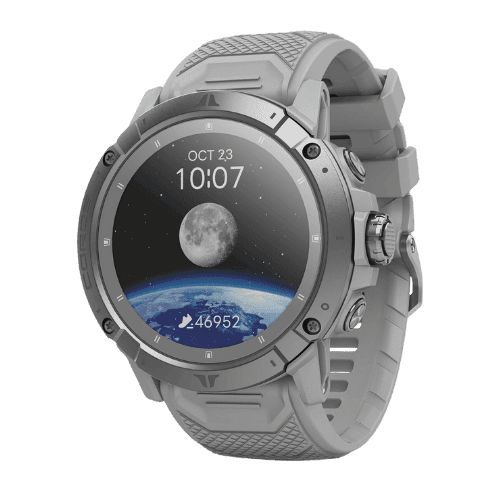
COROS VERTIX 2S
Android and iOS (via COROS app)
COROS UI
50.3mm (50.3 x 50.3 x 16.0 mm / 1.98 x 1.98 x 0.63 in)
Bezel: Grade 5 Titanium Alloy with PVD coating; Body: Titanium Alloy with PVD coating; Glass: Sapphire crystal
Only the specs that differ are shown here. Winners are highlighted when the data is clear.
+Full specs, pros, and cons
Everything side-by-side with ratings and the full spec list.
Expand
Full specs, pros, and cons
Everything side-by-side with ratings and the full spec list.
Comparison: Suunto Race vs COROS VERTIX 2S
Suunto Race
COROS VERTIX 2S
| Criterion | Suunto Race | COROS VERTIX 2S |
|---|---|---|
| Rating | ★4.2(297)Amazon | ★4(89)Amazon |
Compatibility | Android and iOS (via Suunto app) | Android and iOS (via COROS app) |
Operating System | Suunto UI | COROS UI |
Case Size | 49mm (49 x 49 x 13.3 mm / 1.93 x 1.93 x 0.52 in) | 50.3mm (50.3 x 50.3 x 16.0 mm / 1.98 x 1.98 x 0.63 in) |
Case Material | Bezel: Stainless Steel; Case: Glass fiber reinforced polyamide; Glass: Sapphire crystal; Strap: Silicone | Bezel: Grade 5 Titanium Alloy with PVD coating; Body: Titanium Alloy with PVD coating; Glass: Sapphire crystal |
Display Type | AMOLED touchscreen (High definition, always-on capable) | Transflective Memory-in-Pixel (LCD) touchscreen |
Display Size | 1.43 in | 1.4 in |
Resolution | 466 x 466 pixels (1,000 nits brightness) | 280 x 280 pixels (64 colors) |
Always On Display | Yes | Yes (Memory LCD technology) |
Water Resistance | 100 m (10 ATM) | 10 ATM (100 m) |
Durability | MIL-STD-810H tested; Operating temp: -20°C to +55°C (-5°F to +130°F) | Operating temp: -22°F to 122°F (-30°C to 50°C); scratch-resistant sapphire; titanium chassis |
GPS | Dual-band GNSS (L1 + L5); GPS, GLONASS, GALILEO, QZSS, BEIDOU | Dual-Frequency GNSS (L1 + L5); GPS, GLONASS, Galileo, Beidou, QZSS |
Connectivity | Bluetooth, Wi-Fi (for map downloads) | Bluetooth, Wi-Fi (for data sync and firmware updates) |
NFC Payments | No (Not supported) | No (Not supported) |
Sensors | Optical heart rate; blood oxygen (SpO2); barometric altimeter; digital compass; accelerometer; gyroscope | Next-Gen Optical Heart Rate; Barometric Altimeter; Accelerometer; Gyroscope; 3D Compass; Thermometer; Optical Pulse Oximeter; ECG Sensor |
Health Features | HRV measurement (Sleep & Daily); 24/7 heart rate; sleep tracking (stages & quality); blood oxygen; stress and recovery status | HRV Index; Sleep tracking (REM/Deep/Light); SpO2 (Altitude mode); Daily Stress; Recovery time; Resting Heart Rate |
Workout Modes | 95+ sport modes; Suunto Coach (AI-based training load & recovery); offline maps; route navigation; race time estimates | Multi-pitch climbing, Trail Running, Hiking, Skiing (XC/Touring/Downhill), Surfing (Speed/Wind), Whitewater, Triathlon, Strength |
Storage | 16 GB (Steel model) / 32 GB (Titanium model) | 32 GB (Music storage and Maps) |
Speaker Mic | No (No built-in speaker or microphone) | No (Beep alerts and vibration only) |
Calls | No (Notification alerts only) | No (Notification alerts only) |
Battery | Up to 26 days (Daily Mode); Up to 12 days (Daily HR + AOD); 40 hours (Performance Training / Dual-band GNSS) | Up to 40 days (Daily Use); 118 hours (Standard Full GPS); 73 hours (All Systems On); 43 hours (Dual Frequency) |
Charging | Suunto magnetic fast charger (USB-A) | COROS proprietary charging cable (USB-A) |
Weight | 83 g / 2.93 oz (Steel model) | 87 g (with Silicone band) / 70 g (with Nylon band) / 61 g (Body only) |
Band Sizes | Fits wrist sizes 125–175 mm; standard 22 mm quick-release width | Silicone: 130–240 mm; Nylon: 155–225 mm; 26 mm Quick Fit width |
Extras | Global offline outdoor maps (free); weather widgets; phone media controls; customizable watch faces; digital crown navigation | Global offline landscape/topo maps; Music playback (MP3 via Bluetooth); GoPro/Insta360 camera control; Digital Dial navigation; Storm alerts |
| Pros |
|
|
| Cons |
|
|
As an Amazon Associate I earn from qualifying purchases. | Check Price on Amazon→ | Check Price on Amazon→ |
Suunto Race
Android and iOS (via Suunto app)
Suunto UI
49mm (49 x 49 x 13.3 mm / 1.93 x 1.93 x 0.52 in)
Bezel: Stainless Steel; Case: Glass fiber reinforced polyamide; Glass: Sapphire crystal; Strap: Silicone
AMOLED touchscreen (High definition, always-on capable)
1.43 in
Pros
- Vibrant 1.43” AMOLED screen with sapphire crystal durability
- Excellent battery life (up to 40 hours in max accuracy GPS mode)
Cons
- No NFC payments or music storage (music controls only)
- No built-in speaker or microphone for calls
COROS VERTIX 2S
Android and iOS (via COROS app)
COROS UI
50.3mm (50.3 x 50.3 x 16.0 mm / 1.98 x 1.98 x 0.63 in)
Bezel: Grade 5 Titanium Alloy with PVD coating; Body: Titanium Alloy with PVD coating; Glass: Sapphire crystal
Transflective Memory-in-Pixel (LCD) touchscreen
1.4 in
Pros
- Class-leading battery life (118 hours standard GPS, 40 days daily use)
- Updated next-gen heart rate sensor for improved accuracy over Vertix 2
Cons
- No NFC payments or streaming music support (Spotify/Apple Music)
- Large 50.3mm case is very bulky for smaller wrists
Which one is better?
The COROS VERTIX 2S is the better buy for most people - its staggering 118-hour GPS battery life crushes the Suunto Race's 40 hours. That said, grab the Suunto Race if you need a stunning display for everyday wear - it's worth it for that visual flair.
Who should buy each?
Choose the Suunto Race if: you want vibrant visuals for daily use, enjoy exploring with offline maps, or prefer a lighter watch at 2.93oz.
Choose the COROS VERTIX 2S if: you need marathon battery life for long hikes, require advanced heart rate tracking, or want a rugged build for extreme conditions. (3.07 oz weight, 32 GB storage)
Quality Seekers
Higher user rating (4.2★ vs 4★) indicates better overall satisfaction
→ Choose Suunto Race
Safe Choice Buyers
More widely tested with 297 reviews vs 89
→ Choose Suunto Race
Premium Buyers
Higher-tier option with more premium features and build quality
→ Choose COROS VERTIX
Value Seekers
Better value proposition for buyers who don't need top-tier features
→ Choose Suunto Race
Conclusion
Suunto Race and COROS VERTIX 2S are both solid choices. Match the strengths above to your budget and workflow to make the best call.
Bottom line: The Suunto Race edges ahead with a 4.2★ rating compared to 4★. However, COROS VERTIX 2S remains a strong contender if its strengths align better with your needs.
Frequently Asked Questions
+Which is better: Suunto Race or COROS VERTIX 2S?
Suunto Race is the better choice if you prioritize vibrant 1.43” amoled screen with sapphire crystal durability. COROS VERTIX 2S wins if you value class-leading battery life (118 hours standard gps, 40 days daily use). Both are rated highly (4.2★ vs 4★), so consider your specific needs and budget.
+What are the main differences between Suunto Race and COROS VERTIX 2S?
Key differences: Suunto Race offers vibrant 1.43” amoled screen with sapphire crystal durability, while COROS VERTIX 2S stands out with class-leading battery life (118 hours standard gps, 40 days daily use). Consider that Suunto Race no nfc payments or music storage (music controls only). Meanwhile, COROS VERTIX 2S no nfc payments or streaming music support (spotify/apple music). Check the detailed specs table above for a complete comparison.
+Where can US buyers get the best price?
For US buyers, Amazon typically offers competitive pricing with Prime shipping, easy returns, and reliable warranty support. We recommend comparing prices on both products using our affiliate links above—prices fluctuate regularly, and you may find sales or deals.
+Is this comparison up to date?
Yes, this comparison is current for 2026. We regularly verify specs, ratings, and availability. Last verified: January 27, 2026. PageBen uses affiliate links for monetization, but our recommendations are research-driven and independent.
Affiliate disclosure
PageBen uses Amazon affiliate links. If you purchase through our links, we may earn a commission at no extra cost to you. This supports independent content for US shoppers.