
AMD Ryzen 7 8700G vs AMD Ryzen 7 7700X
The AMD Ryzen 7 7700X takes the lead with its superior boost clock of 5.4GHz, perfect for gamers and content creators looking for that extra edge. Meanwhile, the AMD Ryzen 7 306.9 oz, with its integrated Radeon 780M graphics, shines for 1080p gaming, making it the smarter buy if you're not keen on a dedicated GPU. In real-world use, the Ryzen 7 306.9 oz's 65W TDP means it runs cooler and is more power-efficient than the 7700X's 105W rating. This efficiency translates to quieter operation and lower electricity bills, making it a reliable pick for budget-conscious users in 2026. Key specs: Boost Clock: 5.1GHz vs 5.4GHz and PCIe Lanes: 20 vs 28.
Why compare these? The AMD Ryzen 7 8700G (mid-range) and AMD Ryzen 7 7700X (high-end) represent different approaches to processors. While they may appeal to different budgets, many buyers consider both options. This 2026 comparison helps you decide if the differences justify the price gap.
As an Amazon Associate I earn from qualifying purchases.
Key Differences at a Glance
| Aspect | AMD Ryzen | AMD Ryzen |
|---|---|---|
| User Rating | 4.6★ (579 reviews) | ✓4.8★ (3,424 reviews) |
| Top Strength | Best-in-class integrated graphics (Radeon 780M) capable of 1080p gaming | Excellent balance of single-core speed and multi-core productivity |
| Main Drawback | PCIe 4.0 only (no PCIe 5.0) and reduced lane count (x8 for GPU) | Runs hot by design (thick IHS acts as a thermal barrier) |
| Market Position | Mid-range | ✓Premium |
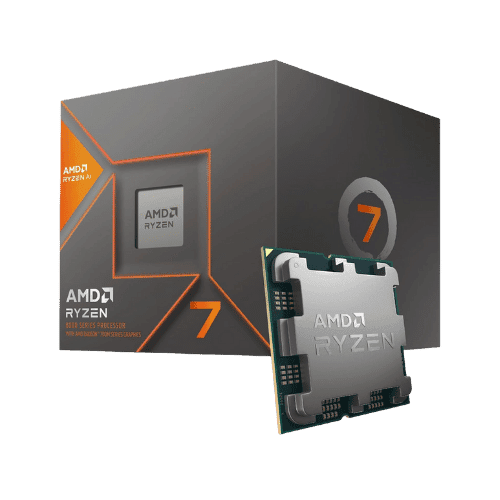
AMD Ryzen 7 8700G
Zen 4 (Ryzen 8000G Series / Hawk Point)
Socket AM5 (LGA 1718)
8 Cores / 16 Threads
4.2 GHz Base / Up to 5.1 GHz Boost
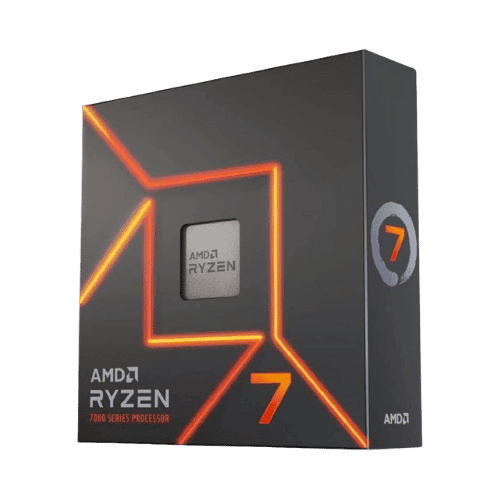
AMD Ryzen 7 7700X
Zen 4 (Ryzen 7000 Series / Raphael)
AM5 (LGA1718)
8 cores / 16 threads
4.5 GHz base / up to 5.4 GHz boost
Only the specs that differ are shown here. Winners are highlighted when the data is clear.
+Full specs, pros, and cons
Everything side-by-side with ratings and the full spec list.
Expand
Full specs, pros, and cons
Everything side-by-side with ratings and the full spec list.
Comparison: AMD Ryzen 7 8700G vs AMD Ryzen 7 7700X
AMD Ryzen 7 8700G
AMD Ryzen 7 7700X
| Criterion | AMD Ryzen 7 8700G | AMD Ryzen 7 7700X |
|---|---|---|
| Rating | ★4.6(579)Amazon | ★4.8(3,424)Amazon |
Architecture Gen | Zen 4 (Ryzen 8000G Series / Hawk Point) | Zen 4 (Ryzen 7000 Series / Raphael) |
Socket Platform | Socket AM5 (LGA 1718) | AM5 (LGA1718) |
Cores Threads | 8 Cores / 16 Threads | 8 cores / 16 threads |
Base Boost Clock | 4.2 GHz Base / Up to 5.1 GHz Boost | 4.5 GHz base / up to 5.4 GHz boost |
Cache L2 L3 | 8 MB L2 + 16 MB L3 (24 MB Total) | 8 MB L2 + 32 MB L3 (40 MB total cache) |
TDP Power | 65 W | 105W default TDP |
Max Turbo Power | 88 W (PPT) | Up to 142W (PPT limit) |
Process Node | TSMC 4nm FinFET (Monolithic Die) | TSMC 5nm FinFET (CPU cores) + TSMC 6nm (I/O die) |
Memory Support | DDR5-5200 MT/s (Official); Dual-Channel; Up to 256 GB; ECC Support: No | DDR5 dual-channel; max 192GB; native DDR5-5200; ECC supported (motherboard dependent) |
Memory Bandwidth Max | N/A (Dependent on RAM config, theoretical max ~83.2 GB/s @ 5200 MT/s) | Up to 83.2 GB/s |
Pcie Version | PCIe 4.0 | PCIe 5.0 |
Pcie Lanes | 20 Total (16 Usable: x8 Graphics, 2x4 NVMe/General) | 28 total / 24 usable (Gen 5 for GPU & SSD) |
Igpu | AMD Radeon 780M (12 Compute Units, 2900 MHz) | AMD Radeon Graphics (2 CUs, up to 2200 MHz) |
Instruction Features | AMD-V, AVX, AVX2, AVX-512, FMA3, AES-NI, SHA, SSE4.1/4.2 | x86-64; AES; AMD-V; AVX-512; FMA3; SHA; SSE4.2 |
Cooler Included | Yes (Wraith Spire) | No (thermal solution not included) |
Max Temp | 95°C (203°F) TjMax | 95°C (Tjmax) |
Notes Limits | Features 'Ryzen AI' NPU (16 TOPS). Monolithic design has less L3 cache than chiplet Ryzen 7000. Discrete GPU slot limited to PCIe 4.0 x8 speed (sufficient for most mid-range GPUs). | Unlocked multiplier; designed to run at 95°C under load for max boost; Eco Mode (65W) significantly reduces temps with minimal performance loss |
Chipset Support | A620, B650, B650E, X670, X670E, B840, B850, X870, X870E | A620, B650, B650E, X670, X670E, X870, X870E, B840, B850 |
| Pros |
|
|
| Cons |
|
|
As an Amazon Associate I earn from qualifying purchases. | Check Price on Amazon→ | Check Price on Amazon→ |
AMD Ryzen 7 8700G
Zen 4 (Ryzen 8000G Series / Hawk Point)
Socket AM5 (LGA 1718)
8 Cores / 16 Threads
4.2 GHz Base / Up to 5.1 GHz Boost
8 MB L2 + 16 MB L3 (24 MB Total)
65 W
Pros
- Best-in-class integrated graphics (Radeon 780M) capable of 1080p gaming
- Includes dedicated NPU for local AI workloads (Ryzen AI)
Cons
- PCIe 4.0 only (no PCIe 5.0) and reduced lane count (x8 for GPU)
- Small L3 cache (16MB) limits performance with high-end discrete GPUs
AMD Ryzen 7 7700X
Zen 4 (Ryzen 7000 Series / Raphael)
AM5 (LGA1718)
8 cores / 16 threads
4.5 GHz base / up to 5.4 GHz boost
8 MB L2 + 32 MB L3 (40 MB total cache)
105W default TDP
Pros
- Excellent balance of single-core speed and multi-core productivity
- Fully unlocked with easy undervolting (Curve Optimizer) potential
Cons
- Runs hot by design (thick IHS acts as a thermal barrier)
- No stock cooler included
Which one is better?
The AMD Ryzen 7 7700X is the better buy for most people - its 5.4GHz boost clock crushes the Ryzen 7 306.9 oz's 5.1GHz. That said, grab the Ryzen 7 306.9 oz if you want impressive integrated graphics for 1080p gaming with lower power consumption.
Who should buy each?
Choose the AMD Ryzen 7 306.9 oz if: you want top-tier integrated graphics for gaming, you prefer lower power consumption with a TDP of 65W, or you need an all-in-one solution with AI capabilities.
Choose the AMD Ryzen 7 7700X if: you need maximum single-core performance for gaming, you plan to do heavy content creation that benefits from higher clock speeds, or you want to leverage PCIe 5.0 for future-proofing your system.
Quality Seekers
Higher user rating (4.8★ vs 4.6★) indicates better overall satisfaction
→ Choose AMD Ryzen
Safe Choice Buyers
More widely tested with 3,424 reviews vs 579
→ Choose AMD Ryzen
Premium Buyers
Higher-tier option with more premium features and build quality
→ Choose AMD Ryzen
Value Seekers
Better value proposition for buyers who don't need top-tier features
→ Choose AMD Ryzen
Conclusion
There is no wrong answer here. Focus on the features you will use daily and pick the model that aligns with them.
Bottom line: The AMD Ryzen 7 7700X leads with a 4.8★ rating versus 4.6★. That said, AMD Ryzen 7 8700G could still be the right pick depending on your specific priorities.
Frequently Asked Questions
+Which is better: AMD Ryzen 7 8700G or AMD Ryzen 7 7700X?
AMD Ryzen 7 8700G is the better choice if you prioritize best-in-class integrated graphics (radeon 780m) capable of 1080p gaming. AMD Ryzen 7 7700X wins if you value excellent balance of single-core speed and multi-core productivity. Both are rated highly (4.6★ vs 4.8★), so consider your specific needs and budget.
+What are the main differences between AMD Ryzen 7 8700G and AMD Ryzen 7 7700X?
Key differences: AMD Ryzen 7 8700G offers best-in-class integrated graphics (radeon 780m) capable of 1080p gaming, while AMD Ryzen 7 7700X stands out with excellent balance of single-core speed and multi-core productivity. Consider that AMD Ryzen 7 8700G pcie 4.0 only (no pcie 5.0) and reduced lane count (x8 for gpu). Meanwhile, AMD Ryzen 7 7700X runs hot by design (thick ihs acts as a thermal barrier). Check the detailed specs table above for a complete comparison.
+Where can US buyers get the best price?
For US buyers, Amazon typically offers competitive pricing with Prime shipping, easy returns, and reliable warranty support. We recommend comparing prices on both products using our affiliate links above—prices fluctuate regularly, and you may find sales or deals.
+Is this comparison up to date?
Yes, this comparison is current for 2026. We regularly verify specs, ratings, and availability. Last verified: February 7, 2026. PageBen uses affiliate links for monetization, but our recommendations are research-driven and independent.
Affiliate disclosure
PageBen uses Amazon affiliate links. If you purchase through our links, we may earn a commission at no extra cost to you. This supports independent content for US shoppers.