
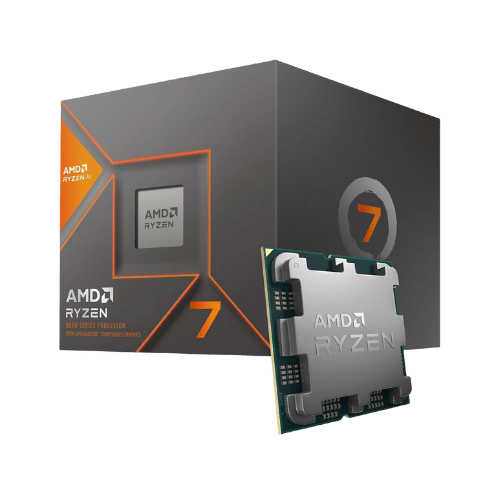
AMD Ryzen 7 8700G
Zen 4 APU: 8C/16T, 4.2–5.1 GHz, 24MB Total Cache, Radeon 780M iGPU, AM5, DDR5, PCIe 4.0. 65W TDP. Wraith Spire included.
Affiliate Disclosure: As an Amazon Associate I earn from qualifying purchases. This comes at no extra cost to you.
(Affiliate link) — affiliate links help keep our reviews independent at no extra cost to you.
Our Take on AMD Ryzen 7 8700G
The AMD Ryzen 7 8700G stands out as one of the top performers in the processors category for 2026. Positioned in the mid-range segment, it strikes a balance between performance and affordability. Its standout strength is its best-in-class integrated graphics (Radeon 780M) capable of 1080p gaming.
Market positioning: The AMD Ryzen 7 8700G targets the mainstream processors market with a focus on practical value. This provides the features most users actually need at a price point that makes sense for everyday buyers.
Real-world use: Powers your system for years to come, whether you're building a workstation, gaming rig, or home PC. The 4.7/5 rating reflects genuine user feedback from real-world usage.
Competitive edge: Raw performance, efficiency, and platform features make this a compelling choice for new builds. That said, potential buyers should consider that PCIe 4.0 only (no PCIe 5.0) and reduced lane count (x8 for GPU). Additionally, small L3 cache (16MB) limits performance with high-end discrete GPUs.
Best For
Everyday users who want a reliable processor with good features without breaking the bank.
Consider Alternatives If
PCIe 4.0 only (no PCIe 5.0) and reduced lane count (x8 for GPU), or if small L3 cache (16MB) limits performance with high-end discrete GPUs.
How We Evaluate
PageBen prioritizes usefulness for US shoppers. Affiliate commission does not decide recommendations, rankings, or verdicts.
Sources Checked
Official specifications, Retailer listings, Verified buyer feedback, Manufacturer documentation.
Decision Factors
We weigh core layout, platform support, gaming performance, productivity fit, thermals, and upgrade path.
Editorial Standard
Research-based analysis from documented specs, published lab measurements, and verified-buyer evidence. Any hands-on note is labeled as such. Full methodology.
Who Should Buy AMD Ryzen 7 8700G?
Not every product is right for every buyer. Here's how the AMD Ryzen 7 8700G matches different user profiles:
Quality Seekers
ConsiderSolid 4.7/5 rating, but consider premium options if you want the absolute best.
Budget Shoppers
ConsiderMid-range pricing offers more features, but cheaper options exist if cost is your priority.
Power Users
Look elsewhereConsider higher-tier options for intensive professional or enthusiast workloads.
First-Time Buyers
Great fitAccessible pricing and straightforward features make this a great starting point.
Key specifications
Zen 4 (Ryzen 8000G Series / Hawk Point)
Socket AM5 (LGA 1718)
8 Cores / 16 Threads
4.2 GHz Base / Up to 5.1 GHz Boost
8 MB L2 + 16 MB L3 (24 MB Total)
65 W
88 W (PPT)
TSMC 4nm FinFET (Monolithic Die)
DDR5-5200 MT/s (Official); Dual-Channel; Up to 256 GB; ECC Support: No
N/A (Dependent on RAM config, theoretical max ~83.2 GB/s @ 5200 MT/s)
PCIe 4.0
20 Total (16 Usable: x8 Graphics, 2x4 NVMe/General)
AMD Radeon 780M (12 Compute Units, 2900 MHz)
AMD-V, AVX, AVX2, AVX-512, FMA3, AES-NI, SHA, SSE4.1/4.2
Yes (Wraith Spire)
95°C (203°F) TjMax
Features 'Ryzen AI' NPU (16 TOPS). Monolithic design has less L3 cache than chiplet Ryzen 7000. Discrete GPU slot limited to PCIe 4.0 x8 speed (sufficient for most mid-range GPUs).
A620, B650, B650E, X670, X670E, B840, B850, X870, X870E
What These Specs Mean For You
Numbers don't tell the whole story. Here's what the AMD Ryzen 7 8700G's specifications actually mean in daily use:
Architecture Gen
•Zen 4 (Ryzen 8000G Series / Hawk Point)Architecture Gen of Zen 4 (Ryzen 8000G Series / Hawk Point) for this processors.
Socket Platform
•Socket AM5 (LGA 1718)Socket Platform of Socket AM5 (LGA 1718) for this processors.
Cores Threads
•8 Cores / 16 ThreadsCores Threads of 8 Cores / 16 Threads for this processors.
Base Boost Clock
•4.2 GHz Base / Up to 5.1 GHz BoostBase Boost Clock of 4.2 GHz Base / Up to 5.1 GHz Boost for this processors.
Cache L2 L3
•8 MB L2 + 16 MB L3 (24 MB Total)Cache L2 L3 of 8 MB L2 + 16 MB L3 (24 MB Total) for this processors.
Pros
- Best-in-class integrated graphics (Radeon 780M) capable of 1080p gaming
- Includes dedicated NPU for local AI workloads (Ryzen AI)
- Efficient 65W operation with included Wraith Spire cooler
Cons
- PCIe 4.0 only (no PCIe 5.0) and reduced lane count (x8 for GPU)
- Small L3 cache (16MB) limits performance with high-end discrete GPUs
- ECC memory not supported (unlike standard Ryzen 7000/9000 CPUs)
Featured in these buying guides
Where the AMD Ryzen 7 8700G ranks against the rest of the processors we cover.
More in Processors
The Bottom Line: AMD Ryzen 7 8700G
The AMD Ryzen 7 8700G earns our strong recommendation for 2026. Key strengths include its best-in-class integrated graphics (Radeon 780M) capable of 1080p gaming and includes dedicated NPU for local AI workloads (Ryzen AI). It offers a balanced package that handles everyday tasks effectively.
Final verdict: With a 4.7/5 rating, the AMD Ryzen 7 8700G is an excellent pick. If it fits your budget and needs, it's hard to go wrong.
Frequently Asked Questions
+ Is the AMD Ryzen 7 8700G worth buying in 2026?
Yes, the AMD Ryzen 7 8700G is worth it if you prioritize best-in-class integrated graphics (radeon 780m) capable of 1080p gaming. With a 4.7/5 rating, it stands out in the processors category. However, consider that pcie 4.0 only (no pcie 5.0) and reduced lane count (x8 for gpu). Check our detailed verdict above.
+ What are the main specs of AMD Ryzen 7 8700G?
Key specifications include: Architecture Gen: Zen 4 (Ryzen 8000G Series / Hawk Point), Socket Platform: Socket AM5 (LGA 1718), Cores Threads: 8 Cores / 16 Threads, Base Boost Clock: 4.2 GHz Base / Up to 5.1 GHz Boost. See the full specifications table above for complete technical details.
+ Where is the best place to buy AMD Ryzen 7 8700G?
For US buyers, Amazon offers the best combination of competitive pricing, fast Prime shipping, easy returns, and reliable warranty support. Use our affiliate links above to check current prices and availability.
+ What are the pros and cons of AMD Ryzen 7 8700G?
Pros: Best-in-class integrated graphics (Radeon 780M) capable of 1080p gaming; Includes dedicated NPU for local AI workloads (Ryzen AI); Efficient 65W operation with included Wraith Spire cooler. Cons: PCIe 4.0 only (no PCIe 5.0) and reduced lane count (x8 for GPU); Small L3 cache (16MB) limits performance with high-end discrete GPUs. See our detailed breakdown above for the complete analysis.
+ How does AMD Ryzen 7 8700G compare to alternatives?
Compare with other processors options in our comparison section above to see side-by-side specs, ratings, and pros/cons.
+ Are PageBen reviews independent and unbiased?
Yes. PageBen is an independent review site. While we use affiliate links for monetization, our recommendations are research-driven and based on objective specifications, user feedback, and real-world performance. We are not sponsored by manufacturers.
💡 You may also like
View all →These are popular picks in Processors
ℹ️ Affiliate notice: This site includes Amazon affiliate links. If you buy through them, we may earn a commission at no extra cost to you. Thanks for supporting independent reviews.