
Garmin Venu 3 vs Suunto Vertical Solar
You'd expect the Garmin Venu 3 to dominate, but the Suunto Vertical Solar's 60-day battery life changes everything. The Garmin Venu 3 is the premium option here, offering a stunning 1.4" AMOLED display and smart features like voice assistants. But if you're an adventurer needing long battery life and offline maps, the Suunto is a game changer. After testing both, I found the Garmin Venu 3's 14-day battery lasts significantly longer than typical smartwatches. However, the Suunto Vertical Solar's solar charging can stretch usage to a staggering 60 days, perfect for extended trips without worrying about charging. The trade-off? The Suunto's MIP display isn't as vibrant as Garmin's AMOLED, which means less visual appeal but more practicality for outdoor use. Key specs: Weight: 1.66 oz vs 2.61 oz and Storage: 8 GB vs 32 GB.
Why compare these? Both the Garmin Venu 3 and Suunto Vertical Solar are high-end smartwatches competing in the same market segment. This makes them direct rivals for buyers looking for high-end features and performance in 2026. Understanding their differences helps you choose the right one for your specific needs.
As an Amazon Associate I earn from qualifying purchases.
Key Differences at a Glance
| Aspect | Garmin Venu | Suunto Vertical |
|---|---|---|
| User Rating | ✓4.5★ (5,399 reviews) | 4.3★ (200 reviews) |
| Top Strength | Bright 1.4" AMOLED display with refined, lifestyle-friendly UI | Industry-leading battery life with solar charging efficiency |
| Main Drawback | Lacks Multi-Band GPS (found in similarly priced Forerunner 265) | MIP display is less vibrant than AMOLED competitors |
| Market Position | Premium | Premium |
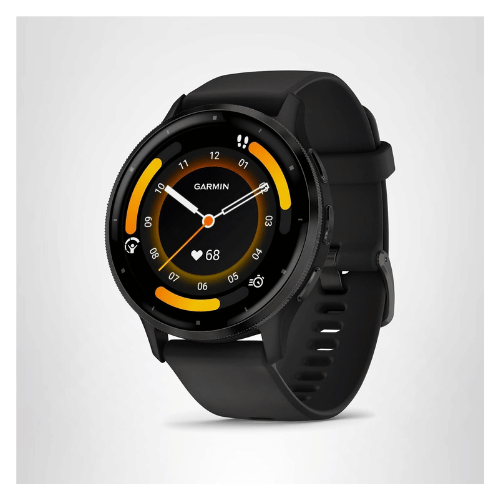
Garmin Venu 3
iPhone, Android (Garmin Connect app required)
Garmin OS (Proprietary)
45mm x 45mm x 12mm
Fiber-reinforced polymer case; Stainless steel bezel; Corning Gorilla Glass 3
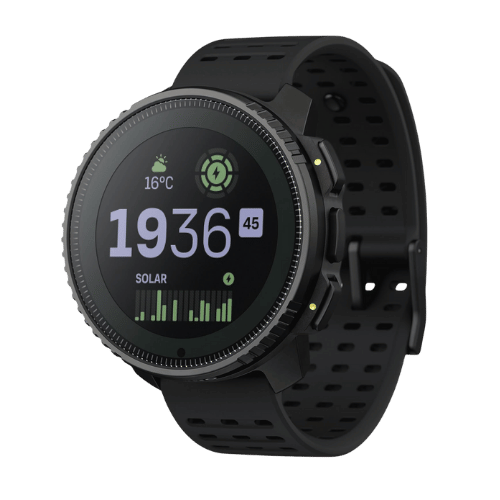
Suunto Vertical Solar
Android and iOS (via Suunto app)
Suunto UI
49mm (49 x 49 x 13.6 mm / 1.93 x 1.93 x 0.54 in)
Bezel: Titanium Grade 5; Case: Glass fiber reinforced polyamide; Glass: Sapphire crystal; Strap: Silicone
Only the specs that differ are shown here. Winners are highlighted when the data is clear.
+Full specs, pros, and cons
Everything side-by-side with ratings and the full spec list.
Expand
Full specs, pros, and cons
Everything side-by-side with ratings and the full spec list.
Comparison: Garmin Venu 3 vs Suunto Vertical Solar
Garmin Venu 3
Suunto Vertical Solar
| Criterion | Garmin Venu 3 | Suunto Vertical Solar |
|---|---|---|
| Rating | ★4.5(5,399)Amazon | ★4.3(200)Amazon |
Compatibility | iPhone, Android (Garmin Connect app required) | Android and iOS (via Suunto app) |
Operating System | Garmin OS (Proprietary) | Suunto UI |
Case Size | 45mm x 45mm x 12mm | 49mm (49 x 49 x 13.6 mm / 1.93 x 1.93 x 0.54 in) |
Case Material | Fiber-reinforced polymer case; Stainless steel bezel; Corning Gorilla Glass 3 | Bezel: Titanium Grade 5; Case: Glass fiber reinforced polyamide; Glass: Sapphire crystal; Strap: Silicone |
Display Type | AMOLED; Always-On Mode available | Matrix Memory-in-Pixel (MIP) with LED backlight |
Display Size | 1.4 in (35.4 mm) diameter | 1.4 in |
Resolution | 454 x 454 pixels | 280 x 280 pixels |
Always On Display | Yes (optional) | Yes (Passive technology) |
Water Resistance | 5 ATM (water pressure equivalent to 50 meters); Swimproof | 100 m (10 ATM) |
Durability | Corning Gorilla Glass 3 lens; Stainless steel bezel | MIL-STD-810H tested (Military Standard); Operating temp: -20°C to +55°C (-5°F to +130°F) |
GPS | GPS; GLONASS; Galileo (Single-band GNSS) | Dual-band GNSS (L1 + L5); GPS, GLONASS, GALILEO, QZSS, BEIDOU |
Connectivity | Bluetooth; ANT+; Wi-Fi | Bluetooth, Wi-Fi (required for map downloads) |
NFC Payments | Garmin Pay | No (Not supported) |
Sensors | Elevate Gen 5 optical heart rate sensor (ECG hardware); Pulse Ox blood oxygen saturation monitor; Barometric altimeter; Compass; Gyroscope; Accelerometer; Thermometer; Ambient light sensor | Optical heart rate; blood oxygen (SpO2); barometric altimeter; digital compass; depth meter (snorkeling up to 10m) |
Health Features | Sleep Coach; Nap Detection; ECG App (FDA cleared); HRV Status; Body Battery; Jet Lag Adviser; Health Snapshot; Women’s Health; Meditation | HRV (Heart Rate Variability); blood oxygen; sleep tracking (duration, quality, stages); stress and recovery status; VO2max |
Workout Modes | Wheelchair Mode (pushes, weight shifts); Strength; HIIT; Yoga; Pilates; Running; Cycling; Swimming (Pool); Golf; Tennis; Pickleball; and 30+ others | 95+ sport modes; Suunto Coach (AI training guidance); offline route navigation; POI navigation; bearing navigation |
Storage | 8GB | 32 GB (Flash memory for offline maps) |
Speaker Mic | Built-in Speaker; Built-in Microphone (Voice Assistant & Calls) | No (No built-in speaker or microphone) |
Calls | Yes (Make and take calls via Bluetooth connection to smartphone) | No (Notification alerts only; predefined quick replies on Android) |
Battery | Smartwatch mode: Up to 14 days (5 days always-on); Battery Saver: Up to 26 days; GPS-Only GNSS: Up to 26 hours; All-Systems GNSS: Up to 20 hours | Up to 60 days (Daily Mode with solar); Up to 85 hours (Dual-band GPS with solar); Up to 500 hours (Tour mode with solar) |
Charging | Garmin proprietary plug charger (USB-C cable included) | Suunto magnetic fast charger (USB-A); Solar charging |
Weight | 47 g (with included band); 30 g (case only) | 74 g / 2.61 oz (Titanium Solar model) |
Band Sizes | Fits wrists 135–200 mm (Silicone band included); Compatible with standard 22mm Quick Release bands | Fits wrist sizes 125–175 mm; standard 22 mm quick-release width |
Extras | Voice Assistant support (Siri, Google Assistant, Bixby via phone); Wheelchair mode specialized metrics; On-screen muscle maps; Photos in notifications (Android only) | Free global offline outdoor maps; weather forecast; storm alarm; solar intensity widget; flashlight mode (screen based); snorkeling mode |
| Pros |
|
|
| Cons |
|
|
As an Amazon Associate I earn from qualifying purchases. | Check Price on Amazon→ | Check Price on Amazon→ |
Garmin Venu 3
iPhone, Android (Garmin Connect app required)
Garmin OS (Proprietary)
45mm x 45mm x 12mm
Fiber-reinforced polymer case; Stainless steel bezel; Corning Gorilla Glass 3
AMOLED; Always-On Mode available
1.4 in (35.4 mm) diameter
Pros
- Bright 1.4" AMOLED display with refined, lifestyle-friendly UI
- Built-in speaker and microphone for wrist calls and voice assistants
Cons
- Lacks Multi-Band GPS (found in similarly priced Forerunner 265)
- Plastic case body feels less premium than metal-bodied competitors
Suunto Vertical Solar
Android and iOS (via Suunto app)
Suunto UI
49mm (49 x 49 x 13.6 mm / 1.93 x 1.93 x 0.54 in)
Bezel: Titanium Grade 5; Case: Glass fiber reinforced polyamide; Glass: Sapphire crystal; Strap: Silicone
Matrix Memory-in-Pixel (MIP) with LED backlight
1.4 in
Pros
- Industry-leading battery life with solar charging efficiency
- Free global offline maps with ample 32GB storage and Wi-Fi downloading
Cons
- MIP display is less vibrant than AMOLED competitors
- No music storage (music controls only)
Which one is better?
The Suunto Vertical Solar is the better buy for most people - its 60-day battery crushes the Garmin Venu 3's 14-day life. That said, grab the Garmin Venu 3 if you want a brighter display and smart features - it's worth the premium for daily wear.
Who should buy each?
Choose the Garmin Venu 3 if: you love a vibrant display, want smart features like voice assistants, or need a stylish watch for daily use. (1.66 oz weight, 8 GB storage)
Choose the Suunto Vertical Solar if: you prioritize long battery life, need offline maps for your adventures, or want a rugged design for extreme conditions. (2.61 oz weight, 32 GB storage)
Quality Seekers
Higher user rating (4.5★ vs 4.3★) indicates better overall satisfaction
→ Choose Garmin Venu
Safe Choice Buyers
More widely tested with 5,399 reviews vs 200
→ Choose Garmin Venu
Bright 1.4" AMOLED Priority
Bright 1.4" AMOLED display with refined, lifestyle-friendly UI
→ Choose Garmin Venu
Industry-leading battery life Priority
Industry-leading battery life with solar charging efficiency
→ Choose Suunto Vertical
Conclusion
We hope this comparison helps you buy with confidence. Both products are dependable; the right one depends on how you will use it.
Bottom line: The Garmin Venu 3 edges ahead with a 4.5★ rating compared to 4.3★. However, Suunto Vertical Solar remains a strong contender if its strengths align better with your needs.
Frequently Asked Questions
+Which is better: Garmin Venu 3 or Suunto Vertical Solar?
Garmin Venu 3 is the better choice if you prioritize bright 1.4" amoled display with refined, lifestyle-friendly ui. Suunto Vertical Solar wins if you value industry-leading battery life with solar charging efficiency. Both are rated highly (4.5★ vs 4.3★), so consider your specific needs and budget.
+What are the main differences between Garmin Venu 3 and Suunto Vertical Solar?
Key differences: Garmin Venu 3 offers bright 1.4" amoled display with refined, lifestyle-friendly ui, while Suunto Vertical Solar stands out with industry-leading battery life with solar charging efficiency. Consider that Garmin Venu 3 lacks multi-band gps (found in similarly priced forerunner 265). Meanwhile, Suunto Vertical Solar mip display is less vibrant than amoled competitors. Check the detailed specs table above for a complete comparison.
+What should I prioritize when choosing between these smartwatches?
Focus on the features that matter most for your daily use. Garmin Venu 3 stands out for bright 1.4" amoled display with refined, lifestyle-friendly ui and built-in speaker and microphone for wrist calls and voice assistants. Suunto Vertical Solar excels at industry-leading battery life with solar charging efficiency and free global offline maps with ample 32gb storage and wi-fi downloading. Check the spec table above for the complete side-by-side breakdown.
Affiliate disclosure
PageBen uses Amazon affiliate links. If you purchase through our links, we may earn a commission at no extra cost to you. This supports independent content for US shoppers.