
HP 24mh 23.8" FHD IPS Monitor vs ASUS VG248QG 24" G-SYNC Gaming Monitor
If you're searching for a budget-friendly monitor, the HP 24mh 23.8" FHD IPS Monitor is a reliable pick. However, for gamers and those who crave speed, the ASUS VG248QG 24" G-SYNC Gaming Monitor takes the lead with its staggering 165Hz refresh rate. In real-world use, the HP monitor offers vibrant colors with ~99% sRGB coverage, while ASUS's ultra-fast 0.5ms response time virtually eliminates motion blur. With the ASUS weighing in at 183.42 oz compared to HP's 158.73 oz, you'll need to consider if that extra weight matters for your setup in 2026. Key specs: Display: 23.8" vs 24" and Refresh: 75 Hz vs 165 Hz.
As an Amazon Associate I earn from qualifying purchases.
How We Compare These Products
PageBen prioritizes usefulness for US shoppers. Affiliate commission does not decide recommendations, rankings, or verdicts.
Sources Checked
Official specifications, Retailer ratings, Manufacturer documentation, Buyer feedback.
Decision Factors
We weigh panel type, resolution, refresh rate, brightness, color coverage, ergonomics, and desk fit.
Editorial Standard
Research-based analysis from documented specs, published lab measurements, and verified-buyer evidence. Any hands-on note is labeled as such. Full methodology.
Key Differences at a Glance
| Aspect | HP 24mh | ASUS VG248QG |
|---|---|---|
| User Rating | ✓4.7★ (25,427 reviews) | 4.6★ (7,676 reviews) |
| Top Strength | Exceptional ergonomics for a budget monitor: Height, Tilt, Swivel, and Pivot support | Ultra-fast 0.5ms (GtG) response time virtually eliminates motion blur and ghosting |
| Main Drawback | Lacks FreeSync/Adaptive Sync support for gaming | TN panel viewing angles (170°/160°) cause color shifting when viewed off-center |
| Market Position | Budget | ✓Mid-range |
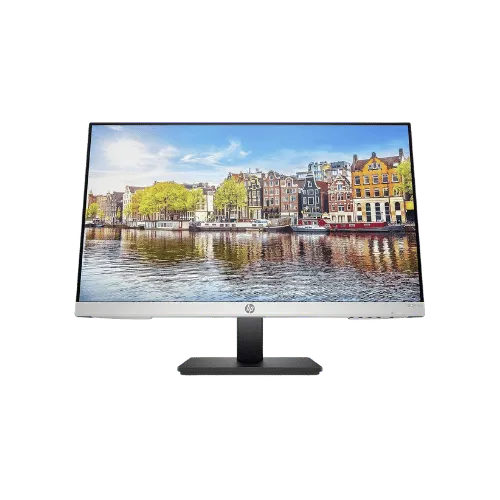
HP 24mh 23.8" FHD IPS Monitor
23.8" Viewable
1920 x 1080 (FHD)
16:9
IPS (In-Plane Switching)
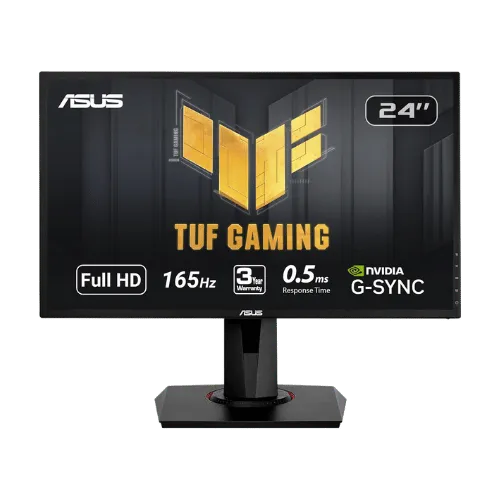
ASUS VG248QG 24" G-SYNC Gaming Monitor
24" Viewable (24" Class)
1920 x 1080 (FHD)
16:9
TN (Twisted Nematic)
Only the specs that differ are shown here. Winners are highlighted when the data is clear.
+Full specs, pros, and cons
Everything side-by-side with ratings and the full spec list.
Expand
Full specs, pros, and cons
Everything side-by-side with ratings and the full spec list.
Comparison: HP 24mh 23.8" FHD IPS Monitor vs ASUS VG248QG 24" G-SYNC Gaming Monitor
HP 24mh 23.8" FHD IPS Monitor
ASUS VG248QG 24" G-SYNC Gaming Monitor
| Criterion | HP 24mh 23.8" FHD IPS Monitor | ASUS VG248QG 24" G-SYNC Gaming Monitor |
|---|---|---|
| Rating | ★4.7(25,427)Amazon | ★4.6(7,676)Amazon |
Screen Size | 23.8" Viewable | 24" Viewable (24" Class) |
Resolution | 1920 x 1080 (FHD) | 1920 x 1080 (FHD) |
Aspect Ratio | 16:9 | 16:9 |
Screen Type | IPS (In-Plane Switching) | TN (Twisted Nematic) |
Refresh Rate | 75 Hz (via HDMI/DisplayPort) | 165 Hz (Overclockable; via DisplayPort) |
Response Time | 5 ms (GtG) | 0.5 ms (GtG Min) / 1 ms (GtG Avg) |
Brightness | 250 nits (cd/m²) | 350 nits (cd/m²) |
Contrast | 1,000:1 (Static); 10,000,000:1 (Dynamic) | 1,000:1 (Static) / 100,000,000:1 (ASCR Dynamic) |
Color Gamut | 72% NTSC (Approx. 99% sRGB) | 72% NTSC (Approx. 99% sRGB) |
Color Depth | 8-bit (6-bit + FRC) | 16.7M (6-bit + FRC) |
HDR | No (Not supported) | No (Not supported) |
Adaptive Sync | No (Not supported) | NVIDIA G-SYNC Compatible / AMD FreeSync Premium |
Viewing Angles | 178° (H) / 178° (V) | 170° (H) / 160° (V) |
Curvature | Flat | Flat |
Speakers | 2x 2 W (Stereo) | 2x 2 W (Stereo) |
Ports | 1x HDMI 1.4; 1x DisplayPort 1.2; 1x VGA; 1x 3.5mm Audio In | 1x DisplayPort 1.2; 1x HDMI 1.4; 1x Dual-Link DVI-D; 1x 3.5mm Audio In; 1x 3.5mm Headphone Out |
USB C | No | No |
Kvm | No | No |
Vesa | 100 x 100 mm (Compatible) | 100 x 100 mm |
Ergonomics | Height (100mm), Tilt (-5° to +23°), Pivot (±90°), Swivel (±360°) | Height (130mm), Swivel (±90°), Pivot (±90°), Tilt (+33° to -5°) |
Power Consumption | 22 W (Typical) / 24 W (Max) / 0.5 W (Standby) | 40 W (Typical) / 0.5 W (Standby) |
Weight With Stand | 4,500 g (9.92 lbs) | 5,200 g (11.46 lbs) |
| Pros |
|
|
| Cons |
|
|
As an Amazon Associate I earn from qualifying purchases. | Check Price on Amazon→ | Check Price on Amazon→ |
HP 24mh 23.8" FHD IPS Monitor
23.8" Viewable
1920 x 1080 (FHD)
16:9
IPS (In-Plane Switching)
75 Hz (via HDMI/DisplayPort)
5 ms (GtG)
Pros
- Exceptional ergonomics for a budget monitor: Height, Tilt, Swivel, and Pivot support
- IPS panel delivers vivid colors with ~99% sRGB coverage and wide viewing angles
Cons
- Lacks FreeSync/Adaptive Sync support for gaming
- No USB-C port or USB hub for peripheral connectivity
ASUS VG248QG 24" G-SYNC Gaming Monitor
24" Viewable (24" Class)
1920 x 1080 (FHD)
16:9
TN (Twisted Nematic)
165 Hz (Overclockable; via DisplayPort)
0.5 ms (GtG Min) / 1 ms (GtG Avg)
Pros
- Ultra-fast 0.5ms (GtG) response time virtually eliminates motion blur and ghosting
- 165Hz refresh rate offers competitive fluidity for FPS titles (via DisplayPort)
Cons
- TN panel viewing angles (170°/160°) cause color shifting when viewed off-center
- Color accuracy is inferior to modern IPS panels (washed out blacks/colors)
Which one is better?
The ASUS VG248QG 24" G-SYNC Gaming Monitor is the better buy for most people - its 165Hz refresh rate crushes the HP's 75Hz.
Who should buy each?
Choose the HP 24mh 23.8" FHD IPS Monitor if: you want an ergonomic setup with height and pivot support, you prefer vibrant colors for casual use, or you need a budget monitor for office tasks. (23.8" display, 75 Hz refresh)
Choose the ASUS VG248QG 24" G-SYNC Gaming Monitor if: you play fast-paced FPS games, you prioritize ultra-fast response times, or you want an immersive experience with G-SYNC compatibility. (24" display, 165 Hz refresh)
Quality Seekers
Higher user rating (4.7★ vs 4.6★) indicates better overall satisfaction
→ Choose HP 24mh
Safe Choice Buyers
More widely tested with 25,427 reviews vs 7,676
→ Choose HP 24mh
Premium Buyers
Higher-tier option with more premium features and build quality
→ Choose ASUS VG248QG
Value Seekers
Better value proposition for buyers who don't need top-tier features
→ Choose HP 24mh
Conclusion
Bottom line: The HP 24mh 23.8" FHD IPS Monitor edges ahead with a 4.7★ rating compared to 4.6★. However, ASUS VG248QG 24" G-SYNC Gaming Monitor remains a strong contender if its strengths align better with your needs.
Frequently Asked Questions
+Which is better: HP 24mh 23.8" FHD IPS Monitor or ASUS VG248QG 24" G-SYNC Gaming Monitor?
HP 24mh 23.8" FHD IPS Monitor is the better choice if you prioritize exceptional ergonomics for a budget monitor: height, tilt, swivel, and pivot support. ASUS VG248QG 24" G-SYNC Gaming Monitor wins if you value ultra-fast 0.5ms (gtg) response time virtually eliminates motion blur and ghosting. Both are rated highly (4.7★ vs 4.6★), so consider your specific needs and budget.
+What are the main differences between HP 24mh 23.8" FHD IPS Monitor and ASUS VG248QG 24" G-SYNC Gaming Monitor?
Key differences: HP 24mh 23.8" FHD IPS Monitor offers exceptional ergonomics for a budget monitor: height, tilt, swivel, and pivot support, while ASUS VG248QG 24" G-SYNC Gaming Monitor stands out with ultra-fast 0.5ms (gtg) response time virtually eliminates motion blur and ghosting. Consider that HP 24mh 23.8" FHD IPS Monitor lacks freesync/adaptive sync support for gaming. Meanwhile, ASUS VG248QG 24" G-SYNC Gaming Monitor tn panel viewing angles (170°/160°) cause color shifting when viewed off-center. Check the detailed specs table above for a complete comparison.
+What should I prioritize when choosing between these monitors?
Focus on the features that matter most for your daily use. HP 24mh 23.8" FHD IPS Monitor stands out for exceptional ergonomics for a budget monitor: height, tilt, swivel, and pivot support and ips panel delivers vivid colors with ~99% srgb coverage and wide viewing angles. ASUS VG248QG 24" G-SYNC Gaming Monitor excels at ultra-fast 0.5ms (gtg) response time virtually eliminates motion blur and ghosting and 165hz refresh rate offers competitive fluidity for fps titles (via displayport). Check the spec table above for the complete side-by-side breakdown.
Affiliate disclosure
PageBen uses Amazon affiliate links. If you purchase through our links, we may earn a commission at no extra cost to you. This supports independent content for US shoppers.